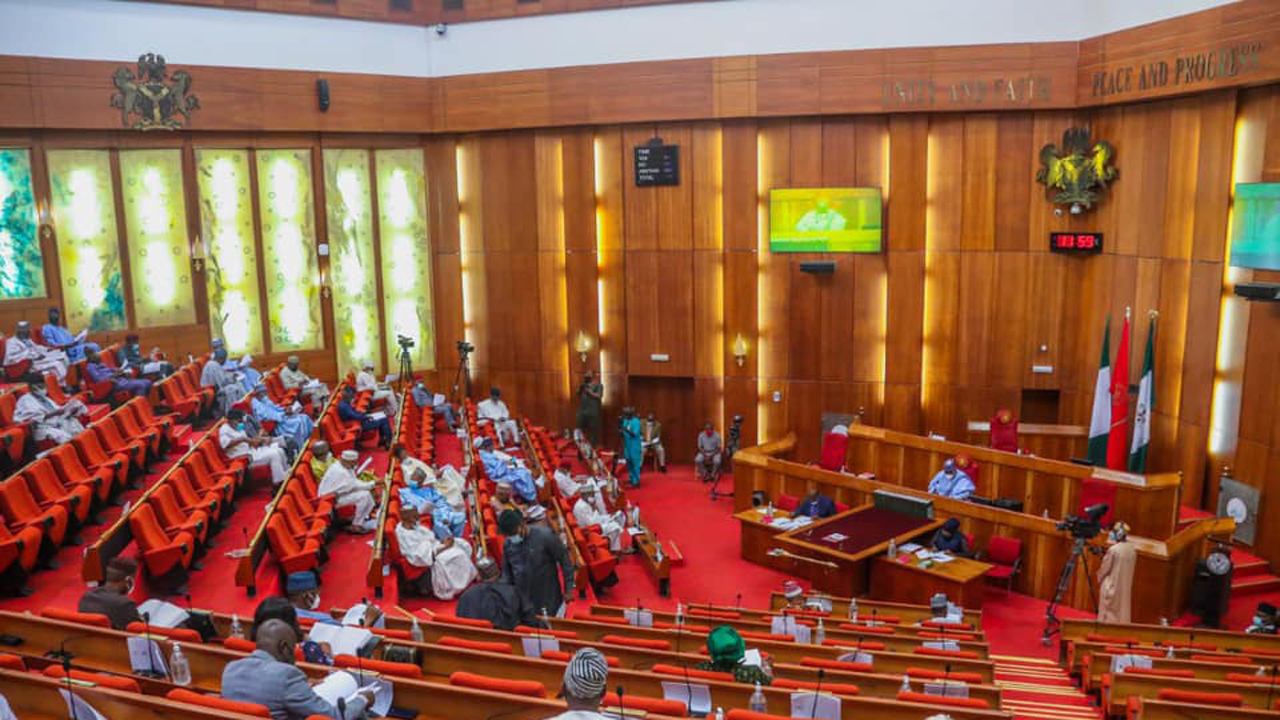
The passage of the Electoral Act 2022 (Repeal and Re-enactment) Bill, 2026, remained unresolved on Tuesday as the Senate failed to reach a final decision after spending more than four hours reviewing the report of a seven-member ad hoc committee in a closed session.
The upper chamber had begun deliberations on the harmonised report prepared by the committee, which was set up last week to compile and align lawmakers’ views on the Electoral Act 2022 (Repeal and Re-enactment) Bill, 2026.

Lawmakers later moved into a closed-door meeting to examine the documents in detail.
After the session ended and plenary resumed, Senate President Godswill Akpabio declined to disclose the outcome of the discussions, instead adjourning the sitting to the next legislative day without taking a position on the bill.
The Senate had, in the previous week, established the seven-member committee to collate, harmonise and refine senators’ submissions and opinions on the Electoral Act Amendment Bill, 2026. The committee was mandated to present a consolidated report to the chamber on Tuesday.
That decision followed more than two hours of consideration of the bill’s provisions during an earlier closed-door session.
The committee is chaired by the Chairman of the Senate Committee on Judiciary, Human Rights and Legal Matters, Senator Niyi Adegbomore, with Senators Adamu Aliero, Aminu Tambuwal, Adams Oshiomhole, Danjuma Goje, Tony Nwoye and Titus Zam serving as members.
Before the latest deliberations, the Senate had commenced formal consideration of the Electoral Act 2022 (Repeal and Re-enactment) Bill, 2026, before moving into a closed session to scrutinise documents submitted by the Chairman of the Senate Committee on Electoral Matters, Senator Simon Lalong.
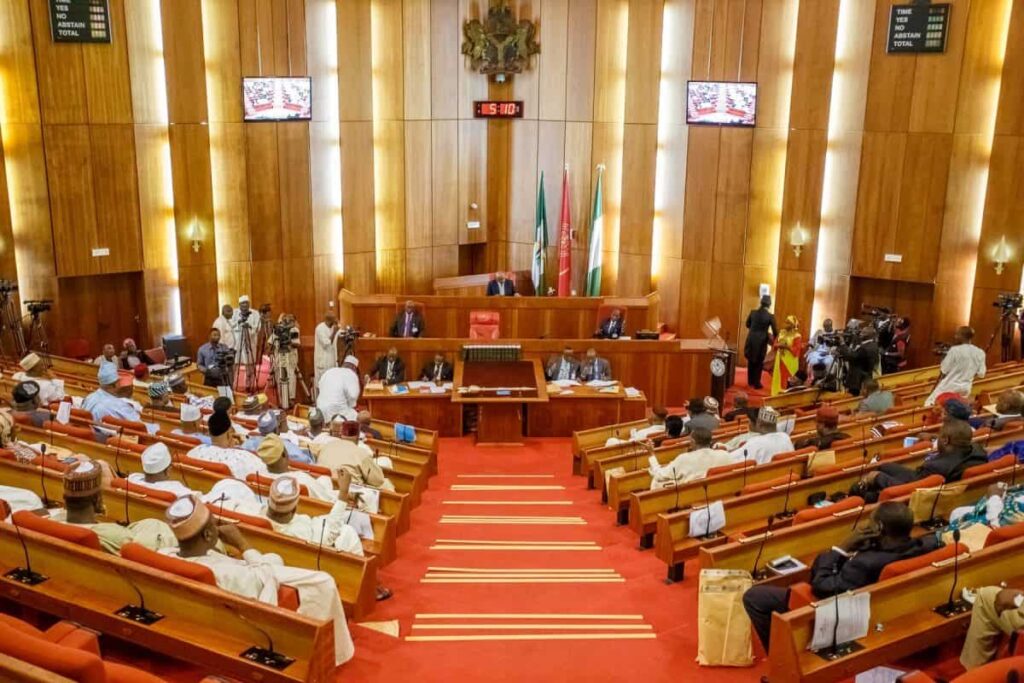
The closed-door meeting was convened to give lawmakers ample opportunity to carefully study the proposed amendments and supporting materials ahead of further debate on the bill.
The delay follows an earlier decision by the upper chamber to step down consideration of the bill on Wednesday, allowing senators additional time to prepare for a comprehensive review of its contents.
What you should know
The Electoral Act 2022 (Repeal and Re-enactment) Bill, 2026, is expected to shape the legal framework for future elections in Nigeria.
The Senate’s repeated closed-door sessions and delayed decisions reflect the sensitivity and far-reaching implications of the proposed amendments. Lawmakers are seeking to reconcile differing views and ensure the revised law addresses electoral credibility, legal clarity and operational efficiency.
Until consensus is reached and plenary action is taken, the fate of the bill remains uncertain, with potential implications for the timing and conduct of future electoral processes.