The ruling military authorities in Guinea-Bissau have reportedly abandoned plans to arrest a senior opposition politician who had gone into hiding, according to an opposition official who spoke on Saturday.
However, developments within the opposition ranks continue to shift, as another high-profile political figure, who was released from detention only a day earlier, has now been confined to house arrest.
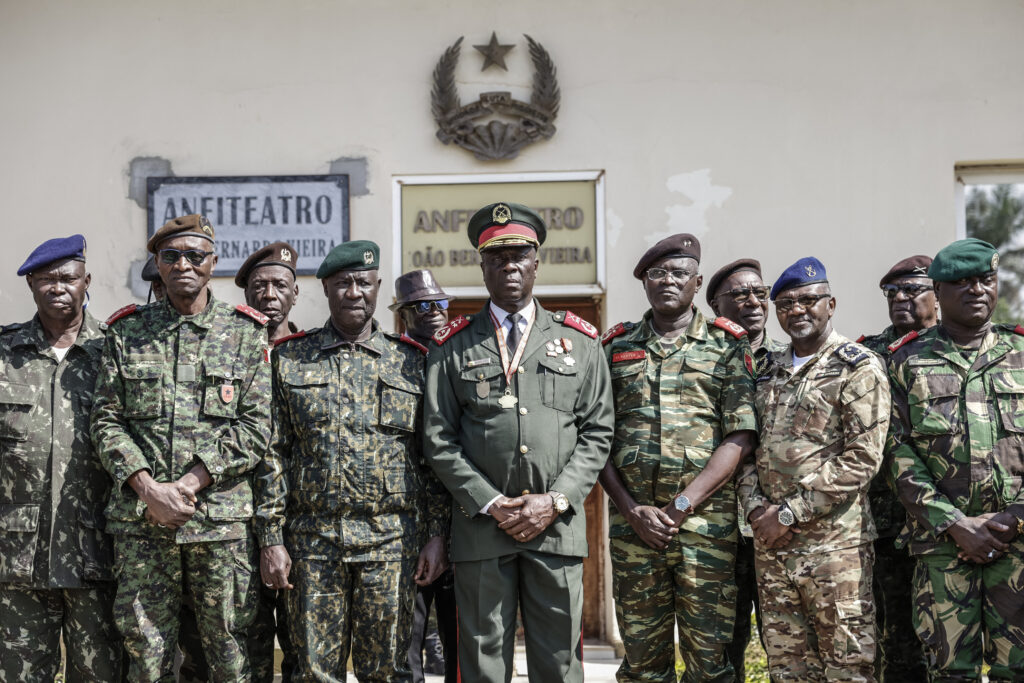
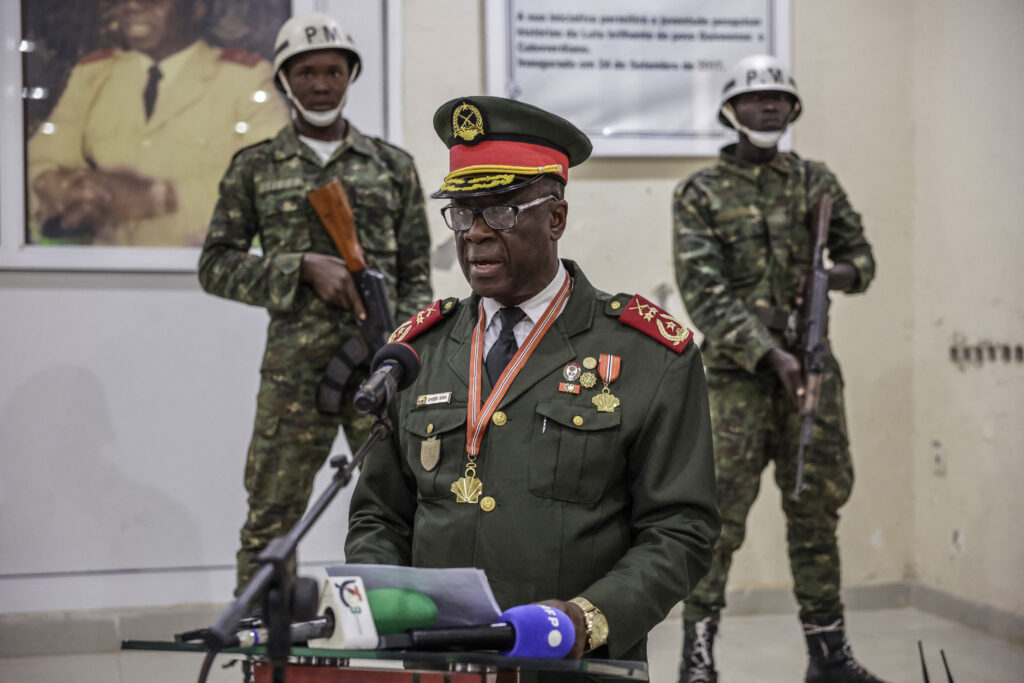
“I have just been sworn in to lead the High Command,” General Horta N’Tam declared after taking the oath of office in a ceremony at the military’s headquarters, AFP journalists observed. Dozens of heavily armed soldiers were deployed at the scene. (Photo by Patrick MEINHARDT / AFP)
Following the overthrow of President Umaro Sissoco Embalo on November 26, the military junta detained several prominent politicians after seizing control of the country just days after the presidential election and before official results were announced.
After suspending the electoral process, Embalo fled Guinea-Bissau. His principal challenger in the election, Fernando Dias, who has insisted that he won the vote, avoided arrest by seeking refuge at the Nigerian embassy.
On Saturday, Dias’s communications manager disclosed that the military had eased most of the restrictions previously imposed on him.
Meanwhile, fellow opposition heavyweight Domingos Simoes Pereira, who had regained his freedom on Friday after spending months in detention, was subsequently placed under house arrest.
Dias “is not under house arrest”, his communications manager Gabriel Ye told AFP.
“The only restrictions imposed on him by the military authorities are that he must refrain from making public statements or engaging in political activities,” he added.
Ye also confirmed that Embalo’s former prime minister, Geraldo Martins, had been released from detention.
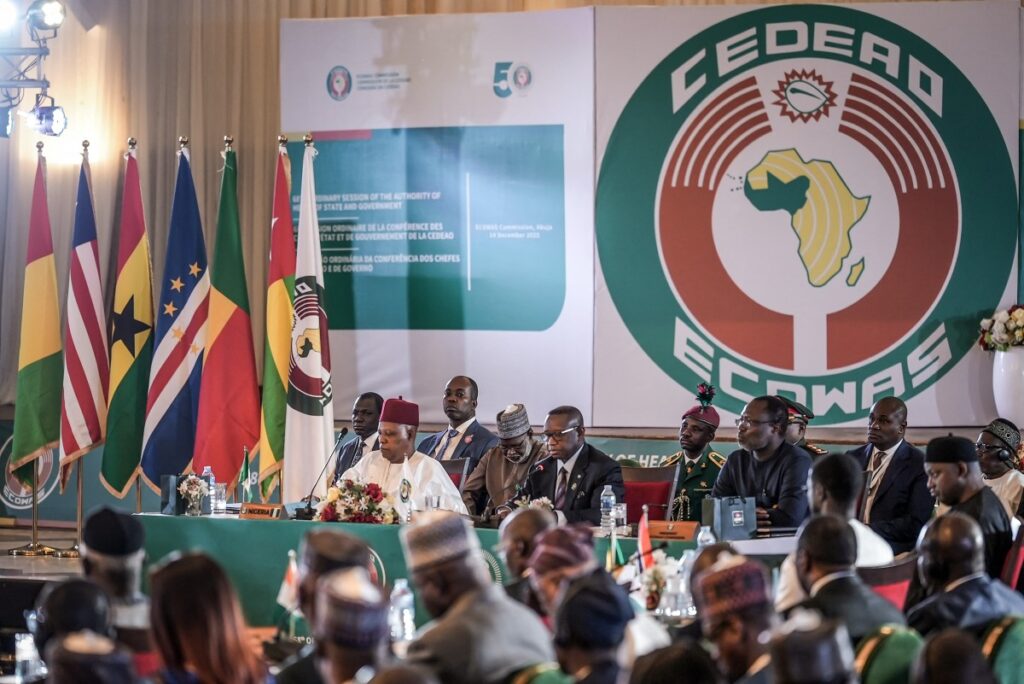
A successful putsch in Guinea Bissau in November and a foiled military takeover in Benin a week ago have rattled regional bloc ECOWAS. (Photo by Light Oriye Tamunotonye / AFP)
In contrast, Pereira — a long-time critic of Embalo — was freed from prison in Bissau on Friday evening but was immediately transferred to house arrest.
“All those detained in connection with the coup have been released,” army commander Jorgito Biague told AFP on Saturday.
“Domingos Simoes Pereira is the only one under house arrest — for economic crimes. His case is in the hands of the judiciary and not the military high command,” he said.
On Friday night, Pereira was accompanied to his home on the outskirts of the capital, where supporters gathered to welcome him with cheers.
Pereira is the leader of the PAIGC party, the movement that guided the coastal West African nation to independence from Portugal in 1974.
He had earlier been barred from contesting the presidential election after submitting his nomination late and later threw his support behind Dias.
Since gaining independence, Guinea-Bissau has endured five successful coups alongside multiple failed attempts at military takeovers.
On Saturday, the Economic Community of West African States (ECOWAS) “welcomed the recent measures taken by the transitional authorities” in Guinea-Bissau, noting that the steps were intended to support “fostering an inclusive political environment and advancing the country’s return to constitutional order”.
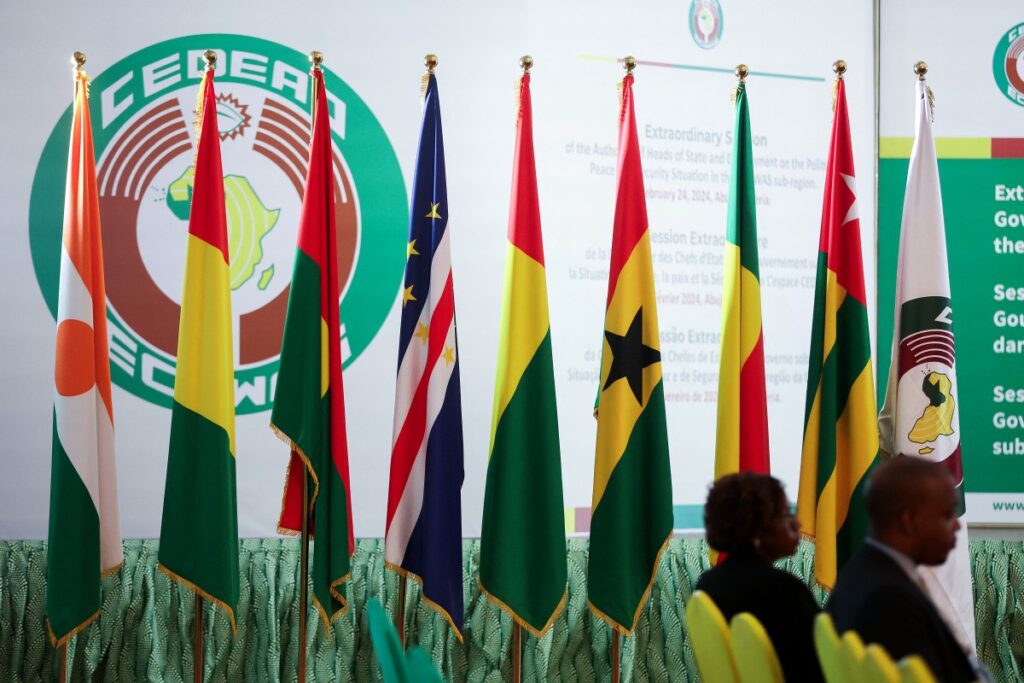
The regional bloc called for the “full release” of Pereira and “guarantees of fundamental rights and freedoms for all citizens”.
ECOWAS further urged “all stakeholders” to cooperate in pursuit of “a peaceful and credible transition leading to democratic elections”.
What you should know
Guinea-Bissau has a long history of political instability marked by repeated military interventions in governance.
The latest coup, which followed a disputed presidential election, has drawn regional and international concern. While the military junta appears to be easing restrictions on some opposition figures, the continued house arrest of Domingos Simoes Pereira highlights unresolved tensions.
ECOWAS remains actively engaged, pressing for respect for civil liberties and a clear roadmap back to democratic rule.
How the transitional authorities handle opposition leaders will likely shape the country’s prospects for a stable and credible return to constitutional governance.