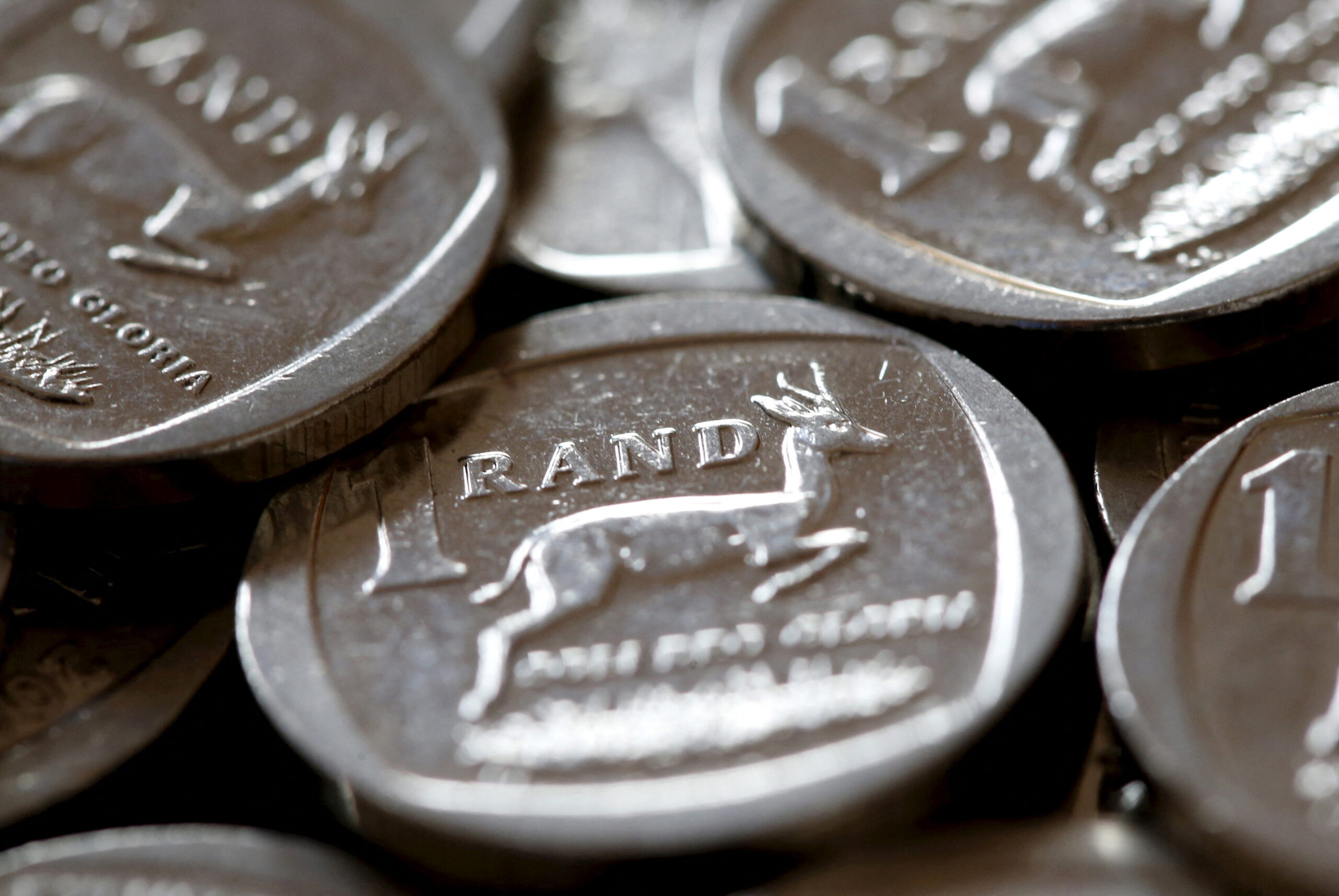
The South African rand gained modest ground in Friday morning trading as financial markets positioned themselves for next week’s critical monetary policy announcement, with investors weighing the implications of the country’s newly recalibrated inflation framework.
The currency appreciated approximately 0.1% against the US dollar, trading at 16.11 as of 0732 GMT, reflecting cautious optimism among market participants ahead of the South African Reserve Bank’s interest rate decision scheduled for the coming week.
The upcoming monetary policy committee meeting carries heightened significance as it marks only the second gathering since Finance Minister Enoch Godongwana formally redefined the central bank’s mandate. The SARB now targets a specific inflation rate of 3%, abandoning its previous target range of 3-6%—a fundamental shift in the institution’s policy framework that has captured the attention of analysts and investors alike.
At its November meeting, the central bank delivered a 25-basis-point rate reduction, signaling the beginning of what many economists believe could be an extended easing cycle. Market watchers are now scrutinizing whether policymakers will continue down this path or adopt a more cautious stance as they navigate toward the new, tighter inflation objective.
Recent economic indicators appear to bolster the argument for additional rate cuts. Statistics South Africa’s December consumer price index data, released earlier this week, showed headline inflation ticking up marginally to 3.6% year-on-year from November’s 3.5% reading—precisely in line with consensus forecasts from Reuters-polled economists.
Crucially, the inflation figure remains comfortably below the previous upper bound of the old target range and relatively close to the new 3% goal, suggesting that price pressures in Africa’s most industrialized economy remain well-anchored despite global economic uncertainties.
Annabel Bishop, chief economist at Investec, provided insight into the central bank’s strategic thinking in a research note distributed to clients. She indicated that the monetary policy committee’s overarching objective is to “suppress the inflation environment and, over the medium term, embed the inflation rate at the new target of 3.0% y/y.”
Bishop’s analysis underscored the delicate balancing act facing Governor Lesetja Kganyago and his fellow committee members: supporting economic growth through lower borrowing costs while ensuring the inflation rate gravitates toward and stabilizes at the more ambitious single-point target.
Despite the recalibrated inflation target potentially requiring a more restrictive policy stance, market analysts have coalesced around the view that the SARB possesses sufficient room to implement multiple interest rate reductions throughout 2025. This expectation rests on the assessment that underlying inflationary dynamics remain subdued, providing policymakers with flexibility to stimulate economic activity.
“Much depends on the inflation outlook and environment, which currently is expected to become embedded at the 3.0% y/y target over the medium term, allowing for a sustained lower interest rate environment,” Bishop elaborated, articulating the prevailing sentiment among financial market participants.
The prospect of an extended easing cycle has implications far beyond currency markets, potentially influencing household consumption, business investment decisions, and South Africa’s broader economic trajectory as the country navigates persistent structural challenges, including elevated unemployment and intermittent energy supply constraints.
The anticipation surrounding the rate decision rippled across South African financial markets on Friday. The Johannesburg Stock Exchange’s Top-40 index climbed 1% in early trading, suggesting equity investors are pricing in a favorable monetary policy environment that could support corporate earnings and economic expansion.
Fixed-income markets similarly reflected optimism about the interest rate outlook. The benchmark 2035 government bond rallied in morning deals, with its yield declining 7 basis points to 8.185%—a movement indicating stronger demand for South African sovereign debt as investors anticipate a potentially dovish policy trajectory.
As financial markets await next week’s announcement, the central bank faces the challenge of communicating how it intends to achieve its new inflation mandate while supporting an economy that has struggled to achieve robust, sustained growth in recent years. The committee’s decision and accompanying policy statement will be scrutinized for clues about the pace and magnitude of future rate adjustments in this transformed policy landscape.
WHAT YOU SHOULD KNOW
The South African rand gained slightly on Friday as markets anticipate the central bank’s interest rate decision next week. The critical development: South Africa’s inflation target has been tightened from a 3-6% range to a fixed 3% goal.
With current inflation at 3.6% and well-contained, analysts expect the Reserve Bank to continue cutting interest rates throughout 2025, supporting economic growth while anchoring prices at the new target.
This shift represents a fundamental change in monetary policy that could usher in a sustained lower interest rate environment for Africa’s most industrialized economy.