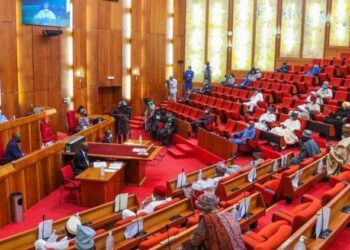
The Chief Judge of Rivers State, Justice Simeon C. Amadi, has declined the request of the Rivers State House of Assembly to constitute a seven-man investigative panel to examine allegations of gross misconduct against Governor Siminalayi Fubara and his deputy, Ngozi Nma-Odu, citing existing court orders and a pending appeal.
Justice Amadi conveyed his position in a formal letter addressed to the Speaker of the Rivers State House of Assembly, Martin Amaewhule, in which he acknowledged receipt of two separate requests dated January 16, 2026.

The requests were made under Sections 188(4) and 188(5) of the 1999 Constitution (as amended), following resolutions of the House to commence impeachment proceedings against the governor and his deputy.
In the letter, the Chief Judge explained that legal constraints prevent him from acting on the requests at this time. “By the doctrine of ‘lis pendens’, parties and the court have to await the outcome of the appeal,” the letter stated in part.
He further clarified that, “In view of the foregoing, my hand is fettered, as there are subsisting interim orders of injunction and appeal against the said orders. I am therefore legally disabled at this point from exercising my duties under Section 188(5) of the Constitution in the instant.”
According to Justice Amadi, the Assembly’s correspondence was accompanied by extensive materials, including copies of the notice of allegations of gross misconduct, the Rivers State Impeachment Panel (Conduct of Investigations) Procedure, 2025, and relevant newspaper publications.
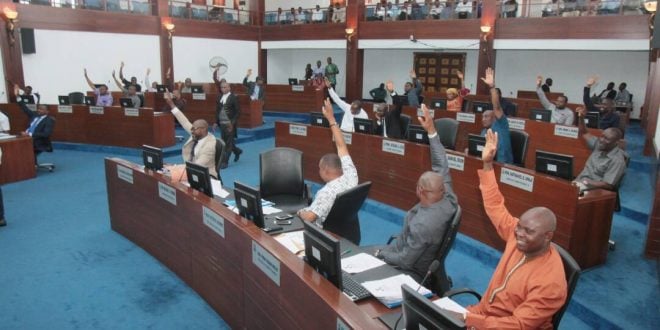
However, he disclosed that prior to receiving the Assembly’s requests, his office had been served with two interim injunctions issued by the Rivers State High Court sitting in Oyigbo on January 16, 2026. The suits, marked OYHC/6/CS/2026 and OYHC/7/CS/2026, were filed separately by the Deputy Governor and Governor Siminalayi Fubara, naming the Speaker and 32 others as defendants, with the Chief Judge listed as the 32nd defendant.
The interim orders, copies of which were attached to the Chief Judge’s response, expressly restrain him from “receiving, forwarding, considering or howsoever acting on any request, resolution, articles of impeachment or other communication” from the House of Assembly relating to the impeachment process for a period of seven days.
Beyond the injunctions, Justice Amadi noted that the House of Assembly has also filed an appeal against the interim orders at the Court of Appeal. He invoked the doctrine of lis pendens, stressing that once an appeal is pending before a higher court, all parties are required to maintain the status quo until the matter is determined.
Emphasising adherence to the rule of law, the Chief Judge stated that all individuals and authorities are bound to obey valid court orders until they are set aside. He supported this position by citing judicial precedent, including Hon. Dele Abiodun v. The Hon. Chief Judge of Kwara State & Ors (2007), where a Chief Judge was criticised for constituting an investigative panel in defiance of a subsisting court order.
Justice Amadi reiterated that his hands are legally tied and that he is presently unable to carry out his constitutional responsibility under Section 188(5) of the Constitution.

The decision has effectively halted the impeachment process initiated by the Rivers State House of Assembly, shifting the dispute squarely into the courts as parties await the outcome of the appeal at the Court of Appeal and the substantive cases before the High Court.
What you should know
The refusal by the Rivers State Chief Judge to constitute an impeachment panel underscores the central role of the judiciary in political disputes involving constitutional processes.
By relying on subsisting injunctions and the doctrine of lis pendens, the court has reinforced the principle that impeachment procedures must not proceed in defiance of judicial orders. This development pauses legislative action against Governor Siminalayi Fubara and his deputy, ensuring that the legal questions surrounding the process are resolved first.
The outcome of the appeal and ongoing suits will determine whether the impeachment bid can lawfully resume or be permanently halted.