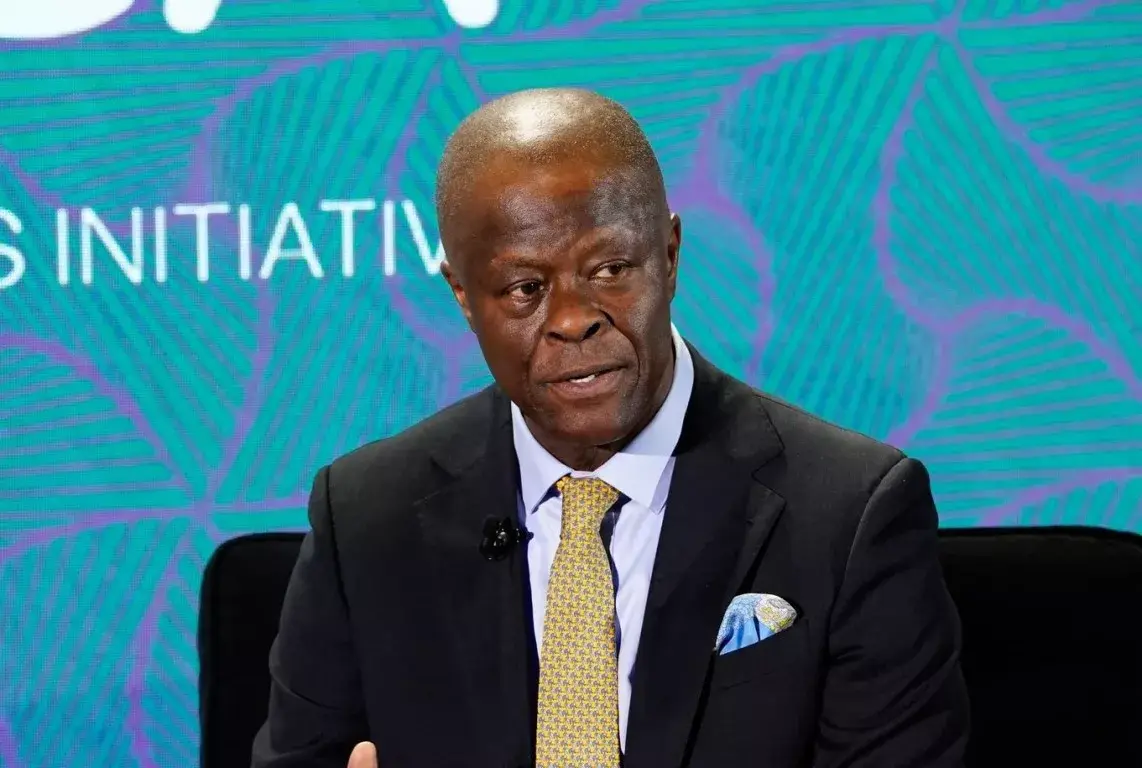
Nigeria’s federal government is charting a new fiscal course, prioritizing domestic resource mobilization over external borrowing as it seeks to stabilize the nation’s economy amid mounting global financial pressures.
Finance Minister Wale Edun made the announcement Tuesday during an appearance on Bloomberg Television at the World Economic Forum in Davos, signaling what could mark a significant shift in Africa’s largest economy’s approach to financing its budget deficits.
“The issue now is to focus on revenue, focus on domestic resource mobilization,” Edun told Bloomberg. “We’re hoping to rely less on borrowing.”
The minister’s comments underscore a fundamental recalibration of Nigeria’s fiscal strategy, coming at a time when developing nations worldwide are grappling with elevated debt servicing costs and reduced access to affordable international financing. While Edun acknowledged that Nigeria retains the option to tap international bond markets if circumstances require, he made clear that such external financing would be a fallback rather than a primary strategy.
This policy direction represents a departure from years of heavy reliance on both domestic and foreign debt to plug budget gaps—a practice that has left Nigeria with debt servicing costs consuming a substantial portion of government revenue.
Central to the government’s revenue mobilization strategy is an ambitious overhaul of Nigeria’s tax system. The administration has set a target to increase tax revenue from approximately 14% of GDP currently to 18% next year—a four percentage point jump that would require significant improvements in tax collection efficiency and compliance.
Nigeria’s tax-to-GDP ratio has long lagged behind both global averages and those of comparable emerging markets, a gap officials attribute to widespread tax evasion, a large informal economy, and inefficient collection mechanisms. The proposed reforms aim to broaden the tax base while modernizing collection systems to capture revenue that has historically slipped through the government’s fingers.
The fiscal policy shift announced in Davos builds on a series of bold economic reforms implemented since President Bola Tinubu took office in 2023. His administration has moved aggressively to dismantle long-standing economic distortions that economists and international financial institutions had long criticized as unsustainable.
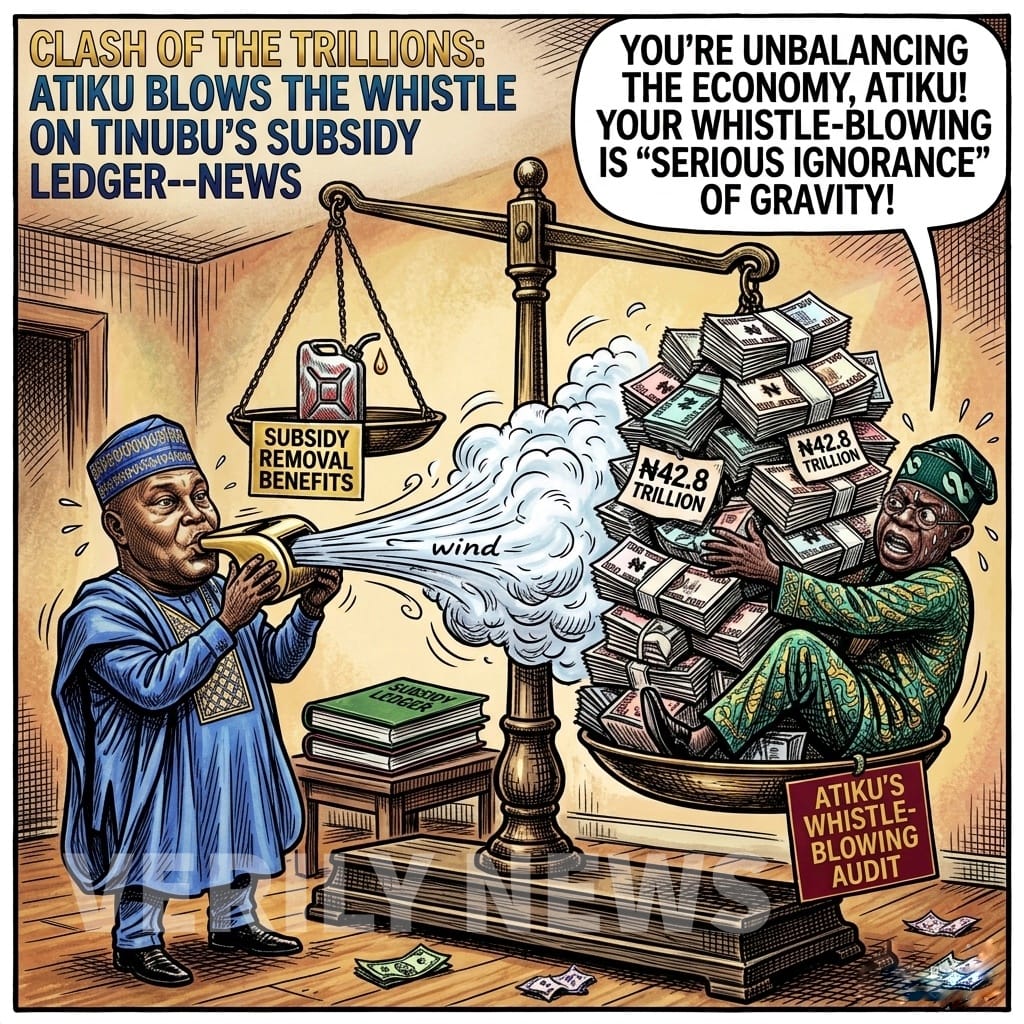
Among the most significant measures was the removal of Nigeria’s costly fuel subsidy—a politically sensitive program that had drained billions of dollars from government coffers annually while primarily benefiting wealthier Nigerians who consume more fuel. The decision, announced shortly after Tinubu’s inauguration, sent fuel prices soaring and triggered public protests, but the government has maintained that the savings will be redirected toward critical infrastructure and social programs.
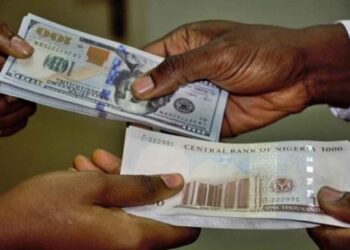
The administration has also eliminated currency restrictions that had created a thriving black market for foreign exchange and discouraged foreign investment. The naira has been allowed to find more market-determined levels, though the currency has depreciated significantly in the process.
These reforms, while aimed at long-term economic sustainability and fiscal health, have come with considerable short-term costs for ordinary Nigerians. Inflation has surged, eroding purchasing power and squeezing household budgets. The removal of fuel subsidies and currency devaluation have driven up the cost of imported goods in a nation heavily dependent on imports for everything from food to manufactured products.
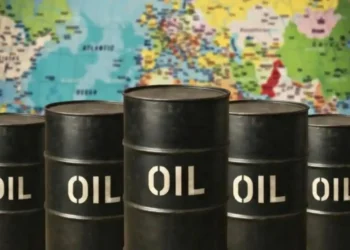
Government officials argue that these painful adjustments are necessary medicine for an economy that has long operated on unsustainable foundations. By reducing reliance on external debt, they contend, Nigeria can free itself from the boom-and-bust cycles tied to global commodity prices—particularly oil, which has traditionally dominated government revenue.
Edun’s remarks in Davos also appeared calculated to reassure international investors that Nigeria is committed to sound fiscal management. The country has struggled in recent years to attract the level of foreign direct investment its economic potential would suggest, with investors citing policy uncertainty, infrastructure deficits, and security challenges as deterrents.
By emphasizing domestic resource mobilization and fiscal discipline, the government is signaling its determination to create a more predictable and sustainable economic environment—one less vulnerable to external shocks and the vagaries of international capital markets.
The success of these initiatives will likely depend on the government’s ability to implement tax reforms effectively while managing the social and political fallout from economic adjustments that have already tested public patience. As Nigeria navigates this delicate balance, the world will be watching to see whether Africa’s most populous nation can transform its fiscal trajectory and establish a new model for economic management on the continent.
WHAT YOU SHOULD KNOW
Nigeria is pivoting away from foreign borrowing toward self-reliance through aggressive tax collection and domestic revenue generation. Finance Minister Wale Edun announced the government aims to boost tax revenue from 14% to 18% of GDP by next year—a dramatic shift for Africa’s largest economy that has historically depended heavily on debt and oil revenues.
This represents a fundamental break from the past. Under President Tinubu, Nigeria has already removed fuel subsidies, scrapped currency controls, and overhauled its tax system—painful reforms designed to build long-term fiscal stability.
While these measures have triggered inflation and squeezed ordinary Nigerians in the short term, the government is betting that reducing debt dependence will free the country from boom-and-bust cycles and attract serious foreign investment.