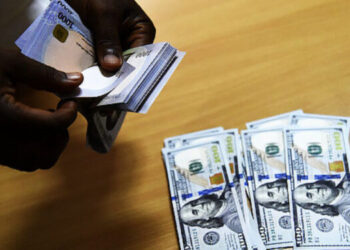
Nigerians have withdrawn a staggering N36.34 trillion from automated teller machines (ATMs) in the first six months of 2025, representing a dramatic 197.66% increase from the N12.21 trillion recorded during the same period in 2024, according to data released by the Central Bank of Nigeria.
The unprecedented surge in cash withdrawals comes despite the introduction of new ATM withdrawal fees by the CBN, raising fundamental questions about the resilience of Nigeria’s cash-based economy and the effectiveness of policies aimed at encouraging citizens to adopt digital payment platforms.
The CBN’s latest quarterly statistical bulletin reveals that transaction volumes mirrored the value surge. Nigerians conducted 858.80 million ATM withdrawals between January and June 2025, up sharply from 496.47 million transactions in the corresponding period of 2024—an increase of 362.34 million transactions, or 72.98%.
The data paints a picture of accelerating momentum throughout the year. First quarter withdrawals totaled N15.97 trillion, compared with just N5.46 trillion in Q1 2024—a remarkable increase of N10.52 trillion, or 192.9%. Transaction volumes during this period jumped from 210.66 million to 411.42 million, representing 95.3% growth.
The second quarter showed even more dramatic growth. Between April and June, Nigerians withdrew N20.36 trillion from ATMs, more than tripling the N6.75 trillion recorded in the same period last year—an increase of N13.61 trillion, or 201.7%. Transaction volumes climbed from 285.81 million to 447.39 million during this period.
Monthly figures underscore the consistency of this trend. January 2025 saw N4.81 trillion in withdrawals compared to N2.15 trillion the previous year, while transactions more than doubled from 69.62 million to 147.24 million. February withdrawals reached N5.40 trillion, up from N1.72 trillion, with volumes rising to 134.59 million.
May 2025 recorded the highest single-month value at N7.44 trillion—nearly three times the N2.49 trillion withdrawn in May 2024. Even June, which saw a slight easing to N6.55 trillion, still far exceeded the N2.45 trillion recorded in June 2024.
The sustained increase in ATM usage presents a complex challenge for policymakers who have been actively promoting cashless transactions. The CBN’s introduction of new withdrawal fees was designed, in part, to discourage cash usage and accelerate the shift toward digital payments. The data suggest these measures have had little deterrent effect.
While point-of-sale transactions continue to dominate in absolute terms—rising from N85.91 trillion to N147.20 trillion in the first half of the year, with volumes increasing from 6.40 billion to 7.72 billion transactions—the growth rate of ATM withdrawals has dramatically outpaced POS expansion.
This divergence highlights what many economists describe as the “dual nature” of Nigeria’s payment ecosystem, where digital infrastructure continues to expand even as cash retains its central role in everyday commerce.
Financial analysts point to several factors driving the persistent demand for cash despite higher withdrawal costs. These include limited POS infrastructure in rural areas, widespread distrust of digital platforms following past technological failures, concerns about transaction fees for digital payments, and the informal nature of much of Nigeria’s economy, where cash remains the preferred medium of exchange.
The data also reflects broader economic pressures. Nigeria has grappled with persistent inflation and currency volatility throughout this period, conditions that often drive citizens to hold physical cash rather than maintain digital balances.
As Nigeria continues its push toward financial digitalization, these figures serve as a stark reminder that policy objectives and on-the-ground economic reality don’t always align. The question facing regulators now is whether additional measures to discourage cash usage will prove any more effective, or whether they risk simply imposing higher costs on citizens without changing fundamental payment behaviors.
WHAT YOU SHOULD KNOW
Despite the Central Bank of Nigeria’s introduction of new ATM withdrawal fees aimed at pushing citizens toward digital payments, Nigerians withdrew nearly three times more cash in the first half of 2025 compared to the same period in 2024—N36.34 trillion versus N12.21 trillion.
This 198% surge demonstrates that higher costs have failed to curb cash demand, revealing a fundamental disconnect between regulatory policy and economic reality.
In Nigeria’s current economic climate, cash remains indispensable to daily commerce, and citizens are willing to pay more to access it rather than shift to digital alternatives. Policymakers must reconsider whether fee-based deterrents alone can drive behavioral change, or if deeper infrastructure and trust issues need addressing first.