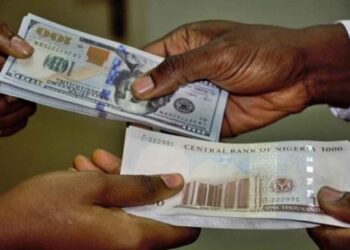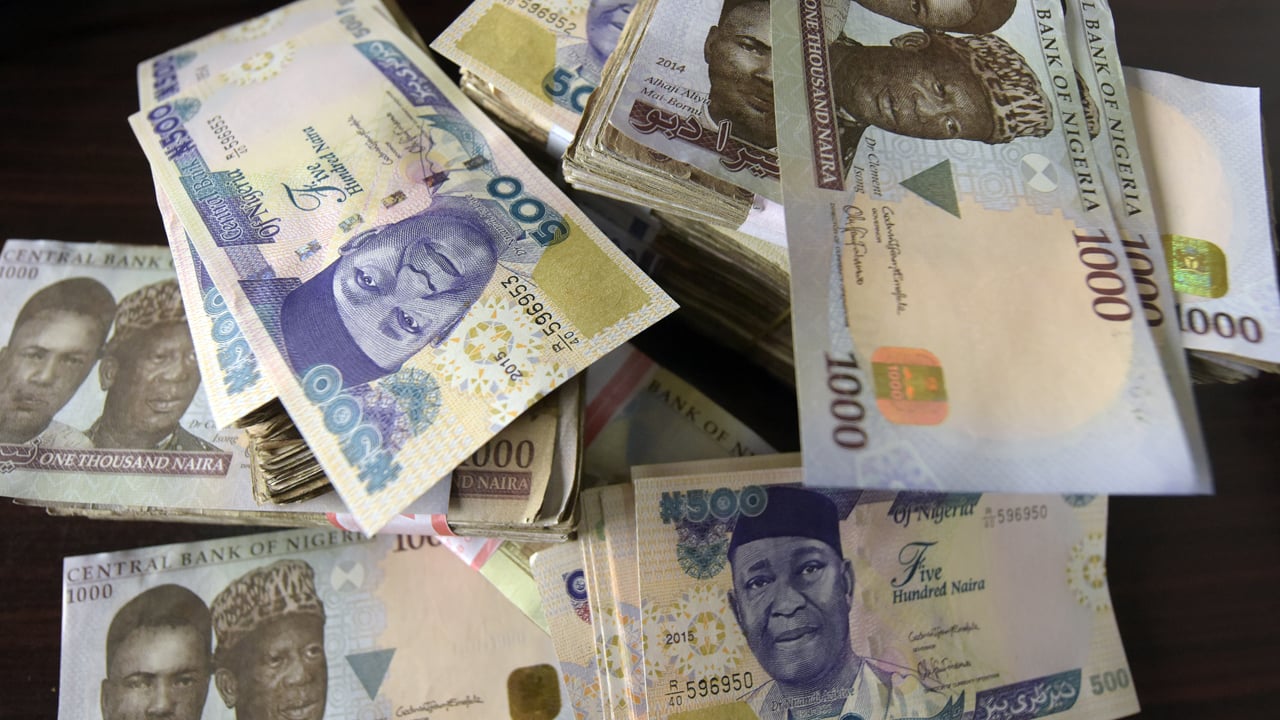
Nigeria’s naira slumped to N1,490 against the dollar in the parallel market this week, opening the widest rift with the official exchange rate in nearly a year and signaling fresh turbulence in Africa’s largest economy despite modest improvements in foreign reserves.
The spread between the two markets reached N73 by the close of trading Friday—the most significant divergence since February 2025—underscoring persistent structural weaknesses in Nigeria’s foreign exchange architecture even as the Central Bank attempts to stabilize the currency through reserve accumulation.
While the official market showed marginal strength, with the naira appreciating to N1,417.95 per dollar from N1,424.5 the previous week, street traders in Abuja’s parallel market told a starkly different story. The currency weakened from N1,477 on January 9 to between N1,489 and N1,490 by week’s end, according to data compiled by Nairametrics Research and confirmed by the Central Bank of Nigeria.
The dichotomy reflects what currency analysts describe as a market under siege from demand-side pressures that official interventions have struggled to contain. Despite the CBN’s efforts to project stability through the regulated channel, ordinary Nigerians seeking dollars for travel, education, or business transactions face dramatically different realities in the unofficial market.
The week brought a rare piece of encouraging news: Nigeria’s foreign exchange reserves edged upward to $45.8 billion from $45.6 billion, according to CBN figures. Central Bank officials attribute the modest $200 million increase to improved oil export revenues and portfolio investment inflows—a welcome development for an economy heavily dependent on petroleum receipts.
Yet the reserve improvement has done little to ease pressure on the currency. Market observers note that while external buffers are strengthening incrementally, demand for foreign exchange continues to outstrip available supply across both official and parallel channels.
“The reserves are moving in the right direction, but the fundamentals haven’t changed,” said one Lagos-based currency dealer who requested anonymity. “Everyone needs dollars, and there simply aren’t enough to go around.”
The widening gap carries particular significance for those who remember February 2025, when Nigeria’s currency markets descended into chaos. On February 5 of last year, the official rate collapsed to N1,499 per dollar while the parallel market soared to N1,605—a disparity that briefly saw the regulated market trading weaker than street rates, an unusual inversion that highlighted the depth of the crisis.
The current N73 spread represents the most severe divergence since that turbulent period, raising concerns that Nigeria may be sliding back toward the instability that characterized the early months of 2025.
At year-end 2025, the gap had already begun widening significantly, with the parallel market closing at approximately N1,470 per dollar against the official rate of N1,429. The deterioration has accelerated in recent weeks despite seasonal expectations of improved dollar liquidity in the first quarter.
Currency specialists view the expanding differential as more than a statistical curiosity. The gap creates profitable arbitrage opportunities for those with access to both markets, effectively rewarding well-connected individuals and businesses who can purchase dollars at official rates and resell them at parallel market premiums.
More significantly, the divergence reflects growing numbers of Nigerians unable to access foreign exchange through legitimate channels, forcing them into the unregulated Bureau de Change segment, where rates respond more directly to supply shortages.
“When the gap widens like this, it tells you that official allocations aren’t meeting market needs,” explained a forex analyst at a Lagos investment firm. “People are being rationed out of the official market and have no choice but to pay premium rates on the street.”
Historically, prolonged disparities between the two markets have exerted gravitational pull on the official rate, eventually forcing the CBN to allow devaluation to narrow the spread. The central bank has responded to similar episodes with direct dollar sales and other interventions designed to close the gap and restore confidence in the managed exchange rate system.
As the trading week closes, all eyes turn to the CBN’s next move. Will policymakers deploy reserves to defend the official rate and narrow the spread through market interventions? Or will they allow the gap to persist, risking further erosion of confidence in Nigeria’s dual exchange rate system?
The stakes extend beyond currency markets. A persistently weak naira drives up import costs, fueling inflation that has already strained Nigerian households. It also influences business planning, investment decisions, and the broader economic expectations that shape Nigeria’s growth trajectory.
For now, the numbers tell a story of an economy caught between competing pressures—modest reserve growth offering hope on one hand, relentless currency depreciation stoking anxiety on the other. As one market trader put it succinctly: “The official numbers look better, but nobody’s celebrating when you need N1,490 to buy a dollar on the street.”
The Central Bank has not yet commented publicly on this week’s developments or indicated whether fresh interventions are planned.
WHAT YOU SHOULD KNOW
Nigeria’s naira fell to N1,490 per dollar in the parallel market this week, creating a N73 gap with the official rate—the widest divergence in 11 months.
The official market showed the naira at N1,417.95 per dollar on Friday, a slight improvement from N1,424.5 the previous week. But street traders in Abuja reported rates between N1,489 and N1,490, up from N1,477 on January 9.
The widening spread marks the largest gap since February 2025, when the official rate hit N1,499 and the parallel market reached N1,605.