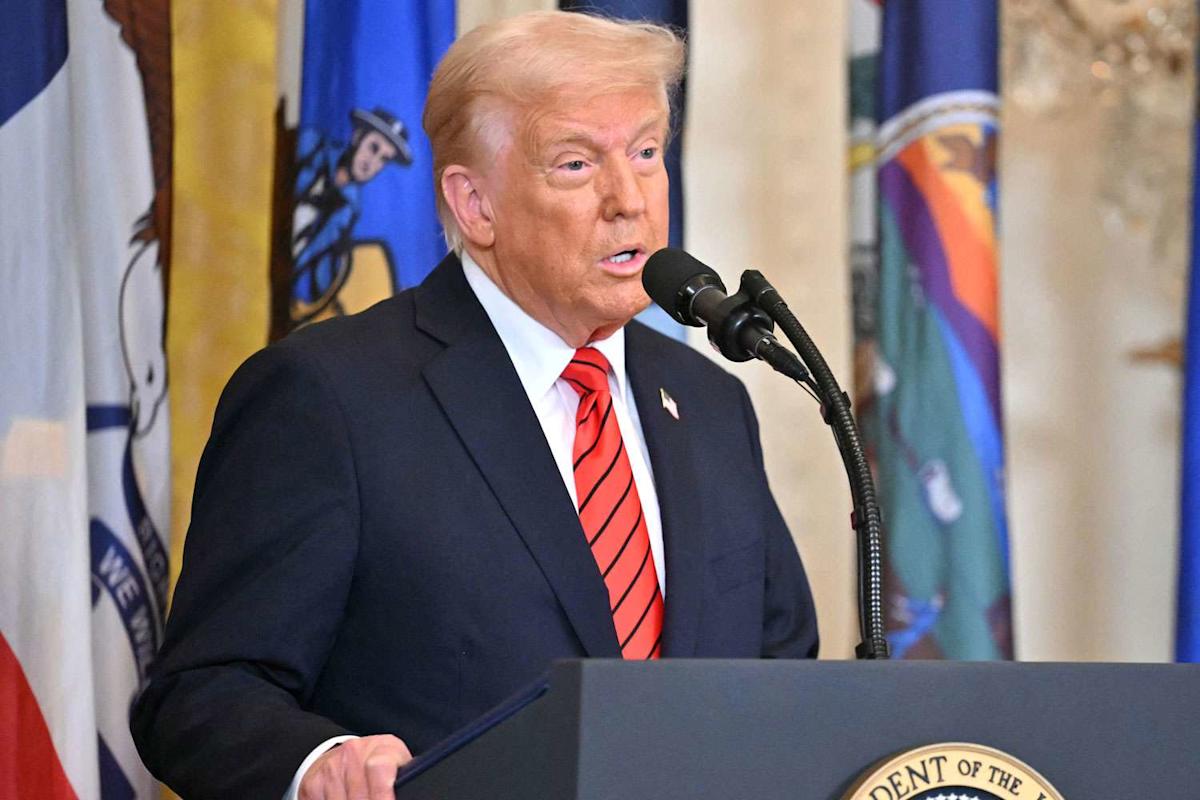
U.S. financial markets opened the week under a cloud of uncertainty on Monday as shares of major banks and credit card companies plunged following President Donald Trump’s unexpected call for a temporary cap on credit card interest rates—a move that could fundamentally reshape consumer lending and strip billions of dollars from the industry.
In pre-market trading, the nation’s banking giants bore the brunt of investor anxiety. JPMorgan Chase and Bank of America, the two largest U.S. lenders by assets, saw their shares drop 3.2% and 2.5%, respectively. Citigroup tumbled 3.6%, while Wells Fargo declined 2.2%. The sell-off reflected Wall Street’s swift judgment that Trump’s proposal, announced Friday, poses a direct threat to one of the banking sector’s most lucrative revenue streams.
Trump’s plan would impose a 10% ceiling on credit card interest rates for one year beginning January 20, though the president offered no concrete details on enforcement mechanisms or the legal framework needed to compel compliance from financial institutions. The average credit card interest rate currently hovers around 20%, according to Federal Reserve data, meaning the proposed cap would effectively slash rates in half for many consumers.
Financial analysts were quick to warn of unintended consequences that could ultimately harm the very consumers the policy aims to protect.
“This rate cap would not address the root of the problem and could push consumers towards more expensive debt,” wrote Vivek Juneja, a J.P. Morgan analyst, in a research note distributed to clients Monday morning. “It could push more borrowing away from banks into other unsecured loans such as pawn shops and other non-bank consumer lenders.”
The market reaction extended well beyond traditional banking institutions. American Express, which derives substantial revenue from its credit card operations, tumbled 4% in pre-market trading. Payment processing giants Visa and Mastercard, whose business models depend on transaction volumes that could shrink if credit availability contracts, slipped 1.2% and 2%, respectively.
Consumer finance companies faced even steeper losses. Synchrony Financial, Bread Financial, and Capital One—firms that specialize in consumer credit products—saw their shares crater between 8% and 10%, reflecting investor concerns that their business models could become untenable under the proposed rate structure.
Despite the market turmoil, legal and policy experts expressed skepticism about whether Trump could implement such a cap through executive action alone.
“This idea has been raised by Trump previously and also by a couple of members of Congress in the past,” Juneja noted, adding that “it is unclear whether Congress would enact anything for just one year.” Most constitutional scholars agree that imposing interest rate caps would require congressional legislation and likely exceeds the scope of presidential authority.
The proposal echoes previous populist efforts to rein in credit card rates, including bills introduced by progressive Democrats, but none have gained sufficient political traction to become law. The banking industry has historically wielded significant lobbying power on Capitol Hill, and any legislative effort would face fierce opposition from financial sector trade groups.
Brian Jacobsen, chief economic strategist at Annex Wealth Management, painted a stark picture of how the proposed cap could distort credit markets.
“When companies can’t price the risk properly, they’ll just reduce credit lines or cut off access to credit entirely,” Jacobsen said. “Buy now, pay later firms and payday lenders might love this proposal.”
Indeed, shares of Affirm, a leading “buy now, pay later” platform that offers short-term installment loans as an alternative to credit cards, rose 2% Monday—a rare bright spot in an otherwise dismal day for financial stocks. The gains suggest investors believe alternative lending models could capture market share if traditional banks curtail credit card availability.
The timing of Trump’s announcement could scarcely be more dramatic for the financial industry. The U.S. banking sector launches its fourth-quarter earnings season this week, with JPMorgan Chase scheduled to report results on Tuesday. Bank of America, Citigroup, and Wells Fargo will follow in quick succession.
Investors and analysts will be listening closely during earnings calls for any commentary from bank executives about the potential impact of the proposed rate cap and how their institutions might adapt their lending practices in response. The results will also provide a snapshot of the sector’s health heading into what could be a period of significant regulatory upheaval.
As markets digest the implications of Trump’s proposal, one thing remains clear: whether the president possesses the authority to implement such a cap or not, the mere threat has already sent shockwaves through an industry that sits at the heart of American consumer finance. The coming days will reveal whether this proves to be a fleeting political gesture or the opening salvo in a fundamental restructuring of how Americans borrow money.
WHAT YOU SHOULD KNOW
President Trump’s proposed 10% cap on credit card interest rates triggered sharp sell-offs across the financial sector on Monday, with major banks losing billions in market value. While the move aims to help consumers, experts warn it could backfire spectacularly—forcing banks to cut off credit access to riskier borrowers and pushing desperate consumers toward predatory lenders like payday loan companies and pawn shops.
Legal experts doubt Trump has the authority to impose this cap without Congress, and even if enacted, restricting how lenders price risk typically doesn’t make credit cheaper—it just makes it disappear for those who need it most. Wall Street is betting this proposal won’t materialize, but the uncertainty alone has already rattled markets as earnings season begins.