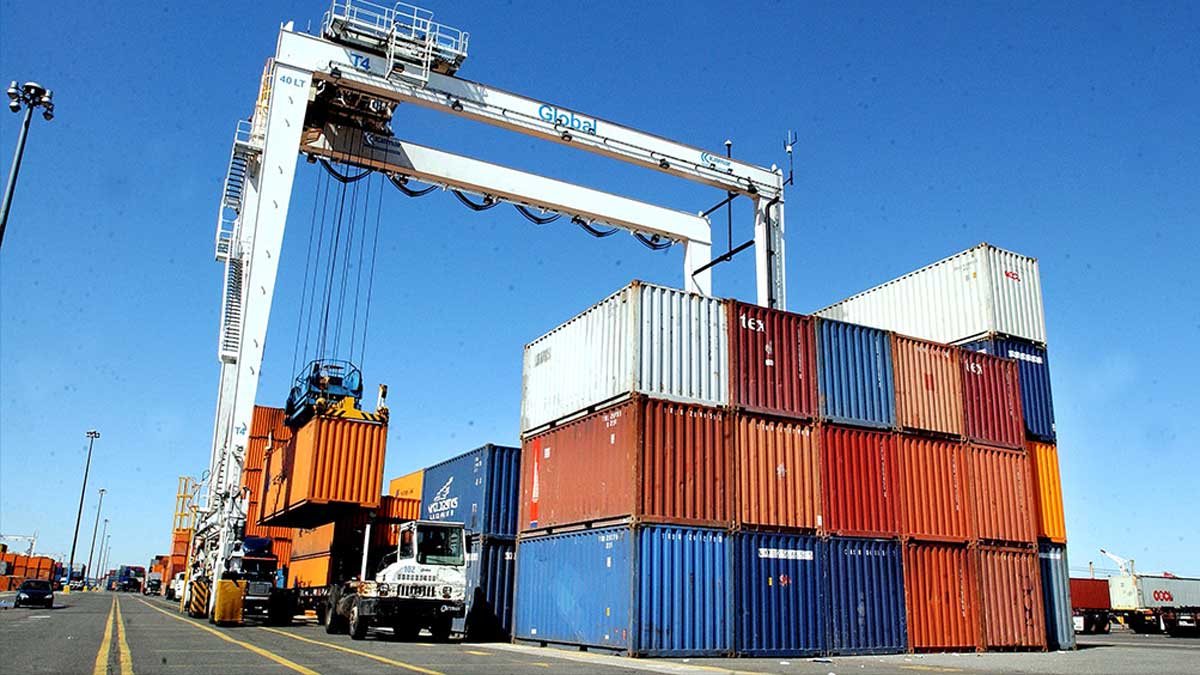
The global business environment deteriorated markedly throughout 2025, with corporate executives reporting mounting obstacles to cross-border commerce as international cooperation frayed across critical areas from trade policy to climate action, according to a comprehensive survey released on Thursday by the World Economic Forum.
The findings, unveiled just weeks before global leaders convene at the organization’s annual gathering in Davos, Switzerland, underscore the growing challenges multinational corporations face as geopolitical fragmentation accelerates and the post-Cold War consensus on globalization continues to unravel.
The WEF’s Global Cooperation Barometer 2026, based on responses from 799 senior executives across 81 economies through a McKinsey global survey panel, revealed that 43% of business leaders found operating conditions more difficult in 2025 compared to the previous year. A mere 7% reported improved conditions, while the remainder indicated no significant change or declined to offer an opinion.
Nearly four in ten executives cited escalating barriers to the movement of goods, talent, and capital across borders as primary obstacles to business operations—a concern more than four times greater than the 10% who reported easing restrictions. The stark disparity reflects a business community grappling with what many analysts characterize as a return to economic nationalism and protectionism not seen since before the establishment of the modern global trading system.
“Undeniably, a series of U.S. tariff announcements in 2025 raised questions about the future of trade,” the WEF report stated, referring to the sweeping duties unveiled by President Donald Trump in April that sent shockwaves through international supply chains and tested decades-old trade relationships.
The Trump administration‘s tariff regime, which targeted a broad swath of America’s trading partners, initially threatened to upend the intricate web of global manufacturing and distribution networks that corporations had spent decades building. However, the White House subsequently moderated its approach, negotiating bilateral agreements and selectively reducing tariffs as individual countries reached accommodations with Washington.
The fact that six out of ten executives did not specifically identify trade issues as worsening suggests that many multinational corporations have proven adaptable, reconfiguring supply chains, diversifying sourcing strategies, and adjusting market approaches to navigate the turbulent policy environment, according to the WEF’s analysis.
Perhaps more troubling for long-term economic stability, 42% of executives reported declining cooperation on peace and security issues—more than three times the 13% who perceived improvements. This anxiety reflects ongoing conflicts, rising tensions in multiple global hotspots, and growing concerns about the reliability of traditional security arrangements that have underpinned international commerce for generations.
The climate and natural resources domain presented a similarly fragmented picture, with 29% of executives reporting deteriorating cooperation compared to 17% who saw progress. The divide illustrates the increasingly politicized nature of climate policy, as nations balance economic competitiveness concerns against environmental commitments.
Yet despite the pessimism about international coordination, the report documented significant momentum in the energy transition. Global investment in renewable energy surged nearly 10% in the first half of 2025 compared to the same period in 2024, while installed solar and wind capacity jumped 67% to reach 408 gigawatts—suggesting that market forces and technological advances may be driving decarbonization even as diplomatic cooperation falters.
A separate WEF poll conducted in September among members of its Global Future Councils—a network of academic experts, policy specialists, and thought leaders—revealed even deeper concerns about the state of global cooperation. A striking 85% of these respondents believed international collaboration had declined in 2025 versus 2024, suggesting that those studying geopolitical trends may perceive dangers that business leaders focused on quarterly results have yet to fully appreciate.
The divergence between executive and expert assessments raises questions about whether corporate adaptation strategies may prove insufficient if underlying cooperation continues to erode or whether academics and policy specialists may be overstating risks that pragmatic business leaders are successfully managing.
As world leaders, corporate chieftains, and civil society representatives prepare to gather in the Swiss Alps later this month, the WEF’s findings provide a sobering backdrop for discussions about rebuilding the frameworks of international cooperation that many argue are essential not just for business prosperity, but for addressing transnational challenges from pandemic preparedness to artificial intelligence governance.
The survey results suggest that 2025 may be remembered as a pivotal year when the centrifugal forces of nationalism and fragmentation gained significant ground against the integrating pressures that have characterized the global economy for decades, with profound implications for how companies operate and how nations interact in the years ahead.
WHAT YOU SHOULD KNOW
Global business conditions deteriorated sharply in 2025, with 43% of executives reporting increased difficulty doing business—driven primarily by rising trade barriers, fractured security cooperation, and geopolitical fragmentation.
While President Trump’s April tariff announcements initially rattled markets, many companies proved adaptable, finding ways to navigate the turbulence. However, the deeper concern is that international cooperation is breaking down across multiple fronts simultaneously—trade, security, and climate—signaling a fundamental shift away from decades of globalization.