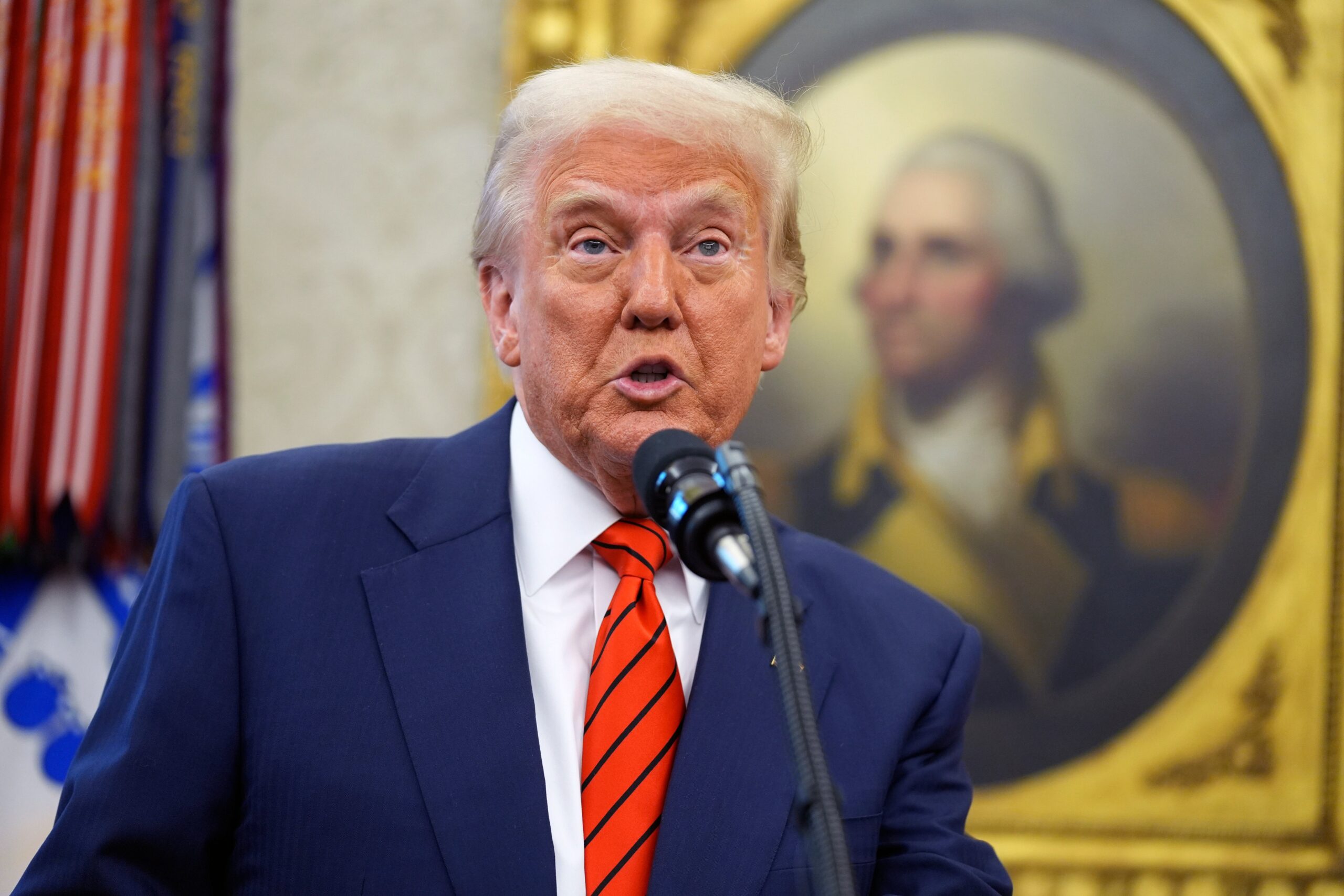
President Donald Trump on Tuesday declared that Venezuela is set to transfer tens of millions of barrels of crude oil to the United States, only days after a dramatic US military operation removed the country’s anti-American president and installed a more accommodating interim leader.
According to Trump, between 30 and 50 million barrels of what he described as “high-quality, sanctioned” Venezuelan oil will be delivered to American ports, with the proceeds, estimated at more than $2 billion at prevailing market rates, placed under his direct control.

The announcement immediately raised questions, as there was no clarity on whether Venezuela’s interim leader, Delcy Rodriguez, had formally approved the arrangement, how such a transfer would be implemented, or the legal framework supporting it.
Should the claim be confirmed, it would mark the clearest indication yet that Venezuela’s new, military-backed leadership is prepared to comply with an extraordinary set of demands from Washington. Venezuelan officials, however, did not issue any immediate response to requests for comment.
The developments follow a US operation last Saturday in which American special forces seized President Nicolas Maduro and his wife in Caracas and transported them to New York to face drug-related charges. Since that operation, Trump has repeatedly asserted that the United States will “run” Venezuela and that American companies will take charge of exploiting the country’s oil resources, which are the largest proven reserves globally.
Rodriguez, who previously served as vice president and energy minister under Maduro, has pledged cooperation with the United States amid concerns that Trump may pursue a broader agenda of regime transformation.
The US president has warned that she would face “a very big price, probably bigger than Maduro” if she fails to comply with Washington’s expectations, which include surrendering control of the oil sector and loosening alliances with Cuba, China, Iran, and Russia. Despite these pressures, Rodriguez has at times adopted a defiant tone and appeared aligned with hardline figures who dominate the military, police, and intelligence institutions.
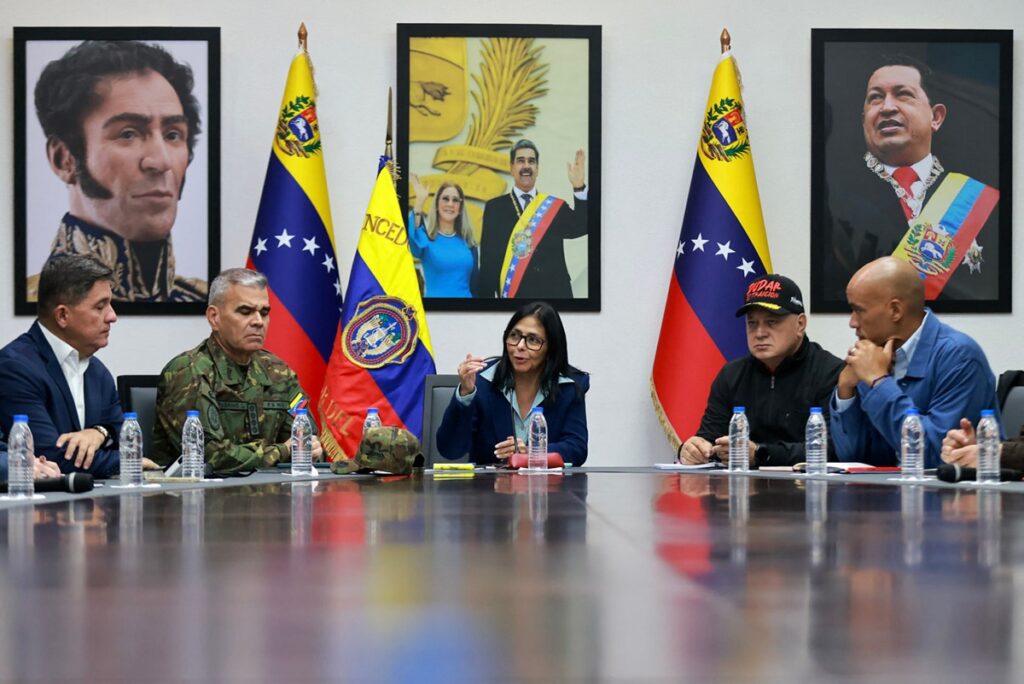
“The government of Venezuela is in charge in our country, and no-one else”, Rodriguez said on Tuesday. “There is no foreign agent governing Venezuela.”
Trump, in contrast, has insisted that Washington is now “in charge” of Venezuela and has outlined what he portrays as a new doctrine of American dominance across the western hemisphere. Former Venezuelan diplomat Alfredo Toro Hardy criticised this posture, saying, “Trump is unapologetically establishing a US Protectorate over a sovereign country and claiming to have a right over its resources”, describing it as “something not seen in Latin America for over a century”. Trump has instructed Energy Secretary Chris Wright to “immediately” oversee the transfer and sale of the 30 to 50 million barrels of oil.
Analysts note that Rodriguez faces an uphill battle to maintain her grip on power, as she attempts to balance US pressure with the demands of entrenched hardliners who command security forces and paramilitary groups. She has sought to project unity alongside Interior Minister Diosdado Cabello and Defence Minister Vladimir Padrino Lopez, widely regarded as the principal power brokers from the Maduro era.
Since the weekend operation, security forces have been highly visible across Caracas, while Cabello has led large demonstrations of Maduro loyalists calling for the former president’s release. Venezuelan authorities have yet to provide a definitive death toll from the US strikes that led to Maduro’s capture. On Tuesday, the military released the names of 23 soldiers, including five generals, killed during the attacks. Cuba, Venezuela’s close ally, separately announced that 32 Cuban military personnel, many attached to Maduro’s security detail, also lost their lives.
Attorney General Tarek William Saab referred to “dozens” of civilian and military casualties without offering specifics. In response, Rodriguez declared a seven-day national mourning period for those killed. “We are a people that does not surrender, we are a people that does not give up,” she said, honouring what she called the “martyrs” of the US assault.
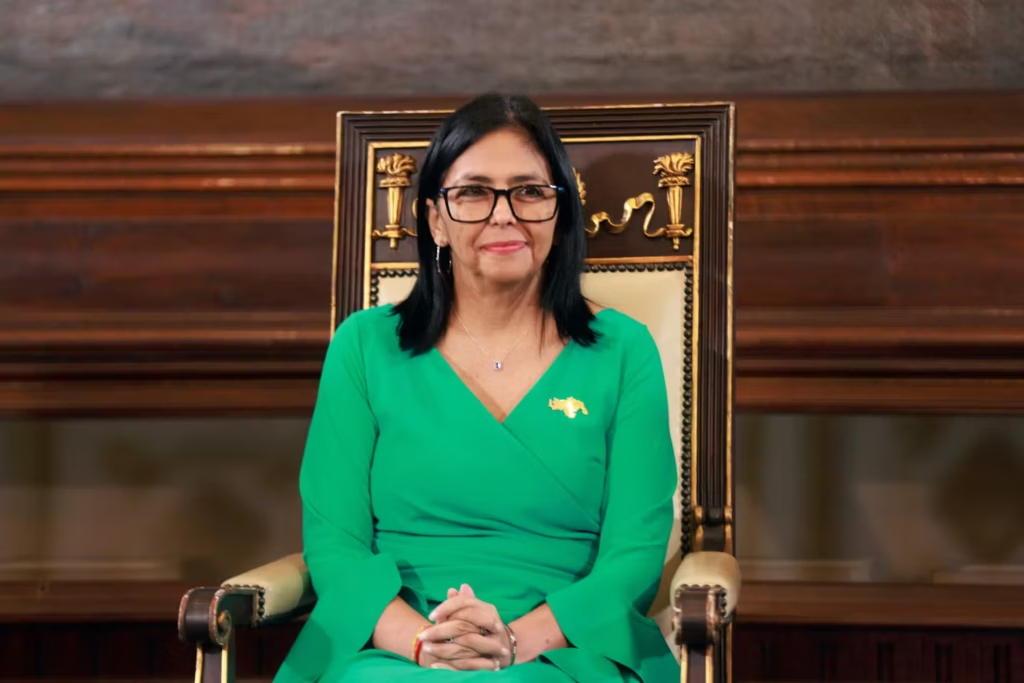
Meanwhile, the White House has dismissed suggestions that Venezuela’s democratic opposition, widely believed to have won last year’s elections, should assume power. Opposition leader Maria Corina Machado, who has been marginalised in the post-Maduro transition, told Fox News that Rodriguez could not be trusted. “She’s the main ally and liaison with Russia, China, Iran, certainly not an individual that could be trusted by international investors,” she said.
Signs of continued repression have also emerged. A journalists’ union reported that 16 journalists and media workers were detained on Monday, although all were later released. Trump told Republican lawmakers that Maduro was a “violent guy” who “killed millions of people” and claimed that Rodriguez’s administration was dismantling a torture facility in Caracas.
Under Venezuela’s constitution, once Maduro is officially declared absent, a process that could take up to six months, fresh elections are required to be held within 30 days.
What you should know
The situation in Venezuela has entered a highly volatile phase following direct US military involvement and the removal of President Nicolas Maduro.
President Donald Trump’s claim that Venezuela will hand over vast quantities of oil underscores a shift toward unprecedented American influence over the country’s resources and political direction. While interim president Delcy Rodriguez has signalled cooperation, her position remains fragile due to internal resistance from powerful security figures and public unrest.
International concern is growing over sovereignty, legality, and human rights, as casualties from the operation mount and political freedoms remain constrained.