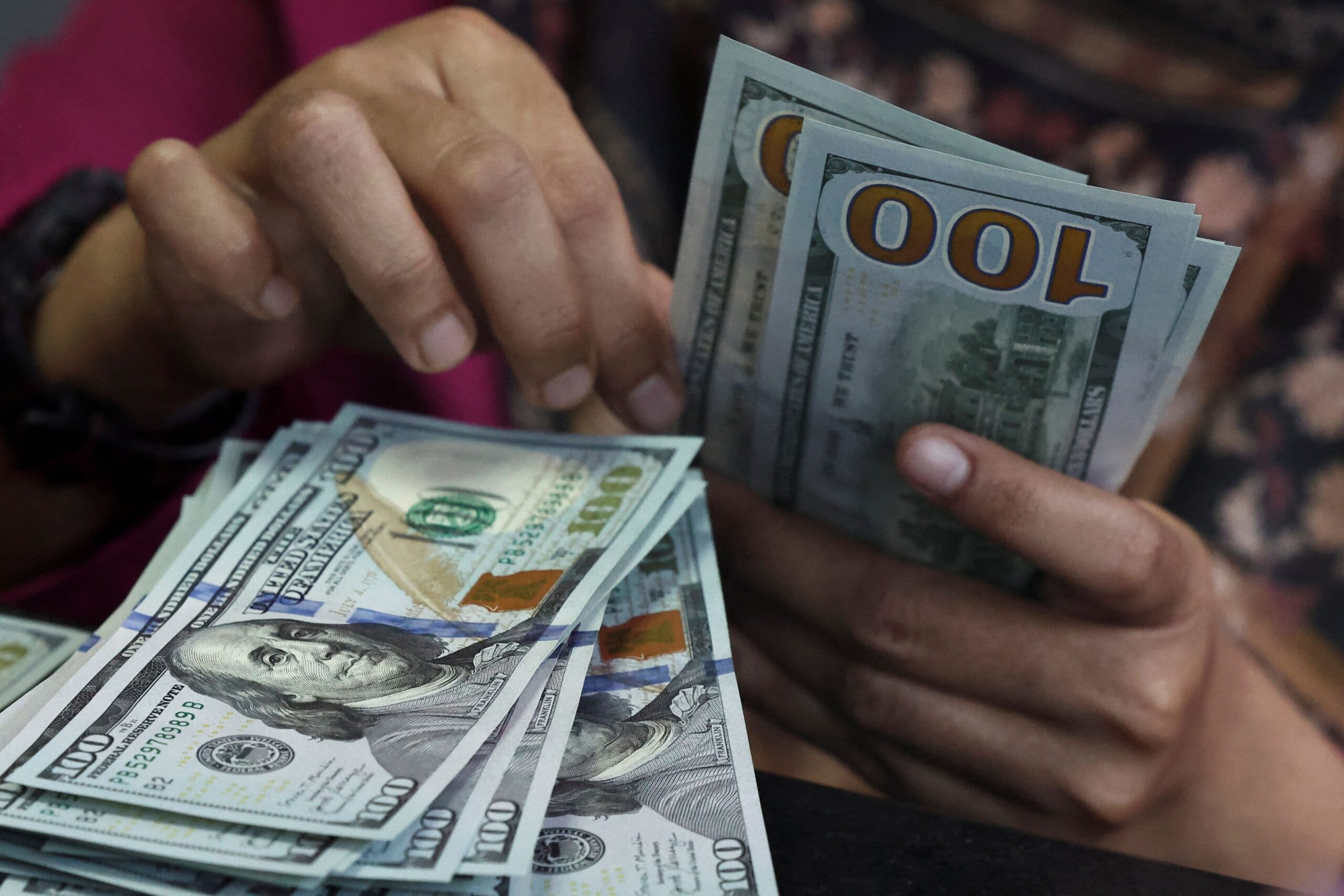
The U.S. dollar powered higher across major currency pairs on Monday, marking a forceful start to 2026’s first full trading week as investors shrugged off geopolitical turbulence to concentrate on upcoming economic data that could reshape Federal Reserve monetary policy expectations.
The greenback climbed to a three-and-a-half-week peak against the euro, advancing 0.3% to $1.1682 after touching $1.1672 earlier in the session—its strongest showing since December 10. Against the yen, the dollar surged to 157.295, while reaching two-week highs versus both the Swiss franc at 0.7951 and the Canadian dollar at C$1.37771, levels not seen since December 22.
Remarkably, currency markets appeared largely unmoved by the weekend’s dramatic developments in Venezuela, where U.S. forces conducted a raid that resulted in the capture of President Nicolas Maduro. Instead, traders are firmly focused on a critical slate of U.S. macroeconomic releases scheduled throughout the week.
“I dare say the FX complex is not much of a reflection of risks stemming from Venezuela but more about what the U.S. data is going to tell us about the Fed’s policy path,” explained Kyle Rodda, senior financial markets analyst at Capital.com.
The data calendar begins Monday with ISM manufacturing figures and builds toward Friday’s closely watched monthly nonfarm payrolls report—potentially the most significant release for Fed policy direction.
Recent resilient U.S. economic data has prompted markets to reconsider the trajectory of Federal Reserve interest rate cuts in 2026. According to LSEG calculations based on futures contracts, traders currently anticipate just two rate reductions this year—a notably cautious outlook that reflects the economy’s continued strength.
Adding another layer of uncertainty, investors are awaiting President Donald Trump‘s selection for the next Federal Reserve chair, with current Chair Jerome Powell’s term set to expire in May. Trump has promised to announce his choice this month, stating his preference for “someone who believes in lower interest rates, by a lot”—a comment that has sparked considerable speculation about the future direction of monetary policy.
Across the Pacific, Bank of Japan Governor Kazuo Ueda reiterated on Monday that the central bank intends to continue raising interest rates, provided economic and price developments align with forecasts. The statement echoes comments Ueda has made repeatedly in recent months, including following December’s decision to lift rates to their highest level in three decades.
The dollar’s strength extended across other major pairs, with the greenback gaining 0.1% against the British pound to $1.3425 and advancing 0.3% versus the Australian dollar to $0.6670.
As the week progresses, all eyes remain fixed on the incoming economic data, which will prove crucial in determining whether the dollar’s rally has further room to run and how aggressively—or cautiously—the Federal Reserve will navigate policy decisions in the months ahead.
WHAT YOU SHOULD KNOW
The U.S. dollar surged to multi-week highs across major currencies as traders ignored the dramatic capture of Venezuela’s president to focus on what really matters: upcoming U.S. economic data that will determine if the Federal Reserve cuts interest rates twice this year or holds tighter for longer.
Markets are betting America’s economic resilience means fewer rate cuts—and with President Trump set to name a new Fed chair who favors “lower interest rates, by a lot,” this week’s jobs and manufacturing data could prove pivotal in shaping monetary policy for 2026.