Global financial markets entered the final trading session of 2025 on a subdued note on Wednesday, with Asian equities displaying divergent movements as investors wound down activity ahead of the New Year holiday period.
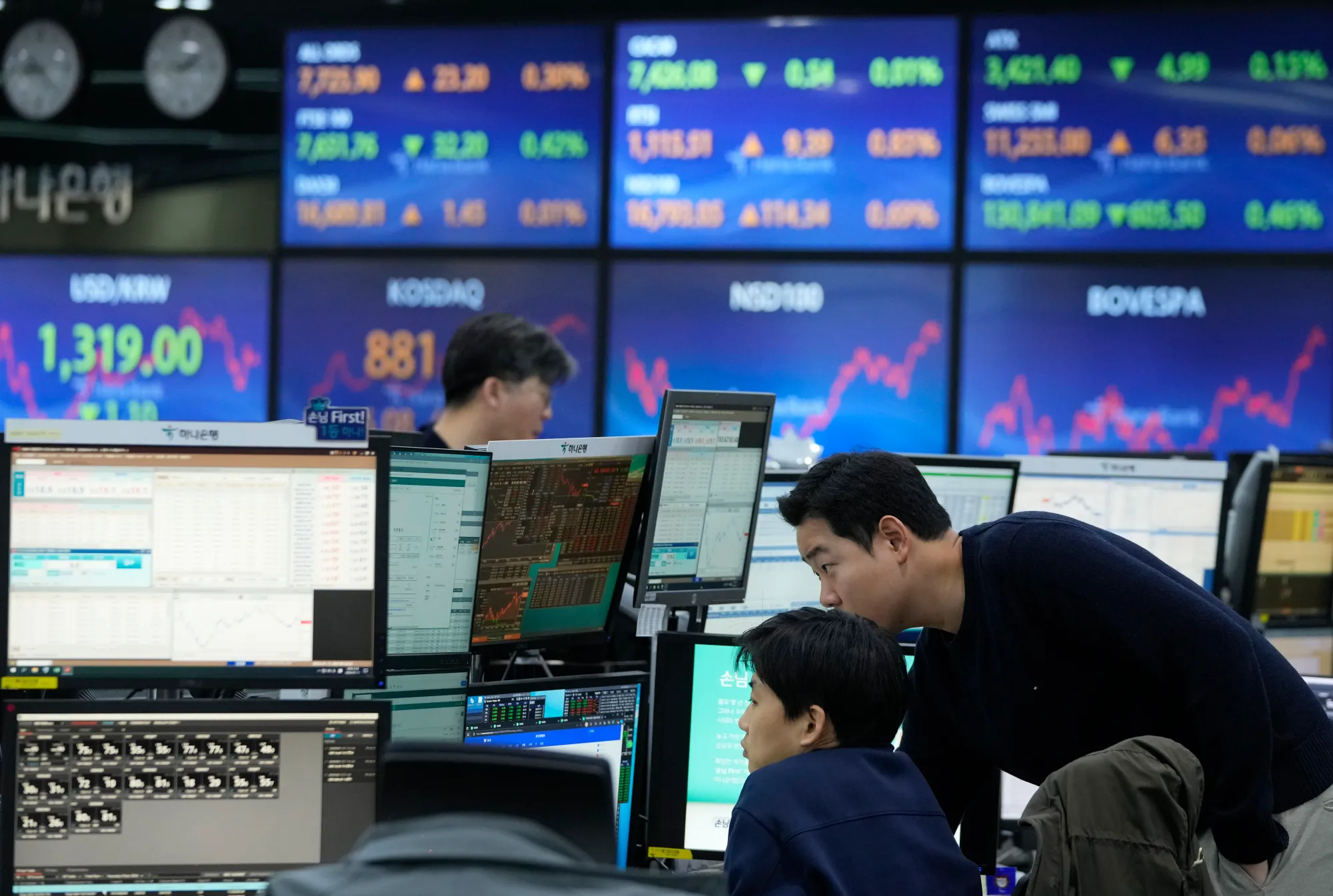
The regional picture reflected typical year-end caution, with Hong Kong’s Hang Seng Index declining 0.8 percent to 25,652.98 in early trading, while Australia’s main index also retreated. Meanwhile, mainland China’s Shanghai Composite edged up 0.2 percent to 3,974.43, and Taiwan’s market posted modest gains during the morning session.
Trading volumes remained characteristically light throughout the holiday-shortened week, as many institutional investors had already closed their books for the year. Major markets, including Tokyo and Seoul, remained shuttered for year-end holidays.
The cautious tone in Asian trading followed a marginally negative session on Wall Street, where the Dow Jones Industrial Average slipped 0.2 percent to close at 48,367.06 on Tuesday. The decline reflected ongoing investor nervousness surrounding stretched valuations in the artificial intelligence sector, which has been at the forefront of this year’s market rally.
Despite the recent pullback, U.S. indices are poised to close 2025 with substantial gains, capping a banner year for global equity markets. Asian bourses similarly enjoyed robust annual performance, with South Korea’s Kospi surging more than 75 percent over the year and Japan’s Nikkei 225 climbing in excess of 26 percent—among the strongest showings globally.
Adding a modest bright spot to the final trading day, official Chinese manufacturing data released Wednesday showed factory activity ticked upward in December. While the improvement was marginal, it provided a welcome counterpoint to an otherwise underwhelming conclusion to the year for the world’s second-largest economy, which has grappled with property sector woes and subdued consumer confidence throughout much of 2025.
Market analysts widely credit the Federal Reserve’s monetary policy shift as a principal catalyst behind this year’s global market strength. The U.S. central bank’s easing campaign, which commenced in the latter half of 2025, injected fresh liquidity into financial systems worldwide and helped sustain the technology sector’s momentum, particularly investments centered on artificial intelligence development.
Minutes from the Fed’s December policy meeting, released recently, revealed that a majority of officials view additional interest rate reductions as warranted, provided inflation continues moderating as projected. This dovish stance has bolstered investor confidence heading into the new year.
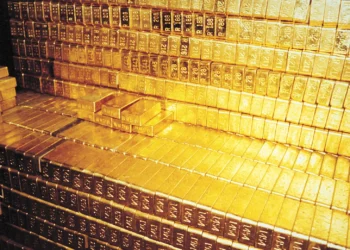
Among the most dramatic market movements in recent weeks has been the performance of precious metals, which attracted substantial safe-haven demand amid persistent geopolitical tensions. Both gold and silver achieved record highs within the past week, though both commodities have since retreated from those peaks.
As of Wednesday morning trading, gold was quoted at approximately $4,370 per troy ounce, while silver traded at $74.96—still elevated by historical standards but down from its recent record levels. The pullback appears to represent profit-taking rather than a fundamental shift in sentiment toward these traditional hedges against uncertainty.
Oil markets showed minimal movement, with West Texas Intermediate crude edging down 0.1 percent to $61.24 per barrel and Brent North Sea crude similarly dipping 0.1 percent to $57.86 per barrel, reflecting the year-end lull in trading activity.
In foreign exchange trading, the dollar demonstrated strength against major currencies. The euro fell to $1.1740 from $1.1774, while sterling declined to $1.3462 from $1.3503. Against the Japanese yen, the dollar firmed to 156.48 yen from 156.00 yen in the previous session.
As 2025 trading concludes, investors will be looking ahead to fresh catalysts in the new year, including upcoming economic data releases, corporate earnings reports, and further guidance from central banks navigating the delicate balance between supporting growth and ensuring price stability.
WHAT YOU SHOULD KNOW
As trading concludes for 2025, global markets are finishing a remarkably strong year despite muted activity in the final session. Asian equities showed mixed movements on Wednesday, but the bigger story is the exceptional annual performance: South Korea’s Kospi surged over 75 percent, and Japan’s Nikkei climbed more than 26 percent.
The Federal Reserve’s monetary easing in the second half of 2025 fueled this global rally, particularly boosting AI and technology stocks. While investors are now showing caution over AI valuations and safe-haven assets like gold recently hit records amid geopolitical tensions, the underlying message is clear—2025 delivered substantial gains across worldwide markets, with central bank support providing the foundation for one of the strongest years in recent memory.