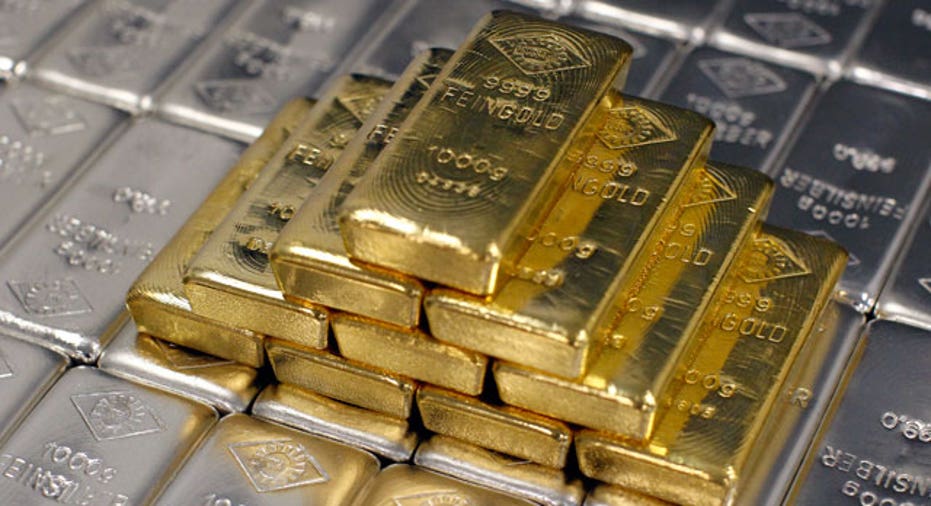
Precious metals surrendered gains across the board on Monday, snapping an extraordinary rally that has captivated investors throughout 2025, as traders locked in profits following a historic run-up and renewed optimism over a potential resolution to the Ukraine conflict dampened safe-haven appetite.
Gold, which has shattered multiple records this year in a 72% surge, pulled back 1.7% to $4,455.34 per ounce as of 0707 GMT, retreating from Friday’s all-time peak of $4,549.71. February U.S. gold futures declined 1.2% to $4,500.30 per ounce in early trading.
The selloff was even more pronounced in silver markets, where spot prices tumbled 4.6% to $75.47 per ounce after briefly piercing the psychologically significant $80 threshold earlier in the session. The white metal had touched an unprecedented high of $83.62 before profit-taking set in, capping what has been a meteoric 181% year-to-date advance that has substantially outpaced gold’s already impressive performance.
According to Tim Waterer, Chief Market Analyst at KCM Trade, the simultaneous pressures of profit-taking and diplomatic progress are weighing on the precious metals complex.
“A combination of profit-taking and seemingly productive talks between Trump and Zelensky regarding a potential peace deal have put gold, silver on the back foot,” Waterer explained.
The shift in sentiment follows comments from U.S. President Donald Trump on Sunday, indicating that negotiations with Ukrainian President Volodymyr Zelenskiy are advancing toward a possible settlement. “We’re getting a lot closer, maybe very close” to an agreement to end the war in Ukraine, Trump stated, injecting hope that one of 2025’s major geopolitical flashpoints could be nearing resolution.
Silver’s exceptional performance this year reflects a confluence of fundamental factors beyond its traditional safe-haven role. The metal received a significant boost from its designation as a critical U.S. mineral, while supply constraints and depleted inventories have collided with surging demand from both industrial users and investors seeking exposure to the precious metals sector.
The industrial applications of silver—spanning electronics, solar panels, and emerging technologies—have created structural demand that distinguishes it from purely monetary metals, contributing to its outperformance relative to gold.
The 2025 precious metals rally has been underpinned by what market observers describe as a “cocktail of factors” creating an unusually favorable environment for non-yielding assets.
Expectations of additional Federal Reserve interest rate cuts have bolstered the appeal for gold and silver, which don’t offer yields but benefit when opportunity costs decline. Geopolitical tensions throughout the year have driven consistent safe-haven flows, while central banks worldwide have maintained robust purchasing programs, adding to demand pressure.
Exchange-traded funds focused on precious metals have also seen rising holdings, reflecting sustained investor interest in the asset class as both an inflation hedge and portfolio diversifier.
Despite Monday’s pullback, analysts remain constructive on the long-term outlook for precious metals, with some predicting further record-breaking moves.
Waterer suggested that gold could target the $5,000 per ounce level next year, provided the next Federal Reserve chairman adopts a more accommodative monetary policy stance. Such a move would represent another 12% gain from current levels and would mark yet another milestone in bullion’s historic ascent.
For silver, the analyst sees even more dramatic potential upside. “Rate cuts and a continuation of robust industrial appetite paired with supply shortages could have silver primed for a run towards $100 in 2026,” Waterer projected, implying potential gains of more than 30% from current prices.
Market participants are now awaiting the release of minutes from the Federal Reserve’s December policy meeting, searching for additional clues about the central bank’s rate trajectory. Traders currently anticipate two U.S. rate cuts in 2026, which would further enhance the appeal of non-yielding precious metals by reducing the opportunity cost of holding assets that generate no income.
The relationship between interest rates and precious metals remains a key driver of price action, with lower rates historically correlating with stronger performance in gold and silver markets.
The broader precious metals complex mirrored gold and silver’s weakness, with platinum falling 6.2% to $2,298.45 per ounce after reaching an all-time high of $2,478.50 earlier in the session. Palladium saw the steepest decline, plunging 11.4% to $1,705.15 per ounce in what appears to be an aggressive round of profit-taking following the metal’s own rally.
Monday’s retreat, while notable, represents a relatively modest correction following what has been one of the most extraordinary years in precious metals markets in recent memory, leaving the fundamental bull case largely intact even as short-term volatility returns to the sector.
WHAT YOU SHOULD KNOW
Precious metals retreated sharply on Monday after a historic 2025 rally—gold up 72%, silver up 181%—as investors cashed in profits and positive signals from Trump-Zelensky peace talks reduced safe-haven demand.
Despite the pullback, analysts remain bullish, predicting gold could hit $5,000 and silver $100 by 2026, driven by expected Fed rate cuts, industrial demand, and supply constraints. The correction appears to be temporary profit-taking rather than a fundamental shift, with the long-term bull case for precious metals intact.