In a landmark development that could reshape fiscal governance across Nigeria’s 36 states, Ekiti State has positioned itself at the forefront of the country’s tax reform agenda by becoming the first subnational government to domesticate the Nigeria Tax Administration Act.
The historic step, formalized on Wednesday at the Executive Council Chamber in the state capital, represents a significant shift in how revenue is collected and managed at the state level, potentially setting a precedent for other states grappling with fiscal inefficiencies and revenue leakages.
A Double Legislative Victory
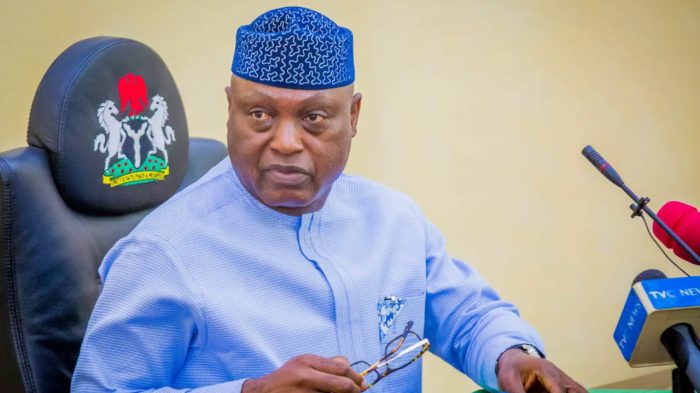
Governor Biodun Oyebanji‘s signing of the Ekiti State Revenue Administration Law, 2025, came alongside his assent to the state’s N415.57 billion budget for 2026, dubbed the “Budget of Sustainable Governance.” The dual signing ceremony, witnessed by key government officials including Deputy Governor Monisade Afuye and House of Assembly Speaker Adeoye Aribasoye, underscored the administration’s commitment to fiscal modernization and transparency.
The new revenue law, which repeals the 2019 Ekiti State Board of Internal Revenue Law, introduces sweeping changes aimed at plugging revenue gaps that have long plagued state finances across Nigeria.
Digital Transformation at the Core
Perhaps the most transformative aspect of the legislation is its mandatory digitalization of all tax-related transactions. Effective immediately, Ekiti has abolished cash-based revenue collection in favor of a fully electronic system covering payments, billing, and receipting.
“From today, Ekiti adopts a strictly electronic payment system. This will eradicate leakages and ensure that your payments go directly into the state’s coffers,” Governor Oyebanji declared during the signing ceremony, emphasizing the administration’s zero-tolerance approach to revenue diversion.
The move addresses a chronic problem in Nigerian state governance: the proliferation of unauthorized revenue collectors and the resulting loss of billions of naira to leakages and corruption. By centralizing all collection authority within the Ekiti State Internal Revenue Service (EKIRS), the law effectively eliminates the role of third-party collection agents who have historically operated with little oversight.
Teeth for Enforcement
The legislation doesn’t merely restructure revenue collection—it arms the tax authority with significant enforcement powers. EKIRS now possesses prosecutorial capabilities and can impose administrative penalties on tax defaulters, marking a departure from the often toothless enforcement mechanisms that have characterized state revenue administration in Nigeria.
This enforcement framework is complemented by the adoption of the Joint Revenue Board’s harmonized tax list, which aims to provide clarity and consistency for businesses operating in the state. The standardization is expected to reduce disputes and create a more predictable business environment.
National Implications
The significance of Ekiti’s action extends far beyond its borders. Segun Adesokan, Executive Secretary of the Joint Revenue Board, who attended the signing ceremony, praised the state for fulfilling commitments made during the JRB retreat in Ikogosi last September.
“Ekiti is the first state to domesticate the Nigeria Tax Administration Act,” Adesokan noted, expressing hope that the move would catalyze similar reforms across Nigeria’s federation. His optimism reflects broader federal efforts to professionalize revenue administration at subnational levels—a critical component of Nigeria’s fiscal sustainability agenda.
The timing is particularly significant as Africa’s most populous nation grapples with dwindling oil revenues and mounting pressure to diversify income sources. State governments have increasingly been called upon to improve their internally generated revenue, making efficient tax administration not just desirable but essential for survival.
Balancing Books for 2026
The N415.57 billion budget signed alongside the revenue law reflects a pragmatic approach to fiscal management, with 53 percent allocated to recurrent expenditure and 47 percent to capital projects. Governor Oyebanji emphasized that the 2026 appropriation prioritizes completing ongoing infrastructure projects while strengthening the state’s agricultural sector—a cornerstone of Ekiti’s economy.
The near-even split between recurrent and capital spending suggests an administration attempting to balance the demands of day-to-day governance with the imperative for long-term developmental investment.
The Road Ahead
As other states watch Ekiti’s experiment with keen interest, questions remain about implementation challenges. Digital infrastructure gaps, taxpayer education, and resistance from entrenched interests in the old system could pose obstacles to the reform’s success.
However, if Ekiti’s gambit pays off—demonstrating increased revenue generation, reduced leakages, and improved taxpayer compliance—it could trigger a domino effect across Nigerian states, fundamentally altering the country’s subnational fiscal landscape.
For now, Ekiti stands alone as a test case for whether political will, combined with modern technology and clear legal frameworks, can transform one of governance’s most persistent challenges in Africa’s largest economy: making tax administration work.
WHAT YOU SHOULD KNOW
Ekiti State has made history as Nigeria’s first state to adopt the national tax reform framework, fundamentally transforming how it collects revenue. The game-changer is mandatory digitalization—all tax payments must now go through electronic channels directly to government accounts, eliminating cash transactions and unauthorized collectors who have drained state coffers for years.
The new law consolidates all collection powers under one agency (EKIRS), which now has prosecutorial authority to pursue tax dodgers. Combined with a N415.57 billion budget for 2026, Ekiti is betting that technology and centralized control can plug revenue leakages and boost state finances.
If successful, this model could reshape fiscal governance across Nigeria’s 36 states, offering a blueprint for how subnational governments can modernize tax administration and reduce the corruption that has historically plagued revenue collection. Other states are watching closely—Ekiti’s experiment may either inspire nationwide reform or serve as a cautionary tale.