A sharp rebuke of Nigeria’s budgetary process has emerged from economic analyst and bank executive Adolphus Aletor, who has accused the National Assembly of rubber-stamping executive requests and enabling what he describes as catastrophic budget performance under the current administration.
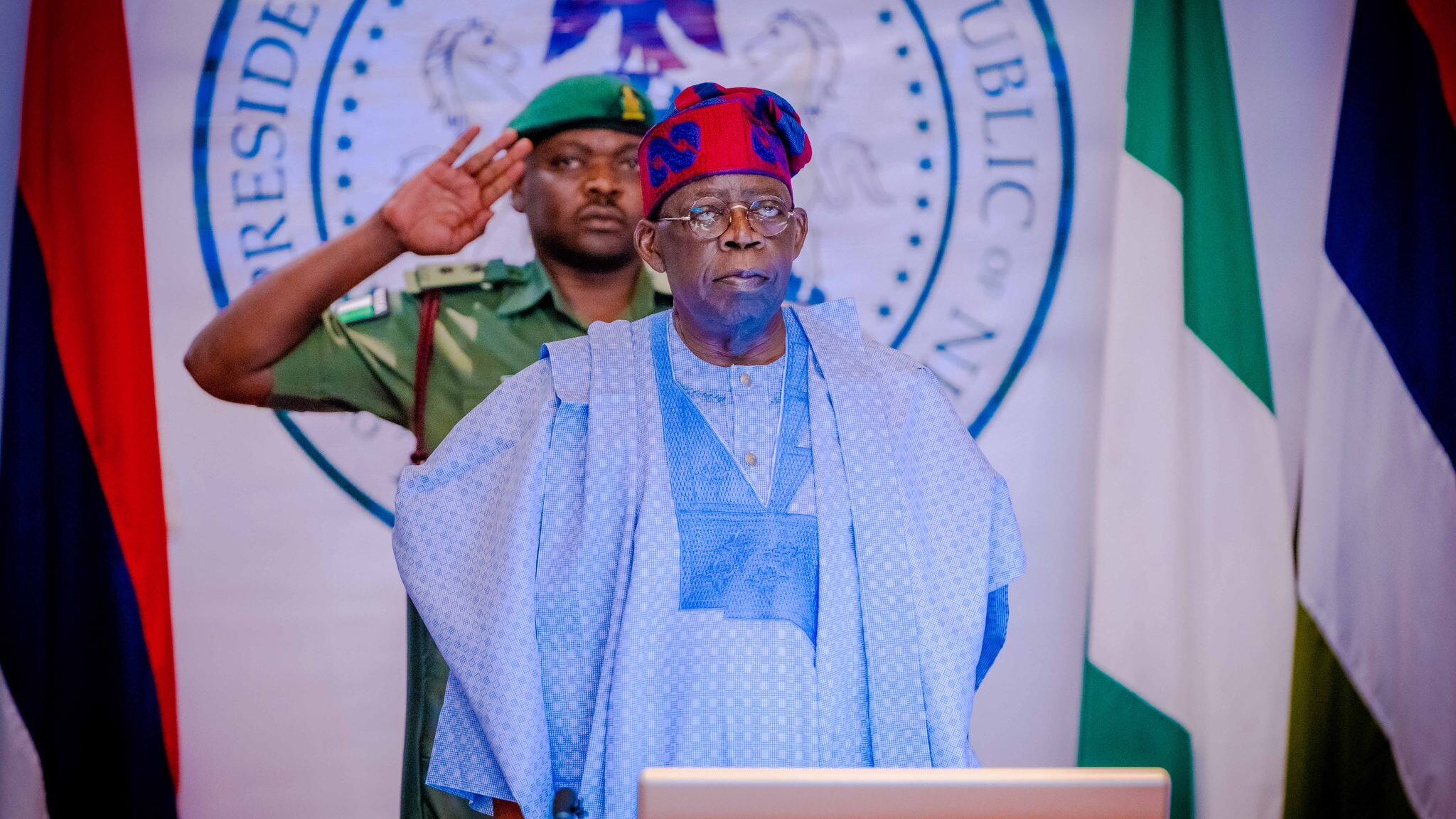
In a pointed interview on ARISE News on Tuesday, Aletor criticized the legislature’s rapid passage of the 2026 Appropriation Bill for second reading, just days after President Bola Tinubu’s presentation. His critique centered on a pattern he says has become all too familiar: lawmakers prioritizing speed over scrutiny.
“You realize that the National Assembly has a characteristic habit of speedy assent to every executive request,” Aletor said, his tone reflecting frustration with what he views as a breakdown in legislative oversight.
The analyst painted a picture of an administration drowning in its own budgetary chaos. Nigeria currently finds itself in the unprecedented position of managing three budget cycles simultaneously—2024, 2025, and 2026—a situation Aletor characterized as fundamentally unhealthy for fiscal discipline.
The numbers tell a sobering story. According to Aletor, only approximately 30 percent of the 2025 budget has been implemented, with the remaining 70 percent now rolled into 2026. Meanwhile, the 2025 budget itself is scheduled to run until March 2026, creating a tangled web of overlapping fiscal commitments.
“When you have a carryover for three consecutive years, it doesn’t look good for any administration,” Aletor stated bluntly. “There is no basis to rate the government positively when you cannot finish the 2024 budget, carry it into 2025, and now into 2026.”
Perhaps most damning in Aletor’s assessment was his examination of the government’s revenue projections versus reality. He pointed to the 2025 budget, where the administration projected approximately ₦40 trillion in revenue but realized only ₦10 trillion—leaving a staggering ₦30 trillion deficit.
The pattern of overestimation extends to previous cycles as well. The ₦53 trillion 2024 budget was subsequently reduced to ₦48 trillion, raising questions about the credibility of the government’s initial assumptions.
“This administration has put a lot of pressure on itself to perform and has largely come up with unrealistic figures,” Aletor explained, suggesting that political ambition may be overriding fiscal prudence.
Central to Aletor’s argument is a concept that often gets lost in discussions of budget sizes and allocations: timing. He emphasized that budgets should ideally be presented around September to allow for proper legislative review before the start of the fiscal year.
“A budget is neither amount nor currency; it is currency in time,” he said, offering a philosophical observation grounded in practical reality. “You cannot separate the budget cycle from budget performance. If the timing is wrong, the performance will be wrong.”
The implications extend far beyond government offices. As the largest spender in the Nigerian economy, the government budget execution directly affects private sector businesses that depend on public contracts and spending. Delays and poor performance create a ripple effect throughout the economy.
While acknowledging that the National Assembly has been “very cooperative” with the executive branch, Aletor suggested this might be part of the problem rather than the solution. The lack of robust scrutiny, he argued, undermines the checks and balances essential to good governance.
He expressed particular concern about what legislators call “budget enhancement”—the back-and-forth negotiations that often follow initial presentations. Rather than strengthening the budget, these processes frequently introduce delays that push implementation further into the calendar year.
Despite his harsh assessment, Aletor offered a pragmatic timeline for the current situation. He suggested that if the 2026 budget takes effect by April, it would still be acceptable—though far from ideal.
His ultimate recommendation was simple yet challenging: resolve all variances within 2026 so that by 2027, Nigeria can return to a single, consolidated budget operating on a proper fiscal calendar.
Only then, he argued, can the government credibly deliver on its stated promise of a “budget of consolidation, renewed resilience, and shared prosperity.”
Aletor noted that his views are not isolated opinions but reflect a broader consensus among fiscal experts. “If you rate this administration on budgeting, most experts agree that their performance has been very poor,” he said, suggesting that the problems he identified represent a widely recognized crisis in Nigeria’s public financial management.
As the 2026 budget moves through the legislative process, Aletor’s warnings serve as a sobering reminder that without fundamental reforms to both budget preparation and oversight, Nigeria may continue to be trapped in a cycle of unrealistic projections, poor execution, and economic underperformance.
The question now is whether lawmakers and the executive will heed these warnings or continue with business as usual—a path that, according to Aletor, leads only to continued fiscal dysfunction and missed economic opportunities.
WHAT YOU SHOULD KNOW
Nigeria is caught in a dangerous cycle of fiscal mismanagement, running three budgets simultaneously (2024, 2025, and 2026) with dismal execution rates. Economic analyst Adolphus Aletor warns that the National Assembly’s habit of quickly approving executive requests without proper scrutiny has enabled catastrophic budget performance.
The government projects unrealistic revenue figures—promising ₦40 trillion but delivering only ₦10 trillion in 2025—then rolls over failed budgets year after year. Only 30% of the 2025 budget has been implemented, with 70% pushed into 2026.
As Nigeria’s largest spender, the government budget failures cripple businesses dependent on public contracts and drag down the entire economy. Poor timing and weak legislative oversight have created what experts widely agree is a systemic failure.