Nigerian consumers and businesses received modest relief as diesel prices declined year-on-year, but emerging month-on-month increases and significant regional price gaps continue to highlight structural challenges in the country’s fuel distribution network, according to fresh data from the National Bureau of Statistics.
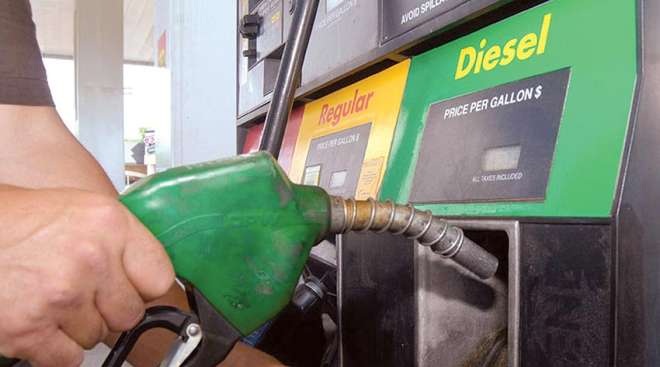
The latest Diesel Price Watch reveals that the average retail price of Automotive Gas Oil fell 2.57% year-on-year to N1,409.61 per liter in November 2025, down from N1,446.83 in the same month last year. The decline offers some breathing room for transport operators, manufacturers, and the millions of Nigerians who rely on diesel-powered generators amid persistent electricity supply challenges.
However, the picture becomes more complex when examining shorter-term trends. On a month-on-month basis, diesel prices edged upward by 0.79%, climbing from N1,398.57 in October to N1,409.61 in November 2025, suggesting that downward pressure on prices may be weakening.
The NBS data exposes dramatic price disparities across Nigeria’s 36 states and the Federal Capital Territory, with consumers in some regions paying substantially more than others for the same product.
Niger State residents faced the steepest costs, with diesel averaging N1,477.57 per liter—approximately 13% higher than the national average. Jigawa State followed at N1,477.31, while Enugu State in the Southeast recorded N1,468.29.
At the opposite end of the spectrum, Kebbi State enjoyed the lowest prices at N1,308.94 per liter, with Katsina (N1,315.78) and Nasarawa (N1,325.29) also recording below-average costs. The gap between the highest and lowest state prices stands at N168.63 per liter—a differential that translates to significant cost implications for businesses operating across multiple states.
Zonal analysis reveals the Southeast recorded the highest average at N1,419.34 per liter, while the South-South Zone, home to Nigeria’s oil-producing region, enjoyed the lowest average at N1,400.58. The relatively narrow spread between zones compared to individual states suggests that intra-regional distribution presents more acute challenges than broader geographical factors.
Energy sector analysts attribute the complex pricing landscape to a combination of global and domestic factors that continue to buffet Nigeria’s fuel market.
“Diesel costs are highly sensitive to global crude oil prices, foreign exchange fluctuations, and domestic distribution efficiency,” explained Dare Awoyemi, an energy expert. “The slight month-on-month increase may reflect emerging supply pressures or heightened demand as economic activity expands.”
Nigeria’s persistent refining capacity limitations mean the country remains heavily dependent on imported petroleum products despite being Africa’s largest oil producer. This dependence exposes domestic prices to international market volatility and foreign exchange pressures, particularly as the naira faces ongoing depreciation challenges.
Logistical bottlenecks compound these issues. Poor road infrastructure, security concerns in certain regions, and inefficiencies in the distribution network contribute to the substantial price variations observed between states. Northern states, particularly those distant from coastal import terminals, typically face higher transportation costs that translate directly into pump prices.
For Nigerian households and businesses, diesel pricing carries implications far beyond fuel costs alone. With electricity supply from the national grid remaining unreliable in many areas, diesel generators serve as a critical backup power source for homes, offices, hospitals, and telecommunications infrastructure.
The year-on-year price decline offers some relief to manufacturers grappling with high production costs and transport operators facing razor-thin margins. Lower diesel prices can help moderate inflationary pressures by reducing transportation costs for goods and services throughout the supply chain.
However, the modest monthly uptick serves as a reminder of the fuel market’s inherent volatility. Economic planners and business operators cannot count on sustained price declines without fundamental improvements to Nigeria’s energy infrastructure and policy framework.
The regional price disparities present particular concerns for economic equity. Northern states bearing higher diesel costs face compounded challenges in attracting investment and supporting local industries, potentially widening economic gaps between regions.
The data underscores ongoing debates about Nigeria’s energy sector reforms. While the government has pursued policies aimed at deregulating fuel prices and encouraging private sector participation, critics argue that infrastructure deficits and policy inconsistency continue to undermine market efficiency.
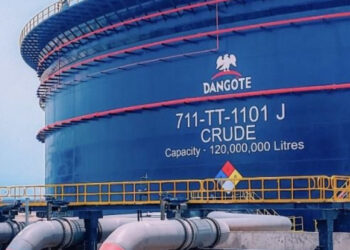
The Dangote Refinery, which began operations in 2024, was expected to transform Nigeria’s petroleum products market by reducing import dependence. However, questions remain about the facility’s impact on retail prices and whether its output will meaningfully address regional supply disparities.
As Nigeria navigates its economic challenges in 2025, diesel pricing will remain a critical indicator of the country’s progress in addressing long-standing energy sector inefficiencies. For millions of Nigerians, stable and affordable diesel prices represent not just an economic concern but a fundamental requirement for reliable power, transportation, and economic opportunity.
WHAT YOU SHOULD KNOW
Nigeria’s diesel prices fell 2.57% year-on-year to N1,409.61 per liter in November 2025, offering some relief to consumers and businesses. However, a slight monthly increase of 0.79% signals potential volatility ahead.
The most critical concern is the stark regional disparity: prices vary by as much as N168.63 per liter between states, with Niger State paying N1,477.57 while Kebbi pays just N1,308.94. This gap, driven by logistical challenges and distribution inefficiencies, means northern states bear disproportionately higher costs, deepening regional economic inequality.
While the year-on-year decline is welcome news, Nigeria’s structural fuel distribution problems remain unresolved, creating an uneven economic playing field that threatens to widen the gap between regions unless infrastructure and policy reforms are urgently implemented.