Early Life and Background
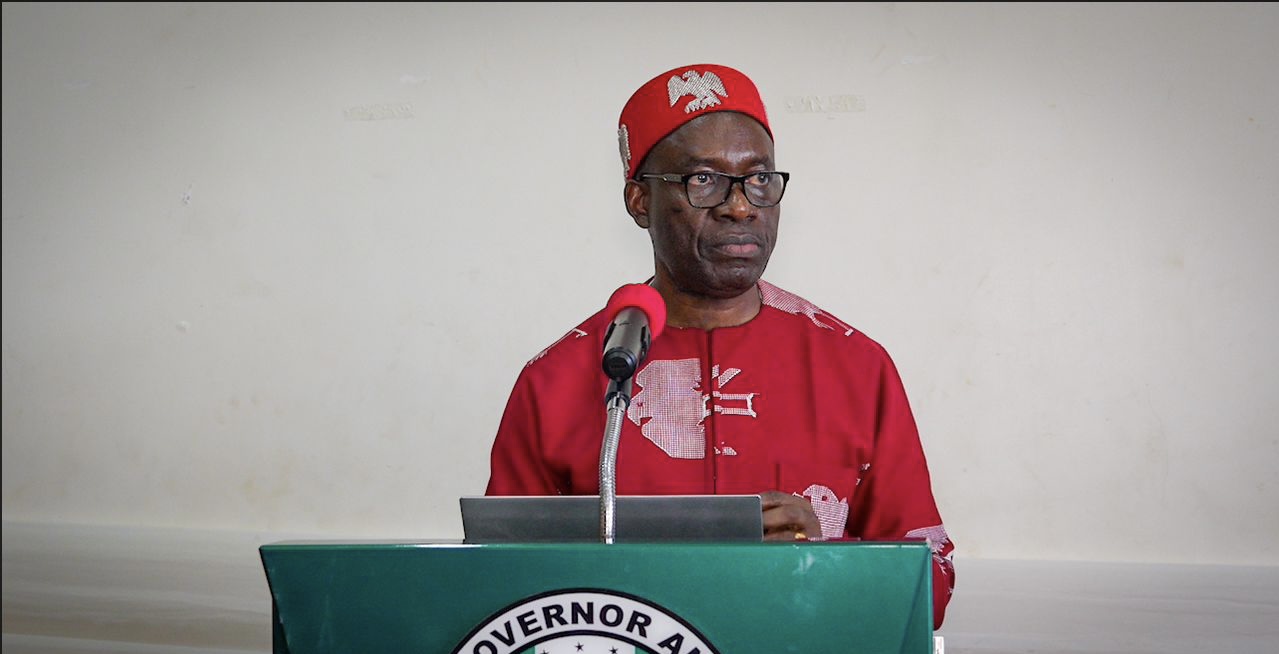
Professor Charles Chukwuma Soludo was born on July 28, 1960, in Isuofia, a town in Aguata Local Government Area of Anambra State, southeastern Nigeria. Born into the family of Pa Simeon Nwankwo Soludo, a trader, and Mgbafor Soludo, Charles’s early years were marked by both promise and tragedy. His mother passed away during the Nigerian Civil War when he was barely eight years old, a loss that would profoundly shape his character and instill in him a remarkable resilience that would define his future trajectory.
Growing up in the rural village of Isuofia, young Charles demonstrated exceptional intellectual abilities from an early age. Despite the modest circumstances of his upbringing and the trauma of losing his mother during one of Nigeria’s most turbulent periods, he remained focused on education as his pathway to a better future. His childhood experiences in the aftermath of the civil war, witnessing the struggles of ordinary Nigerians and the challenges of post-war reconstruction, would later inform his economic philosophy and commitment to national development.
Quick Facts
- Full Name: Charles Chukwuma Soludo
- Date of Birth: July 28, 1960
- Place of Birth: Isuofia, Anambra State, Nigeria
- Current Position: Governor of Anambra State (2022-present)
- Previous Roles: CBN Governor, Chief Economic Adviser, Professor of Economics
- National Honor: Commander of the Order of the Federal Republic (CFR)
- Political Party: All Progressives Grand Alliance (APGA)
Education: A Foundation of Excellence
Soludo’s educational journey is a testament to academic brilliance and unwavering dedication. After completing his primary education, he attended Uga Boys High School in Anambra State, where he excelled academically and was appointed senior prefect, a position that recognized both his intellectual capabilities and leadership qualities. His performance at Uga Boys High School laid the groundwork for what would become an extraordinary academic career.
In 1980, Soludo gained admission to the University of Nigeria, Nsukka (UNN), one of Nigeria’s premier universities, to study Economics. His time at UNN marked the beginning of an unprecedented academic run. In 1984, he graduated with a First Class Honours degree in Economics, establishing himself as one of the brightest students of his generation. Not content with undergraduate success, he immediately proceeded to pursue postgraduate studies at the same institution.
Soludo completed his Master of Science (MSc) degree in Economics in 1987, once again graduating as the best student in his class. Two years later, in 1989, he earned his Doctor of Philosophy (PhD) in Economics from UNN, maintaining his record of academic excellence by emerging as the best graduating student for the third consecutive time. This remarkable achievement of being the best student at all three levels of university education is extraordinarily rare and speaks volumes about his intellectual prowess and dedication to scholarship.
By 1998, at just 38 years of age, Soludo was appointed Professor of Economics at the University of Nigeria, Nsukka, becoming one of the youngest professors in the institution’s history. His academic specializations included multi-country macro-econometric modeling, computable general equilibrium modeling techniques, survey methodology, and panel data econometrics—highly sophisticated fields that require both theoretical depth and practical application skills.
International Academic Recognition: Beyond Nigeria, Soludo became a visiting scholar and professor at some of the world’s most prestigious institutions, including the International Monetary Fund, the University of Cambridge, the Brookings Institution, the University of Warwick, the University of Oxford, and Swarthmore College in Pennsylvania, USA. In 1999, he served as a visiting professor at Swarthmore College, further establishing his reputation as a globally recognized economist.
Academic and Consulting Career
Scholarly Contributions
Throughout his academic career, Soludo established himself as a prolific scholar and thought leader in African economics. He authored and co-authored over 82 scholarly publications, including groundbreaking books and papers on macroeconomic policy, structural adjustment, debt management, and economic development in Africa. His research focused particularly on the economic challenges facing African nations and policy solutions for sustainable development.
Among his most influential works is “Our Continent, Our Future: African Perspectives on Structural Adjustment,” co-authored with Thandika Mkandawire in 1999, which provided critical African perspectives on the controversial structural adjustment programs imposed by international financial institutions. The book became required reading for anyone seeking to understand African economic challenges from an African viewpoint rather than through the lens of Western development economics.
Other notable publications include “The Debt Trap in Nigeria: Towards a Sustainable Debt Strategy,” co-authored with Ngozi Okonjo-Iweala and Mansur Muhtar, which examined Nigeria’s debt burden and proposed sustainable solutions. His work on macroeconomic policy modeling of African economies became a foundational text in development economics, influencing policy discussions across the continent.
International Consulting
Soludo’s expertise extended beyond academia into international consulting and advisory roles. He worked extensively as a consultant for numerous prestigious international organizations, including the World Bank, the International Monetary Fund (IMF), the United Nations Economic Commission for Africa, the United Nations Development Programme (UNDP), the African Development Bank (AfDB), the United Nations Conference on Trade and Development (UNCTAD), the European Union (EU), the United States Agency for International Development (USAID), the African Union (AU), and the Economic Community of West African States (ECOWAS).
These consulting engagements exposed him to diverse economic challenges across multiple countries and regions, enriching his understanding of development economics and policy implementation. His work with these organizations also provided him with valuable networks and insights that would prove instrumental in his later roles as Central Bank Governor and state governor.
Central Bank of Nigeria: Transforming Nigerian Banking
Appointment and Vision
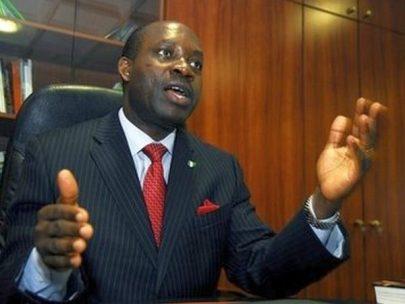
In 2003, Soludo entered government service when he was appointed Chief Economic Adviser to President Olusegun Obasanjo. His exceptional performance in this role, coupled with his impeccable credentials and reform-minded approach, led to his appointment as Governor of the Central Bank of Nigeria (CBN) on May 29, 2004. He also served as Chief Executive of the National Planning Commission before assuming the CBN governorship.
At 44 years old, Soludo brought to the CBN a rare combination of theoretical sophistication and practical policy experience. He assumed leadership of Nigeria’s apex bank at a critical juncture when the banking sector was fragmented, undercapitalized, and vulnerable to systemic shocks. The sector was characterized by numerous weak banks, poor corporate governance, and inadequate risk management systems.
Banking Sector Consolidation
Soludo’s most significant and controversial reform was the banking sector consolidation program, which fundamentally restructured Nigeria’s financial system. In July 2004, shortly after assuming office, he announced a radical policy requiring all banks to increase their minimum capital base from 2 billion naira to 25 billion naira by December 2005. This represented more than a tenfold increase and sent shockwaves through the financial sector.
The policy triggered an unprecedented wave of mergers and acquisitions as banks scrambled to meet the new capital requirements. When the consolidation exercise concluded, Nigeria’s banking landscape had been dramatically transformed. The number of banks was reduced from 89 to 25 mega-banks, creating stronger, more competitive institutions capable of supporting Nigeria’s economic development and competing regionally and internationally.
While the consolidation faced criticism from some quarters who argued it was too aggressive and poorly implemented, Soludo defended it as necessary medicine for a sick banking system. The reform succeeded in creating larger, better-capitalized banks and brought unprecedented scrutiny to banking operations, corporate governance, and risk management practices.
Other CBN Reforms
Beyond consolidation, Soludo implemented several other significant reforms during his tenure from 2004 to 2009. He championed the establishment of the Africa Finance Corporation (AFC), a continental, private-sector-driven investment bank designed to finance infrastructure projects across Africa. He also modernized the CBN’s monetary policy framework, introducing more sophisticated tools for managing inflation and exchange rates.
His tenure saw improved transparency in the banking system, better supervision and regulation, and enhanced consumer protection mechanisms. He also pushed for financial inclusion initiatives aimed at bringing more Nigerians into the formal banking system. While his five-year tenure was not without controversies and criticisms, most observers agree that Soludo fundamentally reshaped Nigerian banking and left the sector stronger than he found it.
“I have achieved all I wanted to achieve in the world in my thirties. I have travelled to 45 countries across the six continents as a scholar and consultant.” – Charles Soludo.
Entry into Politics: The Journey to Government House
First Gubernatorial Bid (2010)
After leaving the CBN in May 2009, Soludo announced his intention to run for Governor of Anambra State in the February 2010 election. His entry into politics generated significant excitement, as many believed his economic expertise and technocratic credentials would translate into effective governance. In October 2009, the People’s Democratic Party (PDP) selected him as their consensus candidate from a field of 47 aspirants.
However, his nomination proved controversial, with 23 of the 47 aspirants challenging the process and citing a lack of transparency. Despite these internal party tensions, 36 of the 47 candidates eventually affirmed their support for Soludo. In the election itself, he lost to the incumbent, Peter Obi of the All Progressives Grand Alliance (APGA), in what was widely considered a free and fair election by major observers. The loss was a significant setback, but it did not diminish his political ambitions.
Party Switch and Second Attempt (2013)
On July 17, 2013, frustrated with the PDP, Soludo resigned from the party and joined APGA in preparation for the November 2013 Anambra gubernatorial election. However, in a stunning turn of events, he and five other qualified aspirants were disqualified by the APGA Screening Committee in August 2013. The disqualification was controversial and raised questions about internal party politics and the influence of godfathers in the state’s political landscape.
The Successful Third Campaign (2021)
In February 2021, demonstrating remarkable persistence, Soludo officially declared his third bid for the Anambra governorship, once again under the APGA platform. This time, he was determined to succeed. On June 23, 2021, he won the APGA primary election, describing himself as “a poor village boy whom God has lifted and gifted.”
The campaign was not without drama and danger. In March 2021, unidentified gunmen disrupted an interactive session between Isuofia youths and Soludo at the town’s civic center, leading to the death of three police officers and the abduction of his aide. The attack highlighted the serious security challenges facing Anambra State and could have derailed his campaign, but Soludo pressed on with characteristic determination.
On November 6, 2021, the Independent National Electoral Commission (INEC) initially declared the election inconclusive. A supplementary election was held in the Ihiala Local Government Area on November 9, 2021. After the supplementary election, INEC declared Soludo the winner, having secured 112,229 votes across 19 of the 21 local government areas. His closest rival, Valentine Ozigbo of the PDP, received 53,807 votes, while Andy Uba of the All Progressives Congress (APC) got 43,285 votes.
On March 17, 2022, Soludo was sworn in as the fifth democratic Governor of Anambra State at a ceremony held at the Anambra State Government House in Awka. The inauguration was memorable not just for the historic moment but also for an unexpected altercation between Ebele Obiano, wife of outgoing Governor Willie Obiano, and Bianca Odumegwu-Ojukwu, wife of the late Biafran leader, which briefly overshadowed the proceedings.
Governor of Anambra State: Vision and Achievements
The “Solution” Agenda
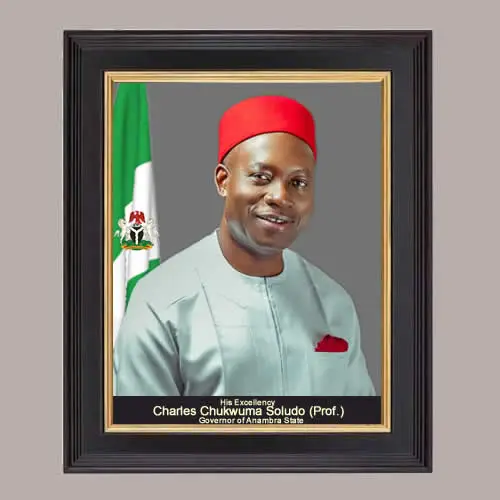
As governor, Soludo has pursued what he terms the “Solution Agenda,” anchored on the mantra “One State, One People, One Agenda.” His vision is to transform Anambra into Africa’s equivalent of Dubai-Taiwan-Silicon Valley, leveraging the state’s abundant human capital and entrepreneurial spirit. This ambitious vision encompasses comprehensive reforms across infrastructure, education, healthcare, security, economic development, and digital transformation.
Infrastructure Development
Soludo’s administration has embarked on an aggressive infrastructure development program that has dramatically changed Anambra’s landscape. As of March 2025, his administration has contracted over 754 kilometers of new roads, with 462 kilometers already asphalted and completed. Major road projects include the dualization of the 34-kilometer Amawbia-to-Imo State road and extensive urban renewal in Awka, Onitsha, and Nnewi.
The government has rehabilitated five major water schemes, ensuring improved access to piped water for residents across the state. Additionally, the administration has undertaken a renewable energy initiative, converting over 26,000 diesel-powered streetlights to solar power, reducing energy costs and promoting environmental sustainability. The construction of a state-of-the-art Government House complex and the remodeling of the Three Arms Zone further demonstrate the commitment to modernization.
Education Reforms
Education has been a cornerstone of Soludo’s governance. His administration has recruited over 8,000 teachers to address staffing shortages in public schools and improve the quality of education. The government distributed 20,000 computer laptops to headteachers and principals of public and mission schools, promoting digital literacy and modernizing educational administration.
The administration introduced free education for Senior Secondary 3 students and has rehabilitated numerous school buildings across the state. The establishment of 60 STEM (Science, Technology, Engineering, and Mathematics) schools demonstrates Soludo’s commitment to preparing Anambra students for the demands of the 21st-century economy. These efforts have yielded results, with Anambra students consistently outperforming their peers in national examinations like JAMB and NECO.
Healthcare Advancements
In the healthcare sector, Soludo’s administration has achieved remarkable progress. The government has upgraded primary health centers in all 326 electoral wards across the state, bringing quality healthcare closer to the people. The administration established a trauma center at Chukwuemeka Odumegwu Ojukwu Teaching Hospital and has employed over 400 medical personnel to strengthen the healthcare workforce.
A flagship initiative is the free antenatal care and delivery program, which has supported over 70,000 women since its inception. The 2025 budget allocates significant funds for healthcare expansion, including 5 billion naira for a cancer hospital and 7 billion naira for hospital expansion projects, signaling the government’s commitment to making Anambra a healthcare leader in Nigeria.
Security Transformation
Soludo inherited a state grappling with serious security challenges, particularly insecurity linked to unknown gunmen and criminal elements. His administration established the “Agunechemba” security architecture, anchored in technology and backed by the Homeland Security Law. This comprehensive approach has yielded impressive results, with the dismantling of over 60 criminal camps and the arrest of numerous suspects.
Local government areas that were once under the grip of criminal elements are now experiencing relative peace and stability. The restoration of security has been fundamental to economic recovery and has encouraged business activities and investments across the state.
Economic Development and Innovation
Soludo’s economic development strategy focuses on positioning Anambra as a commercial, logistics, and technology hub. The establishment of the Anambra Mixed-Use Industrial City (AMIC) and the Pharmaceutical Distribution and Manufacturing Hub is expected to attract significant investments and create thousands of job opportunities.
The Solution Innovation District (SID), a centerpiece of the government’s digital transformation agenda, has trained over 30,000 people in digital skills and supported over 100 new business ideas. The “One Youth, Two Skills” initiative has empowered 20,000 youths with technology and entrepreneurship skills, addressing youth unemployment and preparing young people for the digital economy.
Agriculture and Food Security
In agriculture, Soludo has championed regenerative agricultural transformation under the “zero poverty” initiative. In 2023 and 2024, the government distributed over 1.1 million hybrid coconut, palm, ukwa, pawpaw, and soursop seedlings to more than 130,000 households. The administration plans to distribute at least one million seedlings annually, targeting 500,000 households, promoting food security, environmental sustainability, and income generation for rural families.
Budget and Fiscal Management
Soludo’s fiscal management has been characterized by prudence and strategic allocation of resources. The 2024 budget of 410 billion naira, themed “Changing Gears,” represented a significant increase from previous years and prioritized capital expenditure over recurrent costs. For 2025, he presented an even more ambitious budget of 607 billion naira, themed “Changing Gears 2.0,” representing a 48% increase and dedicating 77% to capital expenditure.
Remarkably, Soludo has achieved these ambitious programs without borrowing, maintaining fiscal discipline while delivering infrastructure and social services. This approach has earned widespread praise and distinguishes his administration from many state governments that have accumulated massive debt burdens.
Awards and Recognition
Soludo’s leadership as governor has earned him numerous national awards and recognition. In 2024 alone, he received multiple prestigious honors:
- The Sun Newspaper – Governor of the Year in Good Governance (2024)
- Vanguard Newspaper – Governor of the Year in Economic Transformation (2024)
- Independent Awards – Governor of the Year 2024, Urban Renewal
- Pentecostal Fellowship of Nigeria – Icon of Societal Transformation
- Commander of the Federal Republic (CFR) – National honor
These awards, decided through rigorous verification of development projects and prioritizing data over rhetoric, validate Soludo’s methodical approach to governance and his tangible achievements across multiple sectors.
Personal Life
Charles Soludo has been married to Nonye Frances Soludo since December 1992. Nonye, a well-educated and socially engaged woman, has been a supportive partner throughout his academic, banking, and political careers. She actively participates in various social causes and has supported her husband’s efforts to improve socio-economic conditions in Anambra and Nigeria at large.
The couple is blessed with six children: Ozonna (Ozzy) Soludo, Adaora Ifeatu Soludo, Ify Soludo, Kosiso Soludo, Chinua Soludo, Ekene Soludo, and Zik Soludo. Despite his demanding public roles, Soludo has maintained a strong connection with his family, balancing his personal life with his professional responsibilities.
Soludo is a devout Catholic and regularly attends St. Patrick’s Cathedral in Awka. His faith has been an important anchor throughout his life, particularly during challenging periods, including his mother’s early death, his electoral defeats, and the security incident during his 2021 campaign.
Challenges and Controversies
Despite his achievements, Soludo’s tenure has not been without challenges and controversies. His public disagreement with Peter Obi, the 2023 Labour Party presidential candidate and former Anambra governor, drew significant criticism. In early 2023, Soludo wrote an article criticizing Obi’s presidential ambitions, sparking a heated public debate and accusations of betrayal from Obi’s supporters.
In September 2024, the National Working Committee of APGA threatened to suspend Soludo over alleged anti-party activities, highlighting internal conflicts within the party. The dispute was eventually resolved, but it underscored the complex political dynamics within APGA and the broader Anambra political landscape.
Some critics argue that while Soludo has focused heavily on infrastructure in urban areas like Awka, Onitsha, and Nnewi, rural areas have not received proportionate attention. Others question whether the ambitious “African Dubai-Taiwan-Silicon Valley” vision is realistic, given Nigeria’s economic challenges and whether the focus on mega-projects might come at the expense of basic services.
His stance on local government autonomy following a 2024 Supreme Court ruling has also generated debate, with critics arguing that his new laws undermine local government independence while supporters maintain they ensure proper management of public funds.
Legacy and Future Prospects
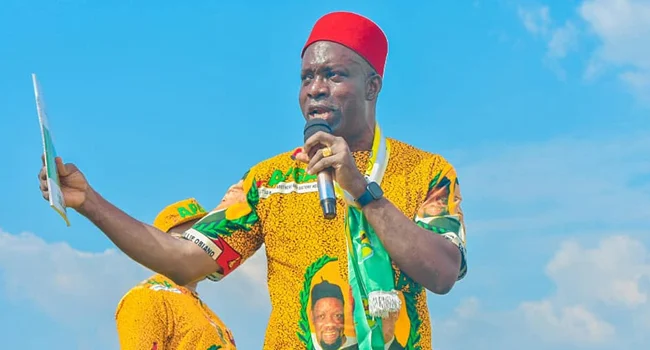
As Soludo approaches the 2025 gubernatorial election seeking a second term, his legacy is already taking shape. He has demonstrated that technocratic expertise can translate into effective governance when combined with political acumen and genuine commitment to public service. His journey from a “poor village boy” to one of Nigeria’s most influential governors embodies the possibilities of the Nigerian dream.
Soludo’s emphasis on infrastructure, education, healthcare, and economic diversification represents a comprehensive development strategy that, if sustained, could indeed transform Anambra into a model state. His fiscal discipline, avoiding borrowing while delivering ambitious projects, offers important lessons for governance across Nigeria.
Looking ahead, political observers anticipate that Soludo will secure a second term given his achievements and the opposition’s fragmentation. A second term would allow him to consolidate gains and pursue long-term projects that require sustained attention. Some speculate that his ultimate ambitions may extend beyond Anambra, potentially to national office, though he has not publicly indicated such intentions.
The Soludo Philosophy: “Development is not about grand announcements; it is about granular execution. It is about doing more with less and without borrowing.” This philosophy has defined his governance approach and distinguishes his administration from many Nigerian leaders who prioritize rhetoric over results.
At 64 years old, Charles Chukwuma Soludo remains in his prime, combining youthful energy with mature wisdom. His trajectory from academic excellence to central banking reform to state governance demonstrates the value of preparation, persistence, and principled leadership. Whether or not he achieves his ambitious vision of transforming Anambra into an African Dubai-Taiwan-Silicon Valley, he has already secured his place as one of Nigeria’s most consequential governors and economic thinkers.
As Nigeria grapples with economic challenges, insecurity, and governance deficits, leaders like Soludo—with their combination of technical expertise, reform mindset, and commitment to tangible results—represent hope that effective governance is possible. His story inspires young Nigerians that with education, hard work, and resilience, they too can rise from humble beginnings to positions where they can make meaningful contributions to national development.
The next chapter of Soludo’s story is still being written, but his impact on Nigerian economics, banking, and governance is already assured. History will judge him not just by the roads he built or the teachers he hired, but by whether he succeeded in creating institutions and systems that outlast his tenure and genuinely improve the lives of ordinary Anambra citizens. Early indications suggest that he is on the right track, though much work remains to fully realize the ambitious vision he has set for his beloved Anambra State.