Early Life and Background
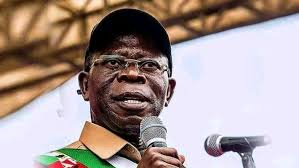
Adams Aliyu Oshiomhole was born on April 4, 1952, in the modest town of Iyamho, near Auchi in what is now Etsako West Local Government Area of Edo State, Nigeria. Born into a humble Muslim family, young Adams was raised primarily by his mother, Hajia Aishetu Oshiomhole, in an environment where resources were scarce but values of hard work and justice were abundant. His early years in Iyamho would become the foundation of a remarkable journey that would see him rise from textile factory floors to the corridors of Nigeria’s highest political offices.
Growing up in post-colonial Nigeria, Oshiomhole witnessed firsthand the struggles of ordinary Nigerians and the widening gap between the privileged and the working class. These formative experiences planted the seeds of social consciousness that would later define his career as a labour activist and politician. Despite limited family wealth, he demonstrated an insatiable appetite for learning and an early commitment to fighting for fairness and equity.
Quick Facts
- Full Name: Adams Aliyu Oshiomhole
- Date of Birth: April 4, 1952
- Place of Birth: Iyamho, Edo State, Nigeria
- Current Position: Senator, Edo North Senatorial District (2023-present)
- Previous Roles: Governor of Edo State, APC National Chairman, NLC President
- Religion: Christianity (converted from Islam)
- Christian Name: Eric
Education: Building the Foundation
Oshiomhole completed his primary and secondary education in local schools within Edo State. However, his thirst for knowledge and understanding of labour dynamics led him to pursue further education beyond Nigeria’s shores. In 1975, demonstrating remarkable determination and ambition, he traveled to the United Kingdom to attend the prestigious Ruskin College, Oxford, where he majored in industrial relations with a specialization in labour economics.
His time at Oxford proved transformative. Not only did he excel academically, graduating as the best international student, but he also gained exposure to global labour movements and sophisticated organizing strategies that he would later deploy in Nigeria. The rigorous academic environment sharpened his analytical skills and deepened his understanding of the theoretical underpinnings of workers’ rights and collective bargaining.
Recognizing the need for continuous learning, Oshiomhole further enriched his credentials by attending the National Institute for Policy and Strategic Studies (NIPSS) in Kuru, Plateau State, in 1989, earning the prestigious designation of Member of the National Institute (MNI). He also received training at the Kennedy School of Government at Harvard University, broadening his perspective on governance and public policy.
Educational Excellence: Oshiomhole’s achievement as the best international student at Ruskin College, Oxford, demonstrated not only his intellectual capability but also his dedication to mastering the principles that would guide his future career in labour advocacy and governance.
Labour Movement Leadership: The Foundation of a Legacy
Early Union Involvement
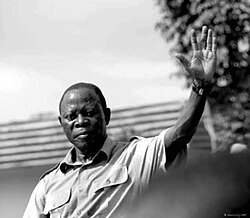
Oshiomhole’s journey into labour activism began almost immediately after his secondary education when he secured employment at the Arewa Textiles Company in Kaduna. It was on the factory floor, witnessing the exploitation of workers, poor wages, and unjust disciplinary actions, that his passion for workers’ rights was ignited. In 1971, during an unplanned workplace crisis, the young Oshiomhole demonstrated leadership qualities that led to his election as union secretary, marking the beginning of a storied career in labour advocacy.
By 1975, he had risen to become a full-time trade union organizer. Following his educational sojourn in the United Kingdom, Oshiomhole returned to Nigeria with enhanced knowledge and renewed vigor. In 1982, at just 30 years old, he was appointed General Secretary of the National Union of Textile, Garment, and Tailoring Workers of Nigeria, a powerful union representing over 75,000 workers. Under his leadership, the union experienced remarkable growth and achieved significant victories for its members.
President of the Nigeria Labour Congress
The pinnacle of Oshiomhole’s labour career came in 1999, when, following Nigeria’s return to civilian rule after years of military dictatorship, he was elected President of the Nigeria Labour Congress (NLC). This position placed him at the forefront of Nigeria’s labour movement during a critical period of democratic transition and economic reform.
As NLC President from 1999 to 2007, Oshiomhole became a household name across Nigeria. He led numerous high-profile industrial actions, most notably organizing massive nationwide strikes against fuel subsidy removals and petroleum price increases. His confrontational yet strategic approach to labour negotiations brought him into direct conflict with the federal government, particularly during the administration of President Olusegun Obasanjo.
Early in Obasanjo’s presidency, Oshiomhole successfully negotiated a 25 percent wage increase for public sector workers, earning widespread acclaim and initially maintaining cordial relations with the administration. However, their relationship soured dramatically when government neglect of local refineries led to increased reliance on imported petroleum and subsequent fuel price hikes. Oshiomhole led fierce opposition to these policies through strikes and demonstrations, facing arrests, tear gas, and even an alleged abduction by state security services in October 2004, though the government claimed he had submitted to voluntary custody.
Beyond national activism, Oshiomhole represented African workers for two terms on the governing body of the International Labour Organization (ILO), serving on the committee on freedom of association. He was also a member of the executive board of the International Confederation of Free Trade Unions, solidifying his reputation as a global labour advocate.
Recognition: In 2000, Punch newspaper declared Oshiomhole “Man of the Year” in recognition of his immense contributions to popular struggles for workers’ rights and social justice. Both The Guardian and Newswatch Magazine also named him “Man of the Year” in 2005.
Political Career: From Opposition to Government
The Road to Edo State Government House
In 2007, Oshiomhole made the pivotal decision to transition from labour activism to electoral politics. He ran for Governor of Edo State under the Action Congress (AC), with which his Labour Party had formed a strategic alliance. The election was initially declared in favor of Oserheimen Osunbor of the People’s Democratic Party (PDP). However, citing numerous irregularities, the AC contested the results in court.
On March 20, 2008, after a protracted legal battle, the Edo State election tribunal nullified Osunbor’s election and declared Oshiomhole the rightful winner. This decision was upheld by the Federal Court of Appeal on November 11, 2008, officially making him the Governor of Edo State. The judicial victory was celebrated as a triumph for electoral justice and marked the beginning of what would become a transformative era for Edo State.
Governor of Edo State (2008-2016)
As governor, Oshiomhole brought the same energy and determination he had displayed as a labour leader to the task of governance. His eight-year tenure was characterized by aggressive infrastructure development, education reform, and healthcare improvements. He focused on road construction, urban renewal projects, and public facility upgrades that dramatically changed the landscape of Edo State.
His administration invested heavily in education, constructing new school buildings, providing learning materials, and implementing policies to improve educational standards across the state. The healthcare sector also witnessed significant interventions through the renovation of primary health centers and expanded medical outreach programs.
In 2012, Oshiomhole sought re-election and won by a massive landslide, demonstrating the widespread approval of his policies and performance during his first term. His second term concluded on November 12, 2016, with many regarding him as one of Edo State’s most impactful governors. He successfully backed his economic adviser, Godwin Obaseki, as his successor, cementing his status as a political godfather in Edo State.
National Chairman of the All Progressives Congress
Following his governorship, Oshiomhole’s political influence expanded to the national level. On June 23, 2018, he emerged as the National Chairman of the All Progressives Congress (APC), Nigeria’s ruling party, following a voice vote by delegates at the party’s national convention. His election was widely seen as recognition of his organizational skills, political acumen, and ability to mobilize grassroots support.
However, his tenure as party chairman was marked by internal conflicts and factional disputes. His relationship with his successor as Edo governor, Godwin Obaseki, deteriorated dramatically, leading to a bitter political feud. On November 12, 2019, Oshiomhole was suspended from the APC by 18 local government chairmen in Edo State who passed a vote of no confidence in him, accusing him of attempting to disintegrate the party in his home state.
The legal battles that ensued culminated in a High Court order on March 4, 2020, suspending him from the office of national chairman. The suspension was affirmed by the Abuja Court of Appeal on June 16, 2020, effectively ending his tenure as APC national chairman. Obaseki subsequently defected to the PDP and won re-election as governor in 2020, dismantling much of Oshiomhole’s political machinery in the process.
Senator Representing Edo North (2023-Present)
Refusing to fade from the political scene, Oshiomhole staged a remarkable comeback. On April 4, 2022, during his 70th birthday celebration at his country home in Iyamho, he declared his intention to contest for the Edo North senatorial seat in the 2023 elections. He won the APC primaries on May 28, 2022, and went on to decisively defeat the incumbent senator, Francis Alimikhena of the PDP, in the February 25, 2023, general elections, securing 107,110 votes against Alimikhena’s 55,344 votes.
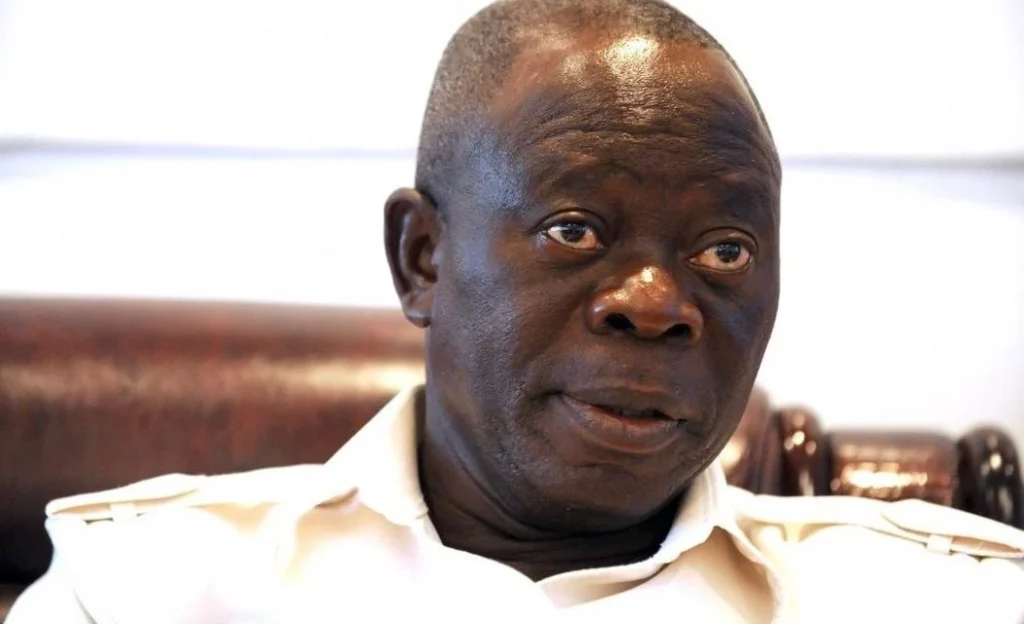
Since assuming office as senator, Oshiomhole has been appointed Chairman of the Senate Committee on Interior of the 10th Senate, a strategic position that allows him to influence national security and immigration policies. His legislative agenda focuses on infrastructure development, education, healthcare, agricultural empowerment, youth and women empowerment, security, and economic growth for Edo North and Nigeria at large.
He remains active in Senate debates and continues to be a central figure in APC’s internal dynamics, particularly in Edo State politics. In 2024, he played a crucial role in the APC’s successful gubernatorial campaign in Edo State, helping to elect Monday Okpebholo as governor and effectively returning the APC to power in his home state.
Personal Life
Oshiomhole’s personal life has been marked by both joy and tragedy. Although born into a Muslim family, he converted to Christianity as an adult, influenced by his first wife, Clara Oshiomhole. His Christian name is Eric, and he is a devout Catholic. Clara, a school principal, was his partner through his rise in the labour movement and early political career. Together, they had three children: Dr. Cyril Adams Oshiomhole, Steve Oshiomhole, and Jane Aduku Oshiomhole.
Tragically, Clara died of breast cancer in December 2010 at the age of 54, leaving Oshiomhole devastated. Her death was a profound loss, as she had been not only his wife but also his confidante and supporter through the most challenging periods of his career.
Five years after Clara’s death, in May 2015, Oshiomhole remarried. His second wife is Lara Fortes, a model from Cape Verde. Their wedding attracted significant media attention due to the international dimension and the age difference between the couple. Despite initial public scrutiny, the marriage has endured, with Lara supporting her husband’s continued political endeavors.
Oshiomhole is known to have a close relationship with his mother, Hajia Aishetu Oshiomhole, who has been a constant source of support throughout his life. He also maintained a close relationship with his younger brother, Abubakar Aliyu Oshiomhole, who reportedly lived with him for over 30 years.
Major Accomplishments and Recognition
Throughout his multifaceted career, Oshiomhole has received numerous accolades and recognition for his contributions to labour rights, governance, and national development. Some notable honors include:
- Commander of the Order of the Niger (CON) – National honor conferred in 2011
- Man of the Year 2000 – Punch newspaper
- Man of the Year 2005 – The Guardian and Newswatch Magazine
- Best Governor of Edo State – Edo Day Celebration, 2015
- Governor of the Year – Vanguard Personality of the Year, 2015
- Award of Recognition – The Social Enterprise Reports and Awards (SERAs), 2011
- Honorary Doctorate – Samuel Adegboyega University, 2016
Beyond awards, Oshiomhole’s true accomplishments lie in the tangible impacts he has made. As a labour leader, he helped secure better wages and working conditions for millions of Nigerian workers. As governor, he transformed Edo State’s infrastructure and improved public services. As a political strategist, he has played a pivotal role in shaping Nigeria’s political landscape, particularly within the APC.
Controversies and Criticisms
Like most prominent political figures, Oshiomhole’s career has not been without controversy. In 2014, he faced severe criticism after a video surfaced showing him publicly insulting a widow, Joy Ifije, who had knelt before him to plead for her livelihood. In the heated exchange, he reportedly told her to “go and die,” sparking national outrage. He later apologized, donated 2 million naira to her, offered her employment, and promised educational support for her children.
His tenure as APC national chairman was marred by accusations of high-handedness and favoritism, particularly in his handling of primary elections and party disputes. The bitter feud with his successor as Edo governor, Godwin Obaseki, divided the state’s political landscape and led to his eventual ouster as party chairman.
More recently, in June 2025, Oshiomhole was involved in a public dispute at Lagos’s Murtala Muhammed Airport following a missed Air Peace flight to Abuja. The airline accused him of confronting staff and disrupting terminal access, causing delays for other passengers. While Oshiomhole denied the allegations and accused the airline of habitual extortion, the incident drew significant media attention.
Despite these controversies, Oshiomhole has consistently maintained a strong political base and continues to command significant influence in Nigerian politics.
Legacy and Current Influence
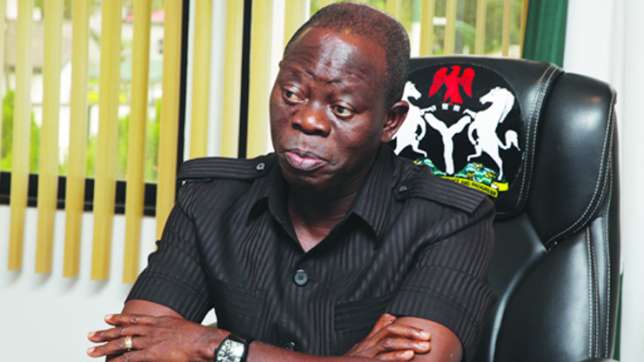
Adams Oshiomhole remains one of Nigeria’s most recognizable and influential political figures. His journey from a textile factory floor to the Senate represents a uniquely Nigerian story of resilience, strategic thinking, and unwavering determination. He embodies the transition from grassroots activism to institutional power, demonstrating how labour organizing can serve as a pathway to political leadership.
His legacy is multifaceted and, in some ways, contested. Supporters praise him for his courage in standing up to powerful interests, his developmental focus as governor, and his ability to mobilize grassroots support. They point to improved infrastructure in Edo State, better working conditions for Nigerian workers, and his role in strengthening democratic processes.
Critics, however, point to his confrontational style, perceived autocratic tendencies, and the internal party strife that characterized his tenure as APC chairman. The bitter fallout with Godwin Obaseki is often cited as an example of the challenges inherent in Nigeria’s godfather political culture.
As a senator representing Edo North and as one of President Bola Tinubu’s closest allies in the Niger Delta region, Oshiomhole continues to wield considerable influence. Political observers suggest he could play a central role in the APC’s campaign for the 2027 presidential elections and may have ambitions for even higher positions within the Senate leadership.
His current focus on infrastructure development, agricultural empowerment, education, and security in Edo North demonstrates a continued commitment to grassroots development. Through regular town halls, feedback mechanisms, and constituency outreach, he maintains strong ties with his constituents, ensuring that their voices shape his legislative priorities.
“Oshiomhole’s influence cannot be overstated. Anyone contesting in Edo State must reckon with him. He has proven his ability to deliver votes and mobilize support across diverse constituencies.”
At 73 years old, Adams Oshiomhole shows no signs of slowing down. His political comeback from the setbacks of 2020 to his current position as a senator and power broker demonstrates the resilience that has characterized his entire career. Whether viewed as a champion of the common man or as a shrewd political operator, there is no denying that Oshiomhole has left an indelible mark on Nigerian labour movements, governance, and politics.
His story serves as an inspiration to many young Nigerians who aspire to rise above humble beginnings and make meaningful contributions to national development. It also offers lessons about the complexities of political leadership, the importance of strategic alliances, and the challenges of maintaining political relevance in Nigeria’s dynamic political environment.
As Nigeria continues its journey toward greater democratic maturity and economic development, figures like Adams Oshiomhole, with their deep understanding of both grassroots struggles and high-level political maneuvering, will continue to play crucial roles in shaping the nation’s trajectory. His legacy, still being written, will ultimately be judged by his contributions to improving the lives of ordinary Nigerians and strengthening the institutions of governance.