Nigeria’s textile industry faces a deepening crisis as import figures reveal a stark disconnect between government rhetoric and economic reality, with the country spending N814.27 billion on foreign textiles in the first nine months of 2025.
The staggering import bill, representing a 47 percent increase from the previous year’s N552.31 billion, has laid bare the failure of federal interventions meant to revitalize what was once a thriving domestic manufacturing base. Industry insiders describe a sector suffocated by policy failures, corruption, and institutional neglect.
The Broken Promise of Revival
Quarter by quarter, the numbers tell a troubling story. Nigeria imported N228.83 billion worth of textiles in Q1, N337.12 billion in Q2, and N248.32 billion in Q3 of 2025. Each figure underscores the country’s growing dependence on foreign fabrics even as Vice President Kashim Shettima and Minister of State for Industry John Enoh have made repeated public commitments to sector revival.
The disconnect between promise and performance has left industry operators frustrated and increasingly vocal about what they characterize as systemic dysfunction.
The Missing Levy: Money That Never Returns
At the heart of the crisis lies a 10 percent levy imposed on textile imports—money that was supposed to flow back into the industry but has instead disappeared into government coffers. Hamma Kwajaffa, Director-General of the Nigerian Textile Manufacturers Association, revealed that not a single naira from this levy has been reinvested in the sector since its introduction.
The levy was conceived as a compromise when the government lifted a ban on textile imports, acknowledging Nigerian consumers’ preference for foreign goods while creating a mechanism to bolster domestic competitiveness. The arrangement drew inspiration from the sugar industry, where a similar levy system operates through a dedicated council with clear funding structures.
“The essence is that when the ban on textiles was lifted, they knew the Nigerians with their penchant for foreign goods, and therefore they want to be sure that 10 percent of that fund is ploughed back into textiles so that they can be competitive,” Kwajaffa explained. “But that money, once it comes in, the government feels it is their own, and they don’t want to give it back to the private sector to work on.”
Institutional Vacuum and Policy Chaos
The industry’s plight is compounded by what stakeholders describe as policy incoherence at the highest levels of government. Kwajaffa pointed to contradictory statements from Vice President Shettima and Minister Enoh as evidence of an administration speaking with multiple, conflicting voices on textile policy.
This confusion has paralyzed the implementation of even the most basic reforms. The proposed textile development fund, which was meant to be domiciled with the Bank of Industry and modeled on successful frameworks in other sectors, has never materialized. Without institutional backing or political champions willing to push the agenda forward, the textile levy simply vanishes into general revenue.
Corruption: The Hidden Tax on Revival
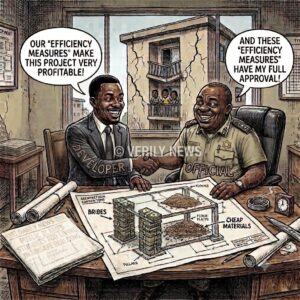
Perhaps most damaging are allegations of endemic corruption in programs ostensibly designed to help manufacturers. Kwajaffa described a system where officials demand kickbacks before releasing grants or facilitating credit access through the Bank of Industry.
“Mostly the problem with the grant is that they also want to get their own,” he stated bluntly. “If they go and tell the companies what their share is, that’s the problem. Once they don’t have a share, they kill the program.”
The textile chief characterized this pattern as “kickback, kickfront”—a reference to demands for payments both before and after program approvals. The result is stagnation across initiatives that could otherwise provide relief to struggling manufacturers facing high energy costs and infrastructure deficits.
Structural Challenges: From Cotton Fields to Polyester Plants
Beyond policy failures, the industry grapples with fundamental structural weaknesses. Nigeria’s cotton sector remains dominated by smallholder farmers using outdated methods, while extension officers tasked with providing technical guidance cannot reach fields due to widespread insecurity in farming regions.
Cotton cultivation requires scientific knowledge and proper support systems, Kwajaffa noted, yet government funding for agricultural extension services has proven inadequate. This weakness at the raw material stage cascades through the entire value chain.
Compounding these difficulties, Nigerian textile manufacturers cannot access affordable polyester despite the country’s status as a major crude oil producer. The inability to leverage domestic petroleum resources for downstream manufacturing represents another missed opportunity in a sector plagued by them.
The Disappearing Industry
The human cost of this decline is visible in places like Kaduna State, once a textile manufacturing hub. Segun Ajayi-Kadir, Director-General of the Manufacturers Association of Nigeria, recalled that the state previously hosted at least six textile companies under MAN’s umbrella. Today, that number stands at zero.
Ajayi-Kadir described a market flooded with dumped foreign textiles that domestic producers cannot match on price, particularly given Nigeria’s harsh operating environment. Even attempts at backward integration into cotton farming have faltered, as producers find it more profitable to export raw materials than to supply the struggling domestic industry.
Workshops Without Action
Industry representatives express particular frustration with what Kwajaffa termed “workshop fatigue”—endless consultations that produce communiqués filed away in bureaucratic drawers while conditions on the ground continue deteriorating.
The August 2024 stakeholder meeting, where Vice President Shettima called for a roadmap to revitalize the sector, the April announcement of plans to “localize up to $4 billion in spending on textile imports,” and the subsequent tour of Kaduna facilities by ministry and Bank of Industry officials have all produced minimal tangible results.
“We’re tired of all these workshops where the communiqués are just dust and kept somewhere in the drawer of some civil servant,” Kwajaffa said.
The Path Forward
For the industry to recover, stakeholders insist the government must move beyond rhetoric to concrete institutional reforms. This includes establishing the textile development fund at the Bank of Industry with transparent disbursement mechanisms, ensuring the 10 percent import levy actually reaches its intended beneficiaries, and creating clear lines of authority to end policy confusion among senior officials.
Without such reforms, the trajectory remains clear: rising imports, declining domestic capacity, and the continued erosion of an industry that once employed hundreds of thousands of Nigerians. The N814.27 billion spent on foreign textiles in nine months represents not just an import bill, but a measure of squandered potential and broken promises.
As Kwajaffa warned, “If imports continue rising and then there’s nothing to be done with competition so that they can reduce imports, it will continue to be like that.”
WHAT YOU SHOULD KNOW
Nigeria’s textile industry is collapsing under the weight of government negligence and corruption, not market forces. Despite spending N814.27 billion on textile imports in nine months—a 47% increase from last year—the federal government has failed to reinvest a single naira from the mandatory 10% import levy back into the sector as promised.
The real story here is systemic betrayal: officials pocket levy funds meant for industry development, demand kickbacks before releasing grants, and stage endless workshops that produce no action. Meanwhile, what was once a thriving manufacturing sector has been reduced to zero operational textile companies in former hubs like Kaduna State.
This isn’t about foreign competition—it’s about a government that collects taxes specifically designated for textile revival, diverts the money elsewhere, and watches local manufacturing die while mouthing empty promises about sector transformation. Until the corruption stops and the levy money actually reaches manufacturers as intended, Nigeria will continue hemorrhaging billions to foreign textile producers while its own factories remain shuttered.