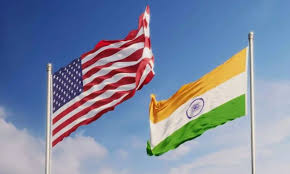
High-stakes trade negotiations between the United States and India entered their second day Thursday, as both nations grapple with the fallout from punishing American tariffs that have sent shockwaves through India’s export-driven economy and strained a critical strategic partnership.
The Tariff Shock
The talks, led by Deputy US Trade Representative Rick Switzer, come against a backdrop of unprecedented economic pressure. In August, Washington slapped 50 percent levies on most Indian goods—tariffs that officials in the Trump administration justify as punishment for New Delhi’s continued purchases of discounted Russian crude oil. The argument from Washington is stark: by buying Russian oil, India is effectively financing Moscow’s war machine in Ukraine.
The impact has been devastating. India’s exports to the United States plummeted nearly 12 percent year-on-year in October, with labor-intensive sectors bearing the brunt of the pain. The Global Trade Research Initiative reports catastrophic declines in key industries: gems and jewelry exports down 37 percent, textiles and seafood falling between 40 and 60 percent in the May-September period alone.
For an economy that recorded a $45.8 billion goods trade deficit with the United States in 2024, these numbers represent more than statistical abstractions—they translate into shuttered factories and lost livelihoods in a nation already struggling to create quality employment for millions of young graduates entering the workforce each year.
Market Turmoil and Economic Fallout
The financial markets have rendered their own harsh verdict. Foreign investors have pulled more than $16 billion from Indian equities this year, contributing to a historic collapse in the rupee, which has breached the psychologically significant 90-per-dollar threshold for the first time. The International Monetary Fund has revised its growth projections downward, cutting India’s 2026-27 forecast from 6.4 percent to 6.2 percent—assuming the 50 percent tariffs remain in place.
Trade experts warn the damage could deepen significantly. Export revenues may shrink to roughly $49.6 billion this fiscal year from $86.5 billion previously, potentially shaving up to 80 basis points off India’s GDP growth. For Prime Minister Narendra Modi, who has staked his political legacy on elevating India to high-income status, these figures represent a serious threat to his economic vision.
The Russian Oil Dilemma
At the heart of the dispute lies a geopolitical contradiction that has bedeviled US-India relations since Russia’s 2022 invasion of Ukraine. India enthusiastically embraced discounted Russian crude as Western sanctions drove down Moscow’s oil prices, transforming itself into one of the Kremlin’s most important energy customers virtually overnight.
President Trump has repeatedly claimed—without confirmation from New Delhi—that India either plans to halt or has already substantially reduced these purchases. The timing of Switzer’s visit is particularly delicate, coming just one week after Prime Minister Modi publicly embraced Russian President Vladimir Putin during a high-profile visit to the Indian capital, where Putin pledged “continued uninterrupted shipments of fuel.”
There are, however, some signs of movement. Reliance Industries, India’s top refiner, announced in November it had stopped importing Russian oil for its export-focused operations. Smaller refiners like HPCL-Mittal Energy have reportedly ceased purchases entirely. Trade analysts at Kpler anticipate a “notable dip” in India’s December-January import figures. Whether these reductions will satisfy Washington’s demands remains an open question.
Agriculture: The Other Flashpoint
Beyond oil, negotiations have stumbled over agricultural trade. The United States has pressed India to reduce tariffs on staple commodities including rice and wheat—a politically explosive demand in a country where farmers represent a formidable voting bloc. Any government seen as threatening agricultural livelihoods risks severe electoral consequences.
A senior Indian commerce ministry official suggested to reporters that these agricultural issues are “largely resolved,” though President Trump complicated matters Monday by accusing India of “dumping” rice into American markets—a charge that signals continued friction on this front.
Two Tracks, One Goal
The complexity of the current negotiations stems from their dual nature. Diplomats are simultaneously attempting to forge a broader trade agreement while addressing Trump’s “reciprocal tariffs”—his signature policy of matching trading partners’ tariff rates. Commerce Secretary Rajesh Agrawal acknowledged last week that while these represent “two separate, parallel negotiations,” they are fundamentally interconnected, with progress on one front influencing the other.
Signs of Thaw?
Despite the tensions, there are indications the relationship may be stabilizing after the August rupture. Several smaller agreements have advanced in recent months, including US approval in November for two arms sales totaling nearly $93 million—a signal that defense cooperation continues despite trade frictions.
More significantly, India committed to a substantial deal under which the United States will supply nearly 10 percent of its liquefied petroleum gas imports. Energy commitments have historically served as cornerstones of US trade agreements, and experts believe this LPG contract may help convince skeptics in Washington that India is genuinely attempting to diversify away from Russian energy dependence.
What’s at Stake
For both nations, the stakes extend far beyond trade statistics. The United States views India as a critical counterweight to China in the Indo-Pacific, while India depends on American technology, investment, and market access to fuel its development ambitions. The outcome of this week’s talks will signal whether both sides can compartmentalize their differences—or whether the Trump administration’s decision to weaponize trade policy against geopolitical behavior has fundamentally altered the relationship.
India’s foreign ministry has characterized Switzer’s visit as a “familiarization” trip, downplaying expectations for immediate breakthroughs. But with India’s economy showing clear signs of stress and Trump having launched tariff negotiations with most major trading partners back in April, time is running short for New Delhi to secure relief that other economies have already obtained.
As the talks continue, one thing remains clear: the world’s largest democracy and its oldest are discovering that aligning economic interests with geopolitical realities in an era of great power competition is far more complicated than either anticipated.
WHAT YOU SHOULD KNOW
India faces an economic crisis as 50% US tariffs—imposed over Russian oil purchases—devastate exports and threaten growth. Trade talks this week aim to resolve the standoff, but success hinges on whether India’s recent moves to reduce Russian oil imports and increase US energy purchases will satisfy Washington.
With exports down 12%, foreign investment fleeing, and the rupee at record lows, India needs a breakthrough urgently. The central tension: Trump is weaponizing trade policy to enforce geopolitical alignment, forcing India to choose between economic survival and strategic autonomy. Early signs suggest modest progress through energy deals and reduced Russian oil imports, but agriculture disputes and Trump’s unpredictability keep the outcome uncertain.
India’s economic future and Modi’s growth agenda now depend on navigating Trump’s demand that trade partnerships align with US foreign policy goals.