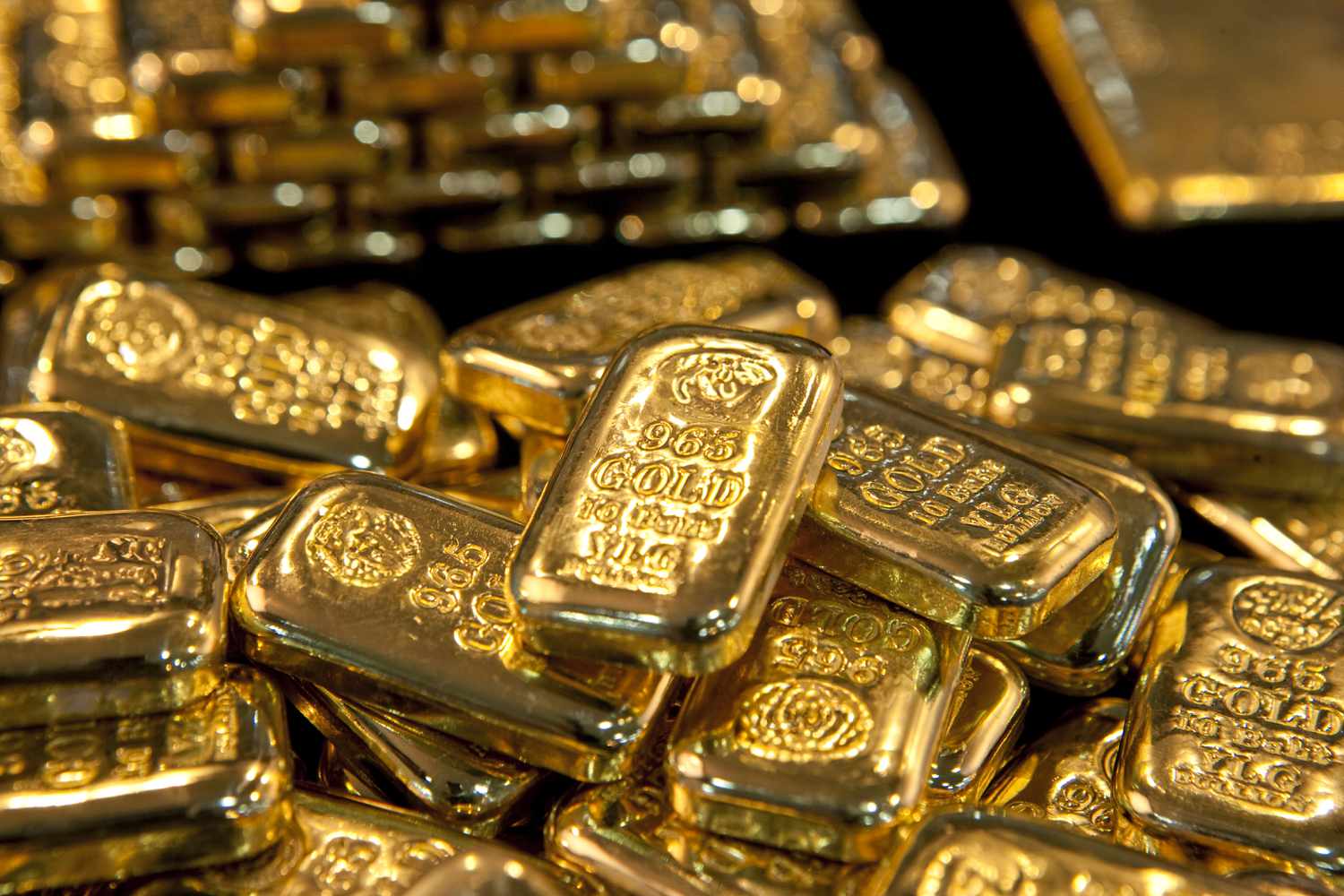
Gold prices advanced in Monday trading as investors positioned themselves ahead of this week’s Federal Reserve policy meeting, with markets overwhelmingly betting on an interest rate reduction that would further enhance the appeal of the non-yielding precious metal.
Spot gold climbed 0.2% to $4,206.36 per ounce by mid-morning European trading hours, while U.S. gold futures for February delivery edged down 0.2% to $4,235.60 per ounce, reflecting a divergence between physical and paper markets as traders recalibrated their positions.
The rally comes as the U.S. dollar weakened under pressure from mounting expectations that the Federal Reserve will announce a quarter-point rate cut when policymakers conclude their two-day meeting on December 10th. According to the CME Group’s FedWatch tool, which tracks fed funds futures pricing, market participants are assigning an 87% probability to a 25-basis-point reduction—a dramatic shift that underscores growing confidence in looser monetary policy.
“Gold is benefiting from a weaker U.S. dollar and market participants expecting the Fed to cut interest rates this week,” explained Giovanni Staunovo, precious metals analyst at UBS. The inverse relationship between the dollar and gold-denominated assets has been a textbook dynamic in recent sessions, with currency weakness making the metal more affordable for international buyers.
The Fed’s anticipated pivot toward rate cuts follows a series of worrying economic indicators that suggest the world’s largest economy is losing steam. Fresh data released last week painted a picture of moderating growth, with U.S. consumer spending advancing at a tepid pace in September. More alarmingly, private sector payrolls contracted in November at their steepest rate in over two-and-a-half years, signaling significant weakness in the labor market—a key pillar of the Fed’s dual mandate.
The combination of rising costs, slowing consumption, and employment pressures has prompted several Federal Reserve officials to adopt a more dovish tone in recent public remarks, effectively telegraphing the central bank’s intention to provide economic support through lower borrowing costs.
For gold investors, the implications are straightforward. Lower interest rates reduce the opportunity cost of holding non-yielding assets like bullion, which produces no dividends or interest payments but serves as a hedge against currency debasement and economic uncertainty. UBS’s Staunovo projects the positive momentum will continue well into next year, forecasting that gold could reach $4,500 per ounce in 2025 if the Fed delivers additional rate cuts as expected.
While gold captured headlines, silver emerged as the standout performer in the precious metals complex. The white metal added 0.3% on Monday to trade at $58.43 per ounce, following Friday’s historic surge to a record high of $59.32. Silver’s remarkable 100% price appreciation this year represents one of the most dramatic commodity rallies of 2024, fueled by a confluence of factors ranging from supply constraints to its newly elevated strategic importance.
“Silver is benefiting from the same factor as gold. Additionally, the expectation of improving industrial demand as a result of monetary and fiscal stimulus helped silver to outperform gold in recent weeks,” Staunovo noted. Unlike its more aristocratic cousin, silver serves dual purposes as both a monetary metal and an industrial commodity, with applications spanning electronics, solar panels, and emerging green technologies.
The metal’s supply-demand fundamentals have tightened considerably, with production deficits creating upward price pressure. Its recent designation as a critical mineral by the United States government has further burnished its appeal, signaling long-term strategic importance that extends beyond financial markets into national security considerations.
The broader precious metals complex participated in Monday’s advance, with platinum and palladium posting solid gains. Platinum rose 0.9% to $1,656.61 per ounce, while palladium climbed 1.2% to $1,475.11, suggesting that investor appetite for alternative precious metals remains robust amid the shifting monetary landscape.
All eyes now turn to Washington, where Federal Reserve Chair Jerome Powell and his colleagues will deliberate behind closed doors before announcing their policy decision Wednesday afternoon. While markets have largely priced in a rate cut, investors will scrutinize the accompanying statement and Powell’s press conference for clues about the central bank’s trajectory in 2025.
For now, gold traders appear confident that the path of least resistance points higher, supported by a weakening dollar, dovish central bank policy, and persistent economic uncertainty that continues to drive safe-haven demand for humanity’s oldest store of value.
WHAT YOU SHOULD KNOW
Gold prices are rising primarily because investors expect the Federal Reserve to cut interest rates this week, with markets pricing in an 87% probability of a quarter-point reduction. Lower interest rates make gold more attractive since it reduces the cost of holding non-yielding assets, while a weakening dollar further boosts gold’s appeal.
Economic warning signs—including slowing consumer spending and the steepest private payroll decline in over two years—are driving the Fed’s shift toward easier monetary policy.
Analysts predict gold could reach $4,500 per ounce in 2025 if rate cuts continue, while silver has outperformed even more dramatically, doubling in price this year due to supply deficits and growing industrial demand.