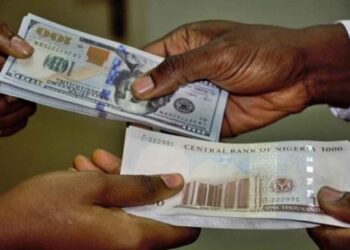
Nigeria has achieved a significant economic milestone as the country’s external reserves breached the $45 billion threshold for the first time in six years, according to official figures released by the Central Bank of Nigeria (CBN), marking what financial analysts are calling a remarkable turnaround in the nation’s foreign exchange fortunes.
The reserves now stand at $45.04 billion—matching the exact level last recorded on July 23, 2019—representing one of the most robust positions Africa’s largest economy has maintained in recent memory and signaling improved macroeconomic fundamentals at a time when many emerging markets face mounting external pressures.
A Steady Climb Through Turbulent Waters
The ascent to this critical benchmark has been neither sudden nor accidental. Rather, it represents a methodical, consistent accumulation that began gaining momentum in September and accelerated through the final quarter of the year.
On September 19, 2025, external reserves climbed to $42.03 billion, marking the highest level since late September 2019 and establishing a 72-month peak. From that foundation, Nigeria has added nearly $5 billion to its foreign exchange war chest—an impressive feat that stands in stark contrast to the declining reserves plaguing numerous developing economies across Asia, Africa, and Latin America.
The November-December period proved particularly transformative. The month of November opened with reserves at $43.26 billion, maintaining a firm grip above the psychologically important $43 billion threshold. By November 18, the figure had climbed to $44.05 billion, reflecting growing inflows and diminishing pressure on the foreign exchange market. The upward trajectory continued unabated, with reserves closing November at $44.67 billion—one of the strongest month-end positions recorded in recent years.
December brought the breakthrough moment. Starting the month within the $44 billion range, reserves crossed the coveted $45 billion mark on December 4, breaching both a psychological barrier and an economic milestone that further underscores the nation’s improving foreign exchange liquidity position.
Multiple Revenue Streams Fuel Recovery
While the CBN has not provided a detailed breakdown of the sources behind this surge, financial analysts point to several probable contributors to the reserves buildup.
Improved crude oil earnings likely play a central role, as Nigeria benefits from relatively stable global oil prices and ongoing efforts to increase production levels following years of underperformance. The nation’s status as Africa’s largest oil producer means that even modest improvements in output translate into significant dollar inflows.
Eurobond-related transactions may also be contributing to the reserves growth, alongside potential multilateral financing from international development institutions. The diversity of these possible sources suggests that Nigeria’s improving external position rests on multiple pillars rather than a single volatile revenue stream—a crucial factor for sustainability.
Strategic Implications for Economic Management
The crossing of the $45 billion threshold carries profound implications that extend far beyond the symbolism of round numbers.
For the Central Bank of Nigeria, these enhanced reserves provide substantially greater firepower to defend the naira and manage foreign exchange market volatility. With more than $45 billion at its disposal, the apex bank possesses a stronger shield against speculative attacks on the currency and can intervene more decisively when market conditions warrant action—all without risking a dangerous depletion of the national safety net.
The impact on investor confidence may prove equally consequential. Portfolio investors—among the most skittish participants in emerging markets—closely monitor reserve levels as a barometer of a country’s external health and ability to weather financial storms. A reserve position above $45 billion sends an unmistakable signal: Nigeria is better positioned to meet its external obligations, finance critical imports, and withstand economic shocks from global markets.
This improved perception could trigger increased capital inflows, particularly into Nigeria’s fixed-income securities and equity markets, as international fund managers recalibrate their risk assessments and potentially upgrade Nigeria’s position in their emerging market portfolios.
A Sustainable Trajectory or Temporary Reprieve?
The critical question facing policymakers and market watchers alike is whether this represents a sustainable trend or merely a temporary spike that could quickly reverse.
The evidence suggests grounds for cautious optimism. Unlike sudden jumps that often reflect one-off transactions—such as a major sovereign borrowing or privatization proceeds—the steady progression from $43 billion in early November to $45 billion by early December indicates consistent, improved inflows rather than windfall gains.
This pattern of gradual, persistent accumulation typically reflects improving underlying fundamentals: stronger export earnings, increased remittances, growing foreign direct investment, or reduced capital flight. Each of these would represent structural improvements rather than temporary factors.
However, challenges remain. Nigeria continues to grapple with security issues in oil-producing regions, infrastructure deficits that constrain economic growth, and the ongoing need for economic reforms that can diversify revenue sources beyond petroleum. The sustainability of the reserves buildup will ultimately depend on the government’s ability to address these structural challenges while maintaining the policy discipline that has contributed to the current improvement.
Looking Ahead
As Nigeria enters the final weeks of 2025 with its strongest external reserve position in six years, the nation stands at a potential inflection point. The $45 billion milestone offers policymakers breathing room—space to implement necessary reforms, support economic growth, and build investor confidence without the constant fear of foreign exchange crises that have plagued previous administrations.
Whether this moment of strength translates into sustained economic transformation or proves to be another fleeting peak in Nigeria’s volatile economic history will depend largely on the choices made in the coming months. For now, at least, Africa’s most populous nation has earned a measure of financial breathing room that seemed improbable just a year ago.
WHAT YOU SHOULD KNOW
Nigeria’s external reserves have hit $45.04 billion—the highest level in six years and a near-$5 billion increase since September. This isn’t a lucky windfall; it’s a steady climb driven by improved oil revenues and diverse foreign exchange inflows.
Why it matters: Stronger reserves give the Central Bank more power to stabilize the naira, boost investor confidence, and protect the economy from external shocks. For the first time in years, Nigeria has genuine financial breathing room.