Global currency markets staged a broad risk rally on Tuesday as traders responded enthusiastically to signs that the prolonged U.S. government shutdown may finally be drawing to a close, with the Japanese yen bearing the brunt of the shift away from safe-haven assets.
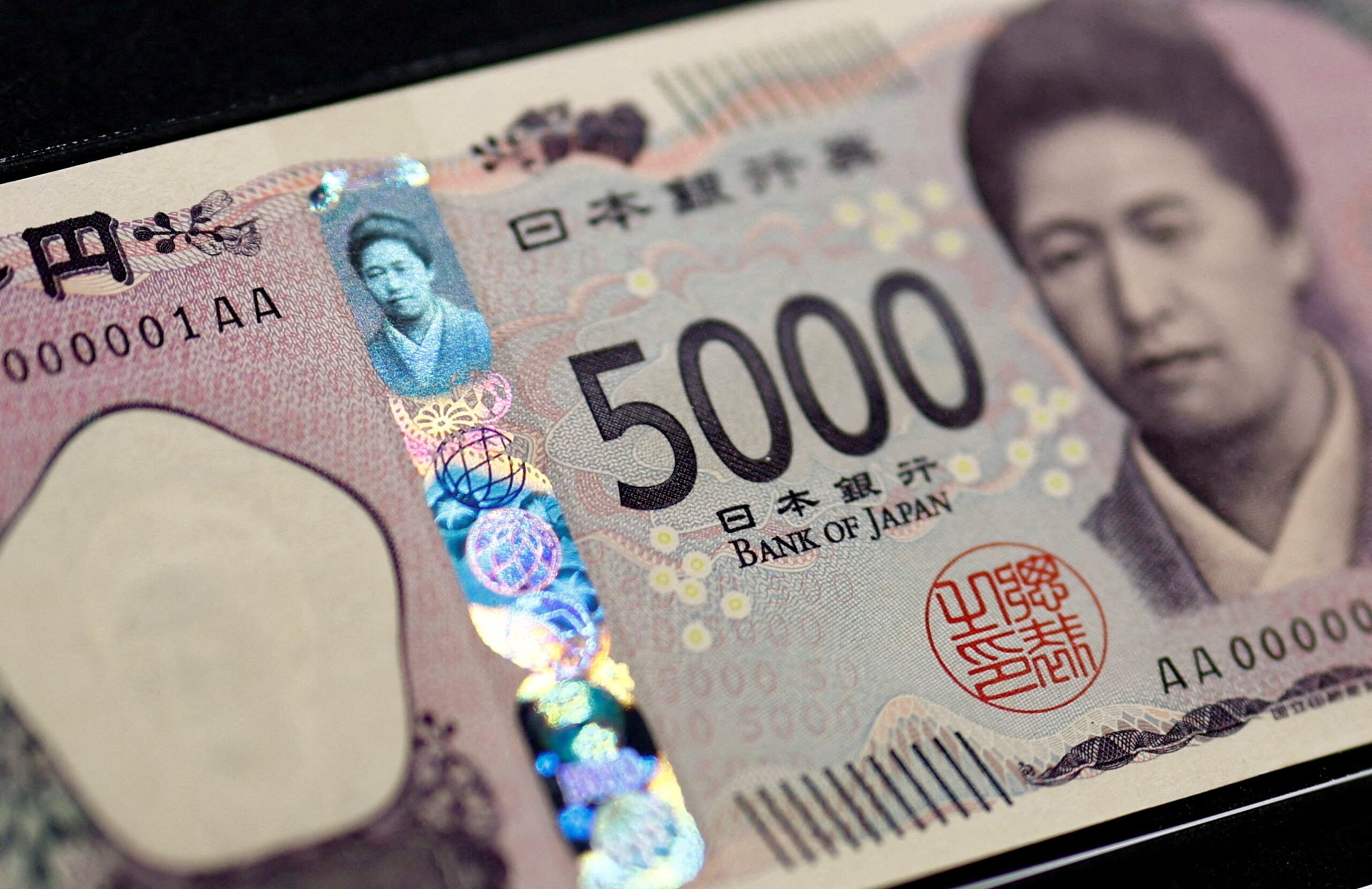
The yen tumbled to its weakest level since February, marking a significant reversal for the traditional haven currency, while higher-risk currencies posted solid gains against the dollar following a breakthrough Senate vote over the weekend that pointed toward a resolution of the political impasse in Washington.
Risk Appetite Returns
“Currencies moved in tandem with the risk-on sentiment. So some of the risk-sensitive currencies like the Aussie, they have benefited from, while the safe-haven currencies like the yen have softened a bit,” explained Moh Siong Sim, currency strategist at Bank of Singapore.
The Australian dollar emerged as one of the primary beneficiaries of the improved risk appetite, climbing approximately 0.7% to reach $0.6536 before moderating slightly to $0.6520 during Asian afternoon trading. The euro held steady at $1.1555, while the British pound continued its gradual ascent, edging up to $1.3165.
Diverging Monetary Policy Expectations Pressure Yen
Beyond the immediate market sentiment shift, the yen faces additional headwinds from a growing divergence in monetary policy expectations between Japan and the United States. Japan’s newly appointed Prime Minister Sanae Takaichi has publicly advocated for a cautious approach to interest rate increases, even as U.S. policymakers have recently signaled reluctance to implement further rate cuts.
“There was a lot of expected interest rate convergence between the U.S. and Japan, and that’s probably not playing out as smoothly or as expected,” noted Bart Wakabayashi, branch manager at State Street in Tokyo. “Maybe long yen players are unwinding.”
This policy divergence has upended earlier market expectations and appears to be forcing traders who had positioned for a narrowing interest rate differential to reconsider their strategies.
New Zealand Dollar Extends Decline
The New Zealand dollar continued its months-long slide, dropping 0.2% to $0.5635 on Tuesday, hovering near a seven-month low. The currency’s weakness reflects the broader economic slowdown gripping New Zealand’s economy, with inflation expectations remaining subdued according to fourth-quarter survey data released earlier in the session. Markets are now widely anticipating a cut to the official cash rate later this month.
The diverging fortunes of the Antipodean currencies were starkly illustrated on Monday when the New Zealand dollar hit a 12-year low against its Australian counterpart, underscoring the markedly different interest rate trajectories expected for the two neighboring economies.
Asian Currency Pressures Mount
In South Korea, the won suffered a sharp decline, plunging to a seven-month low and registering losses exceeding 2% for the month to date. The currency weakness has been driven primarily by capital flight, with both domestic and foreign investors pulling money from the technology-heavy local stock market.
“The recent upside in USD/KRW has been driven primarily by portfolio outflows, particularly locals’ investments in U.S. equities,” said Kiyong Seong, lead macro strategist for Asia at Societe Generale in Hong Kong.
Data on the Horizon
Market participants will be closely monitoring incoming economic data for further directional cues, with British weekly wage figures and Germany’s closely-watched ZEW sentiment survey scheduled for release later in the trading session. These indicators could provide additional insight into the health of major developed economies and potentially influence currency positioning heading into the remainder of the week.
The current market dynamics underscore the complex interplay between political developments, central bank policy expectations, and broader risk sentiment in driving currency movements across global markets.
WHAT YOU SHOULD KNOW
Risk-on sentiment has returned to currency markets following signs of a U.S. government shutdown resolution.
The Japanese yen hit a nine-month low as traders shifted away from safe-haven assets, while higher-risk currencies like the Australian dollar rallied. The yen faces additional pressure from Japan’s reluctance to raise interest rates while the U.S. maintains a hawkish stance, creating an unfavorable policy divergence.
Meanwhile, capital outflows are weighing on Asian currencies, particularly the South Korean won and New Zealand dollar, reflecting broader economic concerns in the region.
The market mood hinges on Washington’s political breakthrough and diverging global monetary policies.