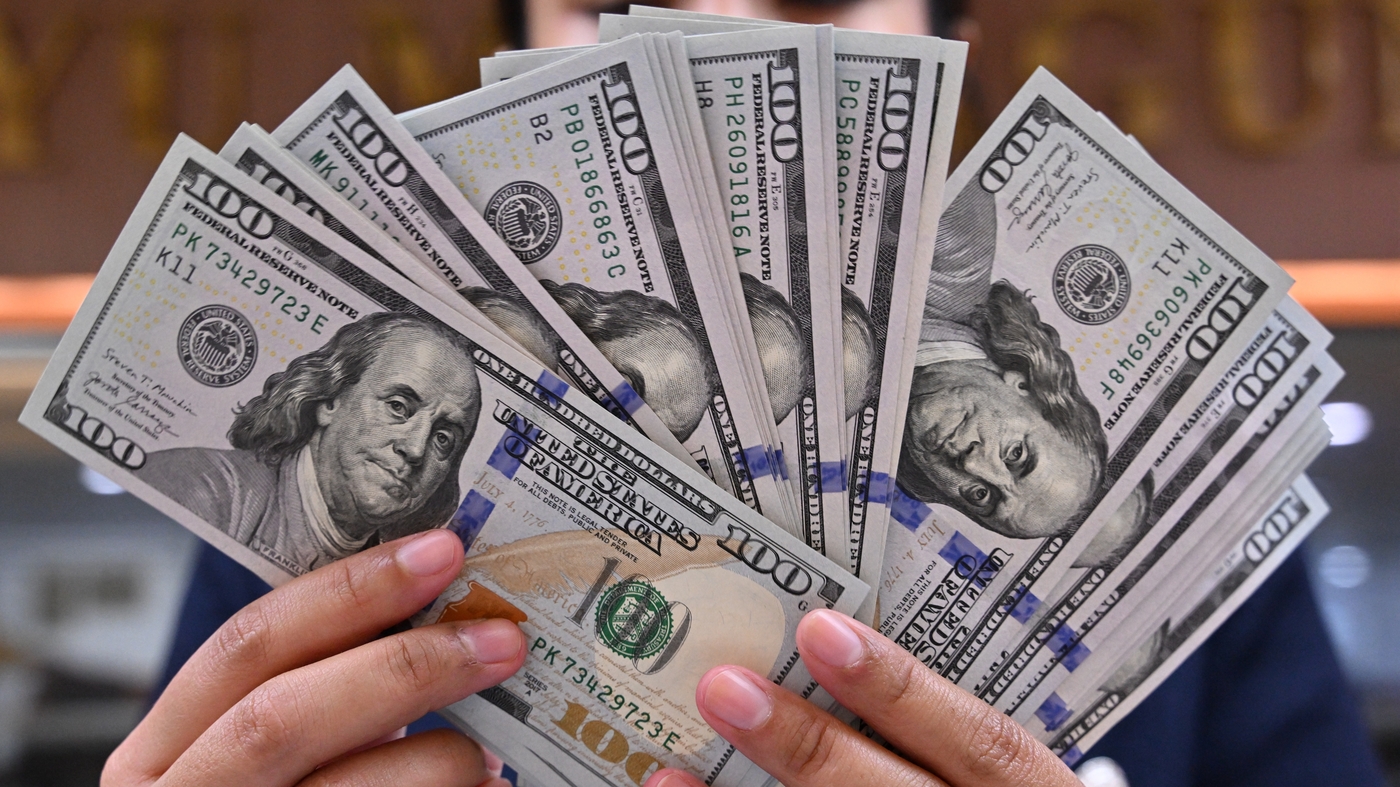
The U.S. dollar steadied on Friday, closing the week almost unchanged as traders navigated a delicate balance between the Federal Reserve’s hawkish tone and growing worries about the health of the U.S. economy.
The greenback, which had started the month on a strong footing following Fed Chair Jerome Powell’s warning against premature rate cuts, lost momentum midweek after weaker-than-expected labor data reignited fears of a slowdown.
The uncertainty was compounded by an extended government shutdown in Washington—now the longest in U.S. history—leaving investors without key economic indicators such as the non-farm payrolls report.
Instead, traders turned to private sector data showing a dip in October employment, particularly in government and retail sectors. Analysts attributed part of the job losses to cost-cutting measures and a growing reliance on artificial intelligence technologies.
“Markets are reacting sharply to every labor market hint,” said Mohit Kumar, economist at Jefferies. “Powell’s recent comments suggest that the bar for a December rate cut remains high, but with the shutdown clouding the data picture, investors are jittery.”
U.S. Treasury yields were flat on Friday after dropping a day earlier amid economic uncertainty and legal questions surrounding President Donald Trump’s tariff policies. The dollar index, which measures the greenback against six major peers, held steady at 99.67, marking a marginal 0.05% decline for the week.
The euro edged up 0.1% to $1.1559, buoyed by expectations that the European Central Bank will maintain its policy rate, even as markets foresee further rate cuts in the U.S. and U.K. next year. Meanwhile, sterling and the Swiss franc lagged behind, pressured by weak economic sentiment across Europe.
However, fresh data from Beijing cast a shadow over the global outlook. Chinese exports tumbled unexpectedly in October—the steepest decline since February—highlighting the country’s ongoing struggle to pivot away from U.S. markets amid tariff pressures. Economists warned that this could increase competitive tension in Europe, as China seeks alternative trade destinations.
The Japanese yen also drew attention as a safe-haven asset, climbing briefly before easing slightly to 153.14 per dollar. Analysts noted that with the Bank of Japan unlikely to raise rates again until at least May, the yen’s movements may remain muted despite persistent inflation above 3%.
Global equities mirrored the uncertainty, with tech-heavy markets on track for their steepest weekly losses in seven months as investor sentiment turned risk-averse.
Barclays estimated a 60% chance that the U.S. government shutdown will end between November 11 and 21 but warned of a 15% risk it could drag into December—potentially extending the cloud of uncertainty over both markets and monetary policy.
As the year winds down, traders are bracing for a volatile finish, with December’s Federal Reserve meeting expected to hinge on the yet-to-be-released labor market data. For now, the dollar remains caught in a tug-of-war between policy expectations and economic reality.
WHAT YOU SHOULD KNOW
The U.S. dollar ended the week steady as investors weighed the Federal Reserve’s hawkish stance against growing economic uncertainty, with weak labor data, the prolonged government shutdown, and falling Chinese exports adding to global market anxiety.