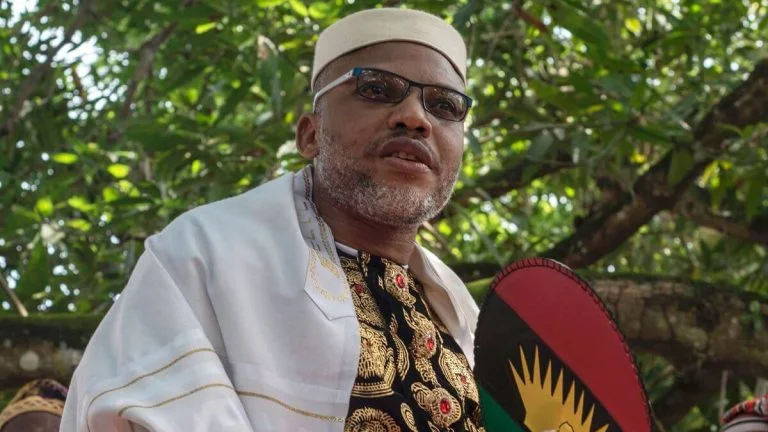
The detained leader of the Indigenous People of Biafra (IPOB), Nnamdi Kanu, was unable to begin his defence in the ongoing alleged terrorism trial at the Federal High Court in Abuja.
Kanu explained that he could not proceed because he had not received his case file, which he needed to review and prepare adequately for his defence.
Following the withdrawal of his legal team led by former Attorney General of the Federation, Kanu Agabi, the IPOB leader requested a brief adjournment to allow time for preparation. When the hearing resumed, prosecuting counsel Adegboyega Awomolo (SAN) reminded the court that the session was set for Kanu’s defence.
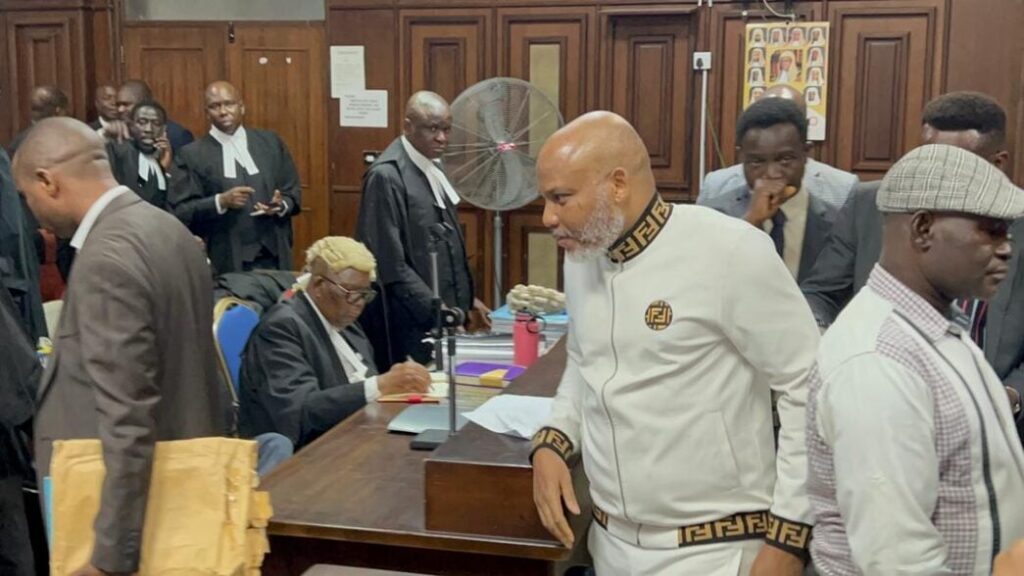
Representing himself, Kanu reiterated his inability to proceed, citing that the Department of State Services (DSS) had yet to facilitate the delivery of his case file. He asked for a short adjournment until Monday, October 27, so his associates could bring the file over the weekend.
Kanu further requested that the court grant him permission to meet witnesses arriving from several countries, including the United Kingdom, the United States, Kenya, and Ethiopia. He urged that the DSS allow him to meet with visitors on Saturdays and Sundays to enable proper preparation.
Awomolo did not oppose the application, leading Justice Omotosho to direct the DSS to permit weekend access for Kanu’s visitors. The judge then adjourned the case to October 27 for Kanu to open his defence, cautioning that the six days allotted for his defence, which started on October 23, would not be extended.
What You Should Know
Nnamdi Kanu, the leader of the Indigenous People of Biafra (IPOB), faces terrorism-related charges stemming from his movement’s push for Biafra’s independence.
His ongoing trial has been marked by legal challenges, including disputes over his detention by the Department of State Services (DSS) and access to legal materials. The recent adjournment request underscores the tension between Kanu’s right to a fair defence and procedural constraints surrounding his custody.
His case remains one of the most closely followed legal proceedings in Nigeria, with significant implications for national unity and human rights debates.