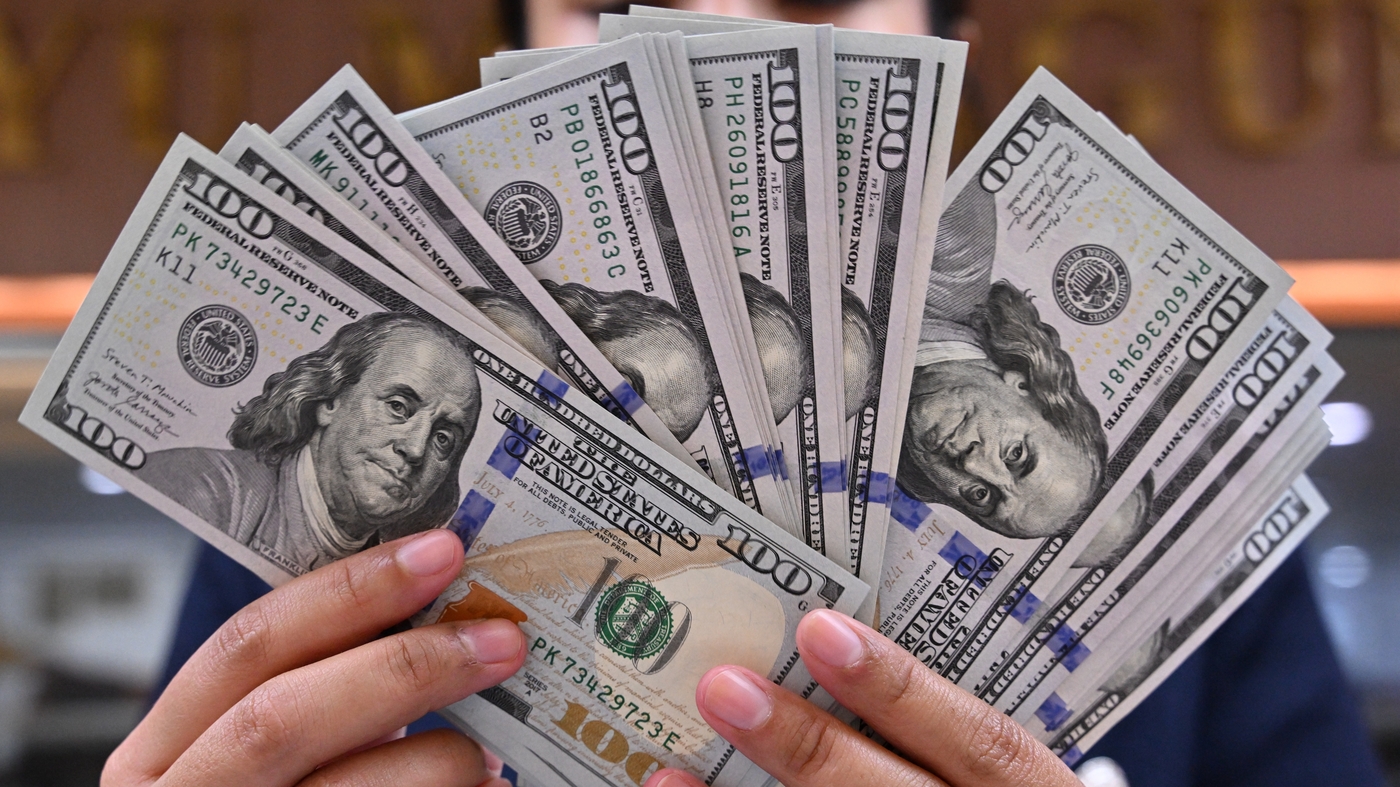
The U.S. dollar drifted higher on Thursday against a basket of major global currencies as traders exercised caution ahead of the long-delayed release of U.S. consumer inflation data, now expected to be released on Friday. Market sentiment remained restrained, further clouded by escalating trade tensions between Washington and Beijing.
As of 05:25 GMT, the U.S. dollar index—which measures the greenback against the yen, the pound sterling, the euro, and three other major currencies—rose 0.11% to 99.038. The dollar also advanced 0.28% to 152.37 yen, briefly touching 152.57 yen—its strongest level since mid-October.
The yen weakened as investors awaited details of an anticipated large-scale stimulus package from Japan’s new Prime Minister, Sanae Takaichi, who is widely regarded as a fiscal and monetary dove. Sources suggest the package could exceed last year’s $92 billion, targeting relief for households burdened by rising inflation.
Economists believe that while the Bank of Japan (BOJ) is unlikely to be swayed from its tightening path, any rate hike may not occur before December or early next year.
In the United Kingdom, sterling remained under pressure after official data revealed that consumer inflation held steady at 3.8% last month—contrary to expectations of a rise. Traders swiftly priced in a 75% probability of a Bank of England rate cut by December, up from 46% before the release, though those odds have since eased to around 61%. The pound slipped 0.12% to $1.3340, while the euro also weakened 0.12% to $1.1599.
Meanwhile, geopolitical tensions continue to rattle investor nerves. Reports indicate that the Trump administration is weighing restrictions on software-driven exports to China—including laptops and jet engines—in retaliation for Beijing’s latest round of rare earth export curbs. Despite the potential for a trade war escalation, the broader market reaction has been relatively muted, with safe-haven assets such as gold and the yen showing limited demand.
“Trade tensions remain the driver of volatility in the markets,” said Kyle Rodda, senior financial markets analyst at Capital.com. “But it can be argued that investors see these threats as brinkmanship—a tactic to push negotiations forward rather than genuine policy moves.”
Compounding the uncertainty, the ongoing U.S. government shutdown—now nearing its 23rd day—has stalled the release of several key economic reports, including employment data. The Consumer Price Index (CPI), already delayed by over a week, is expected on Friday, but analysts suggest that its impact may be limited.
“Markets are marking time. There’s not a lot of reliable news,” said Gavin Friend, strategist at National Australia Bank. “Even the CPI report is almost being looked through because, regardless of what it shows, everyone expects the Fed to cut next week—and probably again in December.”
Market pricing indicates a 97% chance of a quarter-point Federal Reserve rate cut at its October 29 meeting, with a total of roughly 48.5 basis points of reductions expected by year’s end.
In Asia, optimism over Prime Minister Takaichi’s policy plans initially drove the Nikkei 225 to a record high just below the 50,000 mark earlier in the week. However, analysts caution that the “Takaichi trade”—characterized by higher stocks, a weaker yen, and a steeper yield curve—may have already run its course.
“Buying based on policy hopes from a Takaichi government has already peaked,” noted Yutaka Miura, senior technical analyst at Mizuho Securities. “The market is now at a stage where it needs to evaluate concrete policies and their feasibility.”
The dollar’s modest rise reflects global investor caution amid delayed U.S. data, revived trade tensions, and shifting monetary expectations in Japan and the U.K. While market sentiment remains watchful, traders are largely betting that central banks—from Washington to Tokyo—will soon lean toward policy easing to sustain growth.
WHAT YOU SHOULD KNOW
The dollar strengthened slightly as global markets stayed cautious ahead of delayed U.S. inflation data and rising U.S.-China trade tensions, while expectations of rate cuts by major central banks—particularly the Fed and Bank of England—continued to shape investor sentiment.