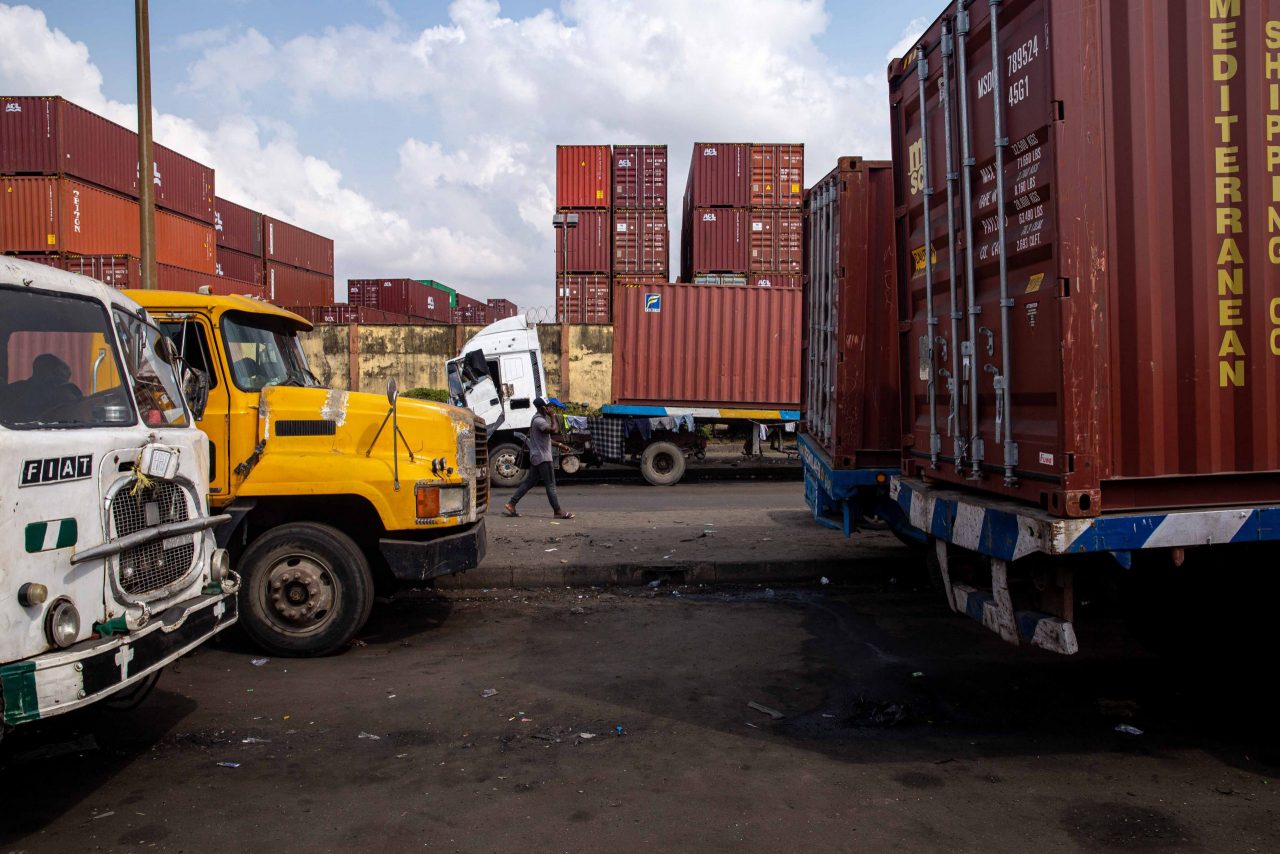
Nigeria’s manufacturing sector faces a deepening crisis as its reliance on imports of raw materials surges, dealing a significant blow to the government’s long-standing import substitution strategy and raising urgent questions about the country’s industrial future.
Alarming Import Growth
Financial data reveals a troubling trend: raw material imports have climbed sharply by 19.7 percent year-on-year, reaching N3.53 trillion in the first half of 2025, up from N2.95 trillion during the same period in 2024. This escalation underscores a growing vulnerability in Africa’s largest economy, as manufacturers increasingly look abroad to sustain operations.
The imported materials span critical sectors of the economy. Sugar refineries depend heavily on cane and associated products from overseas suppliers. Paint manufacturers source binders and resins internationally, while cement producers import gypsum in substantial quantities.
Leather goods manufacturers rely on imported hides and skins, and lubricant producers bring in specialized additives. The supply chain stretches across continents, with major imports flowing from Brazil, the United States, the United Kingdom, France, China, Germany, and Tanzania.
A Policy at Odds with Reality
The surge in imports stands in stark contradiction to Nigeria’s import substitution policy—a framework designed to replace foreign goods with domestically manufactured alternatives, thereby stimulating local industry, conserving precious foreign exchange, and creating employment opportunities. Instead, the current trajectory suggests the policy has stalled, if not failed.
Professor Nnanyelugo Ike-Muonso, Director General of the Raw Materials Research and Development Council (RMRDC), paints an even grimmer picture. He reveals that over 70 percent of inputs used in Nigerian manufacturing are sourced from outside the country—a structural weakness that diminishes the sector’s GDP contribution, stifles job creation, and inflates production costs.
“Unless urgent reforms are made, the country risks remaining locked in a cycle of economic dependency,” Prof. Ike-Muonso warns. He advocates for an ambitious target: reducing foreign raw material dependence by at least 60 percent over the next five years to transform Nigeria into an industrial powerhouse.
The Perfect Storm: Multiple Pressures
Industry analysts point to a confluence of factors driving this import dependency. High energy costs continue to plague manufacturers, making local production uncompetitive. The country lacks sufficient processing capacity to transform indigenous raw materials into manufacturing inputs. Perhaps most damaging has been the persistent devaluation of the naira, which has made imported materials increasingly expensive while simultaneously making backward integration projects financially untenable.
The Manufacturers Association of Nigeria (MAN) reports that raw material imports totaled N6.64 trillion in 2024 alone. Segun Ajayi-Kadir, MAN’s Director General, notes that many companies have been forced to scale down or abandon backward integration plans due to fiscal pressures, insecurity, and an increasingly hostile operating environment.
Adding insult to injury, Ajayi-Kadir reveals a perverse economic reality: “Locally sourced raw materials are supposed to be cheaper. But sadly, in some cases, we discovered that the imported ones are even cheaper. How do you encourage people to buy local materials?”
Divergent Views on Solutions
Gabriel Idahosa, president of the Lagos Chamber of Commerce and Industry, attributes the crisis to the fundamental failure of Nigeria’s import substitution strategy. He argues that while raw material imports aren’t inherently harmful—provided Nigeria can balance them with raw material exports—the reality is far from this equilibrium.
Idahosa highlights technological limitations: “If you are manufacturing a car in Nigeria, you cannot backward integrate to start building engines or even produce tires. You more or less still import most of the components and just put them together.”
Former MAN President Mansur Ahmed calls for a fundamental transformation: “Our manufacturing sector is weak because it is dependent on imported materials that we then process. We must, therefore, scale up or scale down. Our manufacturers have to go back and do the transformation.”
Government Response and New Measures
In response to the crisis, authorities have introduced several initiatives. The federal government recently granted RMRDC authority to implement tax incentives rewarding manufacturers who use locally sourced inputs. Under this scheme, companies that research, develop, and patronize local raw materials will soon pay significantly lower taxes than those dependent on imports.
The National Assembly has also taken action, passing the Raw Materials Research and Development Council Amendment Bill in 2025. This legislation mandates that no raw material can leave Nigeria’s shores without undergoing at least 30 percent processing or value addition—a measure designed to stem the export of unprocessed commodities.
Dr. Muda Yusuf, Chief Executive Officer of the Center for the Promotion of Private Enterprise, emphasizes that proper government support could revolutionize the economy: “The government must provide appropriate policies that encourage manufacturers to backwardly integrate and reduce dependence on imported raw materials.”
Untapped Potential
Despite the grim statistics, Prof. Ike-Muonso remains cautiously optimistic about Nigeria’s prospects. He points to the country’s abundant resources: over 120 commercially viable solid minerals, vast agricultural resources, and a youthful, energetic population. The RMRDC’s Research and Demonstration Plant Complex in Abuja houses over 50 pilot plants designed to convert indigenous materials—including cassava, talc, and shea—into finished industrial products.
“What we lack is not potential, but strategic coordination, bold implementation, and technology-backed commitment,” he states, urging Nigeria to fully embrace the Fourth Industrial Revolution through smart technologies and resource-efficient processes.
As the African Continental Free Trade Area (AfCFTA) creates new opportunities for regional raw material sourcing and processing, Nigerian stakeholders face a critical juncture. The question remains whether the country can reverse its import dependency trajectory and unlock its considerable industrial potential, or whether it will remain trapped in what experts describe as a cycle of economic dependency that threatens its industrial future.
WHAT YOU SHOULD KNOW
Nigeria’s manufacturing sector is in crisis, with over 70% of its raw materials now imported—a dependency that directly undermines the government’s import substitution policy. Raw material imports surged to N3.53 trillion in the first half of 2025, driven by high energy costs, currency devaluation, and lack of local processing capacity. Paradoxically, imported materials are often cheaper than local alternatives, discouraging backward integration.
Experts warn that without urgent reforms—including a targeted 60% reduction in import dependency over five years—Nigeria risks permanent economic dependency despite possessing over 120 commercially viable minerals and abundant agricultural resources.