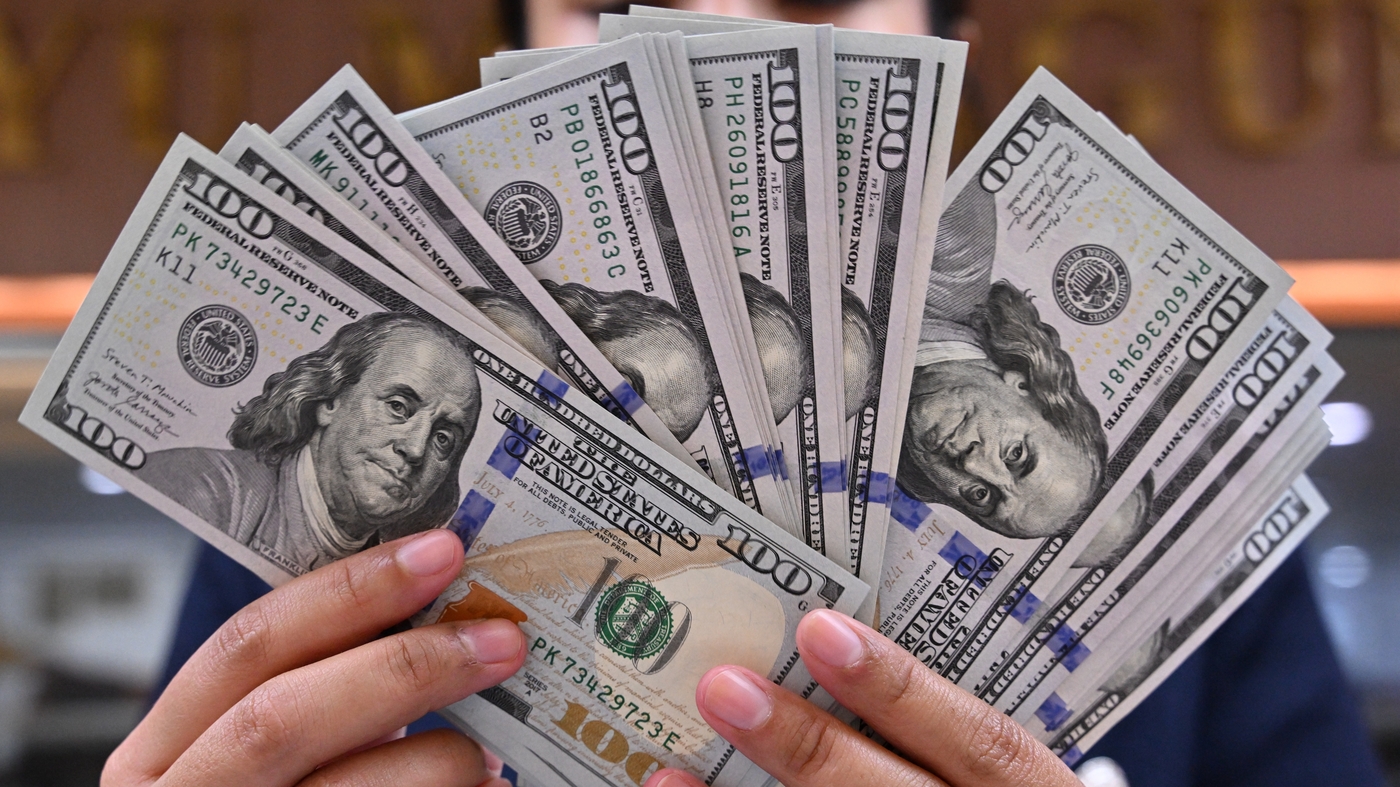
The U.S. dollar tumbled against major currencies on Wednesday, extending its retreat as investors recalibrated monetary policy expectations following Federal Reserve Chair Jerome Powell’s dovish remarks that strengthened the case for additional interest rate reductions in the months ahead.
The greenback’s decline proved particularly pronounced against the Japanese yen and Australian dollar, both of which clawed back ground after suffering sharp sell-offs last week. The dollar index, which tracks the currency against six major peers, slipped 0.2% to 98.844 by 0536 GMT, marking its second consecutive session of losses.
Powell Leaves Door Ajar for Policy Easing
In testimony delivered Tuesday, Powell painted a picture of a U.S. labor market stuck in what he characterized as “low-hiring, low-firing doldrums,” language that traders interpreted as clearing the runway for monetary accommodation. Significantly, the Fed chief suggested that the ongoing government shutdown—which has disrupted the flow of official economic statistics—has not yet hampered policymakers’ ability to gauge the economic landscape.
Financial markets have responded decisively. LSEG pricing data now reflects near-certainty that the Federal Reserve will deliver a quarter-point rate cut at its October 28-29 policy gathering, followed by another reduction in December. Traders are penciling in three additional cuts throughout next year, representing a substantial dovish shift in monetary policy expectations.
‘Goldilocks’ Sentiment Takes Hold
“At this point, the market is pretty much trading ‘Goldilocks,'” noted analysts at DBS, referring to the favorable combination of robust economic growth paired with accommodative monetary conditions. Risk assets have rallied on this benign backdrop, with investors—at least temporarily—pushing aside concerns about trade tensions, the federal government shutdown, and lingering inflation worries.
That optimism received a boost when U.S. Trade Representative Jamieson Greer told CNBC on Tuesday that plans remain on track for President Donald Trump to meet with Chinese President Xi Jinping, helping to ease anxiety over the escalating tariff dispute between the world’s two largest economies.
Asian Currencies Find Footing
The Japanese yen strengthened 0.4% to 151.23 per dollar, touching as low as 151.005 earlier in the session—a notable recovery even as political uncertainty clouds the outlook for Japan’s next prime minister. Local media reports suggest a parliamentary vote tentatively scheduled for next Tuesday may face delays due to ongoing political negotiations.
Meanwhile, the Australian dollar advanced 0.4% to $0.6514, bouncing back from Tuesday’s 0.5% decline that had pushed the currency to its lowest level since late August at $0.64405. The Aussie’s resilience comes despite the backdrop of simmering trade friction between Beijing and Washington—a testament to improved risk sentiment in global markets.
Currency watchers also pointed to support from Beijing’s policy signals. Chinese authorities set the official yuan fixing stronger than the closely monitored 7.1 per dollar threshold for the first time since November, a move some analysts interpreted as Beijing’s attempt to stabilize its currency and project confidence amid trade tensions. The offshore yuan traded at 7.1284 per dollar, with the greenback down 0.2%.
Mixed Fortunes Across Other Major Currencies
The New Zealand dollar lagged its Australian counterpart, edging up just 0.1% to $0.5718 after touching a six-month nadir of $0.56839 on Tuesday. The kiwi’s muted performance came as Reserve Bank of New Zealand Chief Economist Paul Conway told Bloomberg TV on Wednesday that policymakers stand ready to implement further rate reductions if economic conditions warrant, following last week’s outsized cut.
In Europe, the euro gained 0.1% to $1.1621, building on Tuesday’s 0.3% advance. The single currency found support from the French government’s proposal to suspend landmark pension reforms—a politically sensitive move that may ease domestic tensions.
Sterling climbed 0.3% to $1.3355, recovering from Tuesday’s losses that followed official data showing a deceleration in UK wage growth, a development that could give the Bank of England greater flexibility on monetary policy.
Looking Ahead
As markets digest Powell’s comments and position for a potential easing cycle, attention will turn to incoming economic data—once the government shutdown ends—and further signals from Fed officials about the path of monetary policy. The interplay between U.S. rate expectations, trade negotiations with China, and political developments in major economies will likely remain a key driver of currency markets in the sessions ahead.
For now, the prevailing “Goldilocks” narrative appears to be holding sway, with traders betting that central banks can engineer a soft landing while supporting growth—a delicate balancing act that will face its share of tests in the months to come.
WHAT YOU SHOULD KNOW
The U.S. dollar weakened on Wednesday as Federal Reserve Chair Jerome Powell signaled potential rate cuts ahead, citing a sluggish labor market. Markets now expect multiple Fed rate reductions through year-end and into next year, triggering a “Goldilocks” scenario where investors anticipate both economic stability and looser monetary policy.
The yen and Australian dollar rebounded sharply, while trade tensions and government shutdown concerns took a back seat to optimism about easier financial conditions. Powell’s dovish stance has shifted expectations toward aggressive Fed easing, weakening the dollar, and boosting risk appetite across global markets.