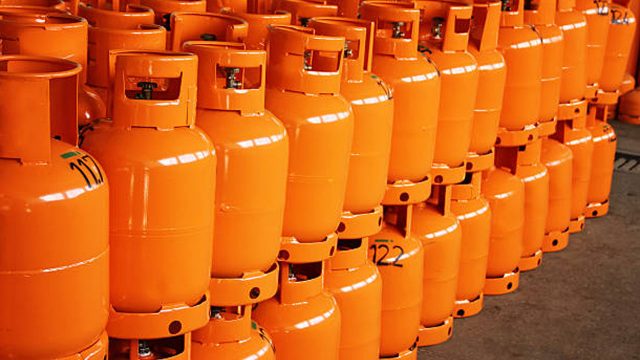
Nigeria’s Minister of State for Petroleum Resources (Gas), Ekperikpe Ekpo, has directed authorities to take decisive action against marketers suspected of hoarding liquefied petroleum gas (LPG) or exploiting consumers, as cooking gas prices have doubled across the country in recent weeks.
The directive, announced Monday through a statement by the minister’s spokesman, Louis Ibah, comes as Nigerians grapple with a severe spike in LPG costs—from approximately ₦1,000 per kilogram to as high as ₦2,000 per kilogram in some areas—and deepening scarcity that has persisted despite the resolution of an earlier industrial dispute.
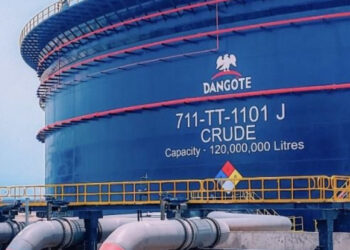
The crisis began when the Petroleum and Natural Gas Senior Staff Association of Nigeria (PENGASSAN) embarked on a strike action during a dispute with the Dangote refinery. Although the strike was suspended nearly two weeks ago, prices have remained elevated and availability has worsened, raising questions about artificial scarcity and price manipulation in the supply chain.
Minister Ekpo attributed the dramatic price increase to what he described as a convergence of two significant supply-side factors. The first was the PENGASSAN industrial action at the Dangote refinery, which temporarily brought LPG loading operations to a standstill. The second was ongoing maintenance activities at the Nigeria LNG Train 4 facility, which has reduced the volume of gas flowing into the domestic market.
“The situation is temporary and will normalize by next week,” Ekpo assured Nigerians, appealing for calm and understanding as authorities work to restore normal supply levels.
The impact on household budgets has been severe and uneven across the country. In Lagos, Nigeria’s commercial capital, residents are now paying between ₦2,500 and ₦3,000 per kilogram for cooking gas, according to reports from Nairametrics last week. The cost of refilling a standard 12.5 kg cylinder has climbed to ₦21,600 in some parts of the city, while in the Amuwo Odofin area, the same service now commands as much as ₦26,000—equivalent to ₦2,080 per kilogram.
The situation in Abuja, while marginally better, remains punishing for households. Around the Nyanya axis, a 12.5 kg cylinder refill costs approximately ₦20,000, translating to ₦1,600 per kilogram.
Beyond the sticker shock, many Nigerians are confronting outright scarcity. Numerous filling stations and gas plants have reportedly exhausted their stocks, leaving desperate consumers at the mercy of street vendors who are charging premium prices for limited supplies.
The combination of reduced domestic supply from NLNG maintenance, disrupted operations at Dangote, and allegations of hoarding by marketers has created what industry observers describe as a perfect storm in Nigeria’s LPG market.
The minister’s order for a clampdown signals the government’s recognition that the current situation may involve more than just legitimate supply constraints. By targeting marketers who may be hoarding supplies or exploiting the crisis for profit, authorities are seeking to separate genuine scarcity from artificial manipulation.
However, with the minister promising normalization “by next week,” the effectiveness of the intervention and the accuracy of the timeline will be closely watched by millions of Nigerian households who depend on LPG for daily cooking needs.
As the situation develops, consumer advocacy groups and industry stakeholders will be monitoring whether the government’s dual approach—addressing supply constraints while cracking down on exploitation—can bring relief to a population already burdened by high inflation and cost-of-living pressures.
WHAT YOU SHOULD KNOW
Nigeria’s cooking gas prices have doubled—from ₦1,000 to ₦2,000 per kilogram—due to a workers’ strike at the Dangote refinery and maintenance at the NLNG facility. Despite the strike ending two weeks ago, prices remain high and scarcity persists.
The government has now ordered a crackdown on marketers suspected of hoarding and price exploitation, promising the situation will normalize within a week. Consumers in Lagos are paying up to ₦26,000 for a 12.5 kg cylinder, while many filling stations have run out of stock entirely.
The crisis reveals a potential mix of legitimate supply disruption and market manipulation that authorities are now moving to address.