A brief but devastating nationwide strike by oil and gas workers has dealt a severe blow to Nigeria’s energy sector, forcing production shutdowns that erased nearly a fifth of the country’s oil output and triggering warnings of systemic economic risks.
The industrial action by the Petroleum and Natural Gas Senior Staff Association of Nigeria (PENGASSAN), which began on September 28, brought critical infrastructure across Africa’s largest oil producer to a standstill within hours, according to internal reports from the Nigerian National Petroleum Company Limited (NNPCL).
In a confidential letter to regulators dated September 29, obtained by Reuters, NNPCL Group Chief Executive Officer Bayo Ojulari detailed the staggering toll: crude oil production plummeted by approximately 283,000 barrels per day—representing roughly 16 percent of national output. Natural gas production dropped by 1.7 billion standard cubic feet daily, accounting for 30 percent of marketed gas. The cascading effects knocked out more than 1,200 megawatts from the national power grid, equivalent to 20 percent of electricity generation.
“Significant revenue losses are projected at current deferment levels, driven by missed liftings and gas sales. Cashflow pressures are immediate and compounding,” Ojulari wrote, underscoring the financial hemorrhaging facing the state oil company, which serves as a cornerstone of Nigeria’s economy.
Critical Infrastructure Shuttered
The strike’s impact rippled across Nigeria’s oil and gas infrastructure with surgical precision. Major facilities forced offline included Shell’s Bonga floating production unit, one of the country’s largest offshore oil operations, and the strategically important Oben gas plant. The planned restart of liquefied natural gas production at Nigeria LNG’s Train 5 and 6 facilities was postponed indefinitely, while midstream pipeline networks experienced widespread disruptions.
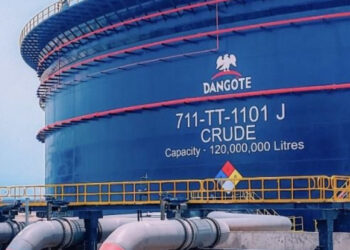
Export operations ground to a halt at key terminals including Akpo, Brass, and Egina, with cargo loadings delayed and vessels left waiting offshore—raising the specter of costly demurrage charges. Critically, fuel deliveries to the Dangote Refinery, the $19 billion facility that represents Africa’s largest oil processing complex with a capacity of 650,000 barrels per day, were also disrupted.
The NNPC chief executive warned that at least five major maintenance projects and critical infrastructure timelines had slipped, potentially creating longer-term operational challenges even after production resumes.
Beyond Dangote: Systemic Vulnerabilities Exposed
While the strike was triggered by the dismissal of approximately 800 unionized workers at the Dangote Refinery, Ojulari emphasized that “the industrial action has impacts that extend beyond the Dangote Refinery.”
His assessment painted a grim picture of systemic vulnerabilities: “The disruptions pose systemic risks to energy supply, personnel and asset security and the wider economy,” constituting what he termed a “material threat to national energy security” if the standoff had been prolonged.
The NNPCL activated emergency business continuity protocols, deploying non-union staff to take over operations where feasible and maintaining engagement with operating partners and security stakeholders. However, these stopgap measures could not prevent the immediate production losses and revenue shortfalls.
Government Intervention Ends Strike
Following swift government intervention, PENGASSAN suspended the strike after brokered negotiations, easing the most immediate supply risks. The union’s decision to down tools had been sparked by what it viewed as unjust mass layoffs at the Dangote facility, highlighting ongoing tensions between labor rights and operational efficiency in Nigeria’s vital petroleum sector.
However, despite the strike’s suspension, Ojulari cautioned regulators that “systemic vulnerabilities remained,” suggesting that the underlying issues exposing Nigeria’s energy infrastructure to such rapid disruption have not been fully addressed.
For Nigeria, which depends on oil revenues for approximately 90 percent of export earnings and roughly half of government revenues, even brief disruptions carry outsized economic consequences. The timing is particularly sensitive as the country seeks to attract foreign investment in its energy sector and stabilize production levels that have declined significantly from historic peaks due to aging infrastructure, security challenges, and operational inefficiencies.
Industry analysts warn that the episode demonstrates the fragility of Nigeria’s energy supply chain and the potential for labor disputes to trigger cascading economic effects across West Africa’s largest economy.
WHAT YOU SHOULD KNOW
A one-day strike by Nigeria’s oil workers union in late September 2025 wiped out 16% of the country’s oil production and 30% of its gas output within 24 hours, exposing critical vulnerabilities in Africa’s largest energy producer.
The industrial action—sparked by mass layoffs at the Dangote Refinery—forced major facilities offline, delayed billions in revenue, and knocked out a fifth of national power generation before government intervention ended the strike.
The incident starkly demonstrates how labor disputes can rapidly cripple Nigeria’s oil-dependent economy, which relies on petroleum for 90% of export earnings, revealing systemic weaknesses that persist even after the strike’s resolution.