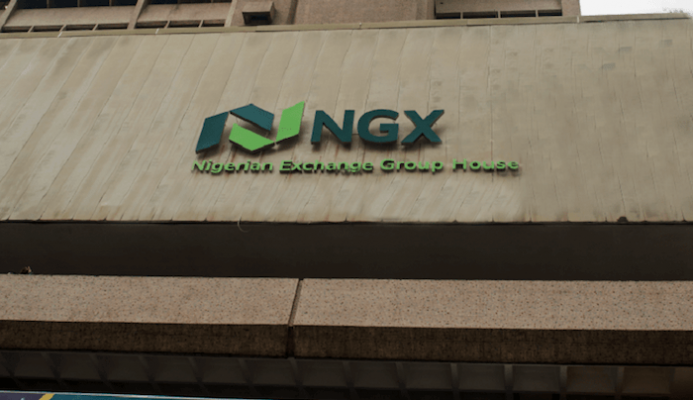
Foreign investor participation in Nigeria’s stock market has witnessed a dramatic resurgence, with transaction values surging to N1.718 trillion by the end of August 2025, representing a staggering 541% increase from the N262.85 billion recorded during the same period in 2021, according to data released by the Nigerian Exchange Limited (NGX).
The robust growth in foreign capital flows signals a remarkable turnaround in international investor sentiment toward Africa’s largest economy, which has grappled with currency volatility, inflation pressures, and economic headwinds in recent years.
Foreign Portfolio Inflows Jump Over 500%
Breaking down the foreign investment figures, the NGX’s domestic and foreign investment report reveals that Foreign Portfolio Investment (FPI) inflows reached N748.23 billion during the eight months ending August 2025—a substantial 506% leap from the N123.46 billion recorded in the corresponding period of 2021.
However, the data also shows increased capital mobility, with investment outflows climbing 436.8% to N748.23 billion in 2025, up from N139.39 billion four years earlier. The near-parity between inflows and outflows suggests heightened trading activity and portfolio rebalancing by international investors, rather than sustained long-term capital flight.
Domestic Market Activity Explodes
The foreign investor resurgence forms part of a broader revival across Nigeria‘s equity markets. Total transactions on the Nigerian bourse surged 240.8% to N6.916 trillion as of August 2025, compared to N1.213 trillion during the same period in 2021.
Domestic investors—both retail and institutional—have emerged as the backbone of this growth. Retail investor transactions skyrocketed 475.8% to N2.332 trillion from N404.77 billion, while institutional investors saw their transaction values climb 473.3% to N3.130 trillion, up from N545.99 billion in 2021.
The parallel growth in domestic and foreign participation underscores what market analysts describe as a broad-based confidence recovery in Nigerian equities, driven by improved market infrastructure, corporate earnings growth, and potentially attractive valuations following years of underperformance.
Domestic Investors Still Dominate
Despite the impressive foreign investment surge, Nigerian investors continue to dominate trading activity on the exchange. The NGX noted that domestic transactions have accounted for approximately 85% of total trading volume in recent years, with foreign transactions comprising roughly 15%.
Historical data provided by the exchange shows that over the past 18 years, domestic transactions have grown 33.15% from N3.556 trillion in 2007 to N4.735 trillion in 2024. During the same period, foreign transactions expanded 38.31% from N616 billion to N852 billion.
“The long-term trends further underline the growing importance of the domestic market,” the NGX stated in its report, highlighting the increasing sophistication and depth of local investor participation.
What’s Driving the Revival?
Market analysts attribute the resurgence in investor activity to several converging factors, including improved macroeconomic stability, corporate reforms, and potentially more favorable currency policies that have reduced foreign exchange risk concerns.
The significant growth in both institutional and retail domestic participation also suggests strengthening confidence among Nigerian investors in their own capital markets, possibly driven by enhanced financial literacy, improved market access through digital platforms, and attractive returns relative to other asset classes.
While the near-equal inflows and outflows among foreign investors indicate ongoing volatility and active portfolio management, the sheer scale of transaction growth represents a vote of confidence in the Nigerian equity market’s resilience and potential.
As Nigeria continues to position itself as a key investment destination in sub-Saharan Africa, the sustained growth in both domestic and foreign market participation will be critical to deepening capital markets and supporting long-term economic development.
WHAT YOU SHOULD KNOW
Nigeria’s stock market has experienced a remarkable revival, with foreign investor transactions surging 541% to N1.718 trillion by August 2025, while total market transactions jumped 241% to N6.916 trillion.
This dramatic growth reflects renewed confidence in Nigerian equities from both international and domestic investors—with retail and institutional participants driving equally impressive gains of over 470% each.
Despite the foreign investment surge, Nigerian investors remain the market’s backbone, accounting for 85% of trading activity. The across-the-board increases signal a fundamental shift in investor sentiment and suggest that Africa’s largest economy is successfully rebuilding trust in its capital markets after years of economic uncertainty.