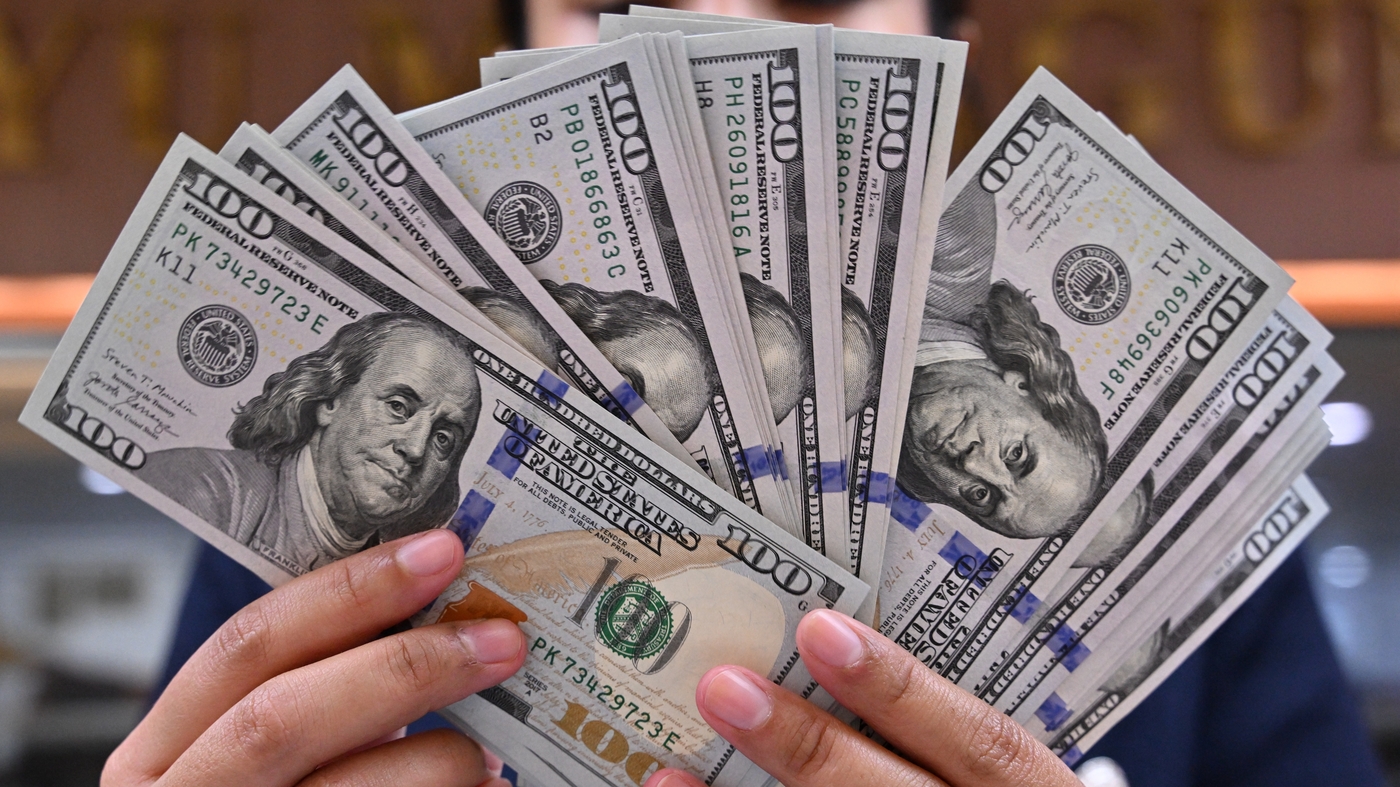
The U.S. dollar traded unsteadily on Tuesday as financial markets grappled with the twin uncertainties of an impending government shutdown and its potential impact on critical economic data releases, while the Australian dollar notched solid gains following the Reserve Bank of Australia’s unexpectedly cautious stance on persistent inflation pressures.
Australian Dollar Strengthens on Hawkish RBA Tone
The Australian dollar advanced 0.49% to $0.66075 in Tuesday trading after the RBA maintained its benchmark interest rate at current levels, a decision that was widely anticipated by market participants. However, it was the central bank’s accompanying statement that caught traders’ attention and provided fuel for the currency’s rally.
In its policy statement, the RBA acknowledged that recent economic indicators suggest inflation may have run hotter than previously projected during the third quarter, while emphasizing that considerable uncertainty continues to cloud the economic outlook. This represented a notably more cautious—some analysts would say hawkish—tone than markets had expected.
“The RBA statement leaned on the hawkish side by noting the tension in the economic data flow and the upside surprise to inflation from last week,” explained Carol Kong, currency strategist at Commonwealth Bank of Australia. “We retain our call for a 25 basis point rate cut in November but note a cut is not guaranteed and is dependent on the Q3 2025 CPI print.”
The Australian central bank has executed three rate reductions this year—in February, May, and August—as part of its effort to support economic growth while managing inflation. Money markets had assigned virtually no probability to another rate cut at this week’s meeting, particularly after a higher-than-expected monthly consumer price reading argued for a wait-and-see approach until the comprehensive third-quarter inflation report arrives in late October.
The Aussie has been one of this year’s stronger-performing major currencies, appreciating more than 6% year-to-date. The currency has benefited from a broad-based weakening in the U.S. dollar and robust risk appetite among global investors. For September alone, the currency has posted a more modest gain of 0.6%, after touching an 11-month peak two weeks ago.
Shutdown Concerns Weigh on Dollar
Across the Pacific, investor attention has fixated on the looming deadline for U.S. government funding, which expires at midnight Tuesday unless lawmakers can bridge their differences. Republicans and Democrats remained locked in negotiations over a temporary spending measure that would keep federal agencies operational, with no clear resolution in sight as the deadline approached.
The potential ramifications extend beyond the usual disruptions associated with government shutdowns. Both the U.S. Labor Department and Commerce Department have indicated that their statistical agencies would suspend the release of economic data in the event of a partial shutdown—including the closely monitored employment report for September, scheduled for release Friday.
This development has injected considerable uncertainty into financial markets. “The initial reaction could be a sell-off in risky assets and a flight to safety, which may lead to lower Treasury yields and a steeper yield curve,” predicted Subadra Rajappa, head of U.S. rates strategy at Société Générale.
Critical Data at Stake
The timing could hardly be more consequential. The monthly payroll report represents one of the most important data points for Federal Reserve policymakers as they calibrate monetary policy. A delay in its release could leave the central bank operating without clear visibility into labor market conditions at a critical juncture.
Federal Reserve Bank of New York President John Williams underscored the importance of employment data on Monday, noting that “emerging signs of weakness in the labor market” had driven his support for the rate cut decision at the most recent Federal Open Market Committee meeting.
Current market pricing reflects expectations for 42 basis points of Fed easing by December, with a total of 104 basis points of cuts anticipated through the end of 2026. Notably, these expectations have moderated by approximately 25 basis points from levels seen in mid-September, suggesting investors have tempered their expectations for aggressive monetary accommodation.
Market Implications Unclear
Analysts remain divided on how a potential shutdown might ultimately influence Federal Reserve decision-making and dollar valuations.
“If a shutdown is brief, the Fed will largely ignore it,” said Elias Haddad, senior markets strategist at Brown Brothers Harriman. “However, a prolonged shutdown (more than two weeks) increases the downside risk to growth and raises the likelihood of a more accommodative Fed.”
Such a scenario could place additional downward pressure on the greenback, which has already declined 9.7% year-to-date. The broader U.S. dollar index stood at 97.928 in Tuesday trading, with the euro trading marginally lower at $1.172 and sterling at $1.3436.
Tony Sycamore, market analyst at IG, offered a more measured assessment of the potential economic impact. “While a shutdown could delay Friday’s non-farm payrolls report, historically, the impact on GDP has been modest, as any disruptions are typically made up immediately after the shutdown ends,” he noted.
Bond Markets Steady
Treasury markets showed limited movement Tuesday, with benchmark 10-year yields little changed at 4.142% after declining 4.6 basis points in Monday’s session. For September, yields have retreated 8.3 basis points, reflecting the market’s evolving assessment of the Federal Reserve’s policy trajectory and economic conditions.
Yen Weakens as BOJ Signals Potential Tightening
The Japanese yen edged lower, trading at 148.72 per dollar, as investors digested the Bank of Japan’s summary of opinions from its September policy meeting. The minutes revealed that central bank officials had debated the merits of a near-term interest rate increase, adding to speculation about the timing of the BOJ’s next move toward policy normalization.
At its September gathering, the BOJ maintained rates at current levels, though two board members dissented and voted in favor of an immediate rate hike. Market pricing now assigns a 60% probability to a BOJ rate increase in December, as Japan’s central bank continues its gradual pivot away from ultra-loose monetary policy.
WHAT YOU SHOULD KNOW
The U.S. dollar faces near-term pressure from two critical developments: an imminent government shutdown that could delay Friday’s crucial jobs report, leaving the Federal Reserve without key labor market data at a pivotal moment for monetary policy decisions. Meanwhile, the Australian dollar strengthened after the RBA signaled inflation remains stickier than expected, dampening hopes for aggressive rate cuts.