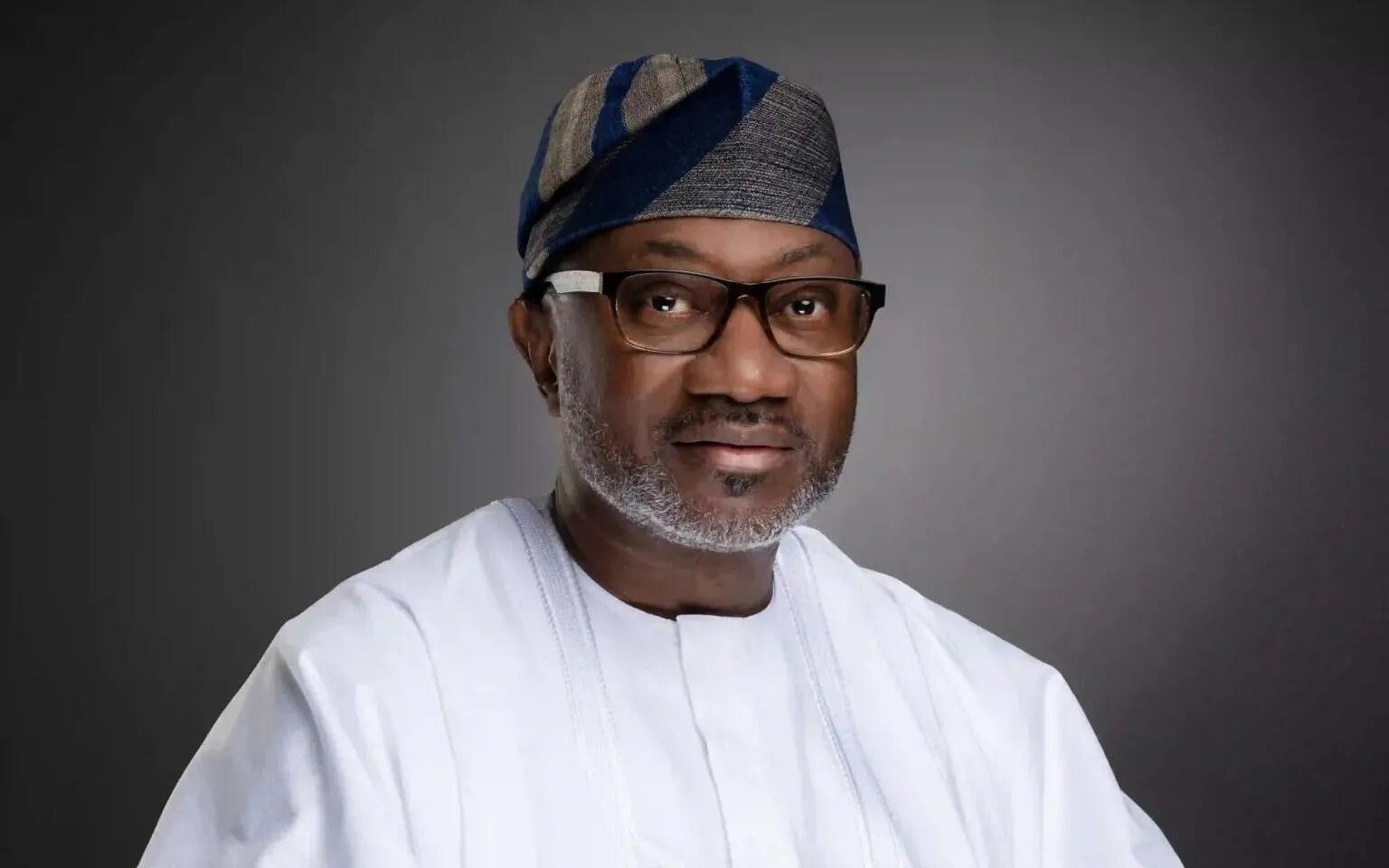
Business magnate Femi Otedola has launched a fierce rebuttal against renewed accusations linking him to Nigeria’s infamous fuel subsidy scandal, calling the claims “false and malicious” while announcing legal action against his accuser.
The controversy erupted following allegations by Umar Sani, a former media adviser to ex-Vice President Namadi Sambo, who attempted to implicate Otedola in improprieties related to the Petroleum Subsidy Fund (PSF) scheme that rocked Nigeria over a decade ago.
In a comprehensive statement released to the public, Otedola systematically dismantled the allegations, beginning with a fundamental industry fact: his company, Zenon Petroleum and Gas Limited, never dealt in Premium Motor Spirit (PMS) — the only product eligible for subsidy claims.
“Zenon Petroleum and Gas Limited was wholly an importer and trader of diesel with a market share in excess of 90%,” Otedola stated, emphasizing that diesel had been deregulated long before the subsidy fund’s implementation and therefore fell outside the subsidy regime entirely.
The billionaire questioned how someone who held a position of authority could display “such ignorance of basic industry facts,” characterizing Sani’s claims as either deliberate mischief or “a blatant display of gross ineptitude.”
Perhaps most striking in Otedola’s defense is his assertion that he was, in fact, the original whistleblower who exposed the subsidy fraud during President Goodluck Jonathan‘s administration.
According to Otedola, who served on Jonathan’s Economic Team, he personally alerted the president to what he described as “monumental fraud being perpetrated by economic saboteurs.” When the then-Minister of Petroleum denied the allegations, Otedola escalated the matter to Senator Bukola Saraki, who brought it to the Senate floor, eventually triggering a House of Representatives investigation.
“If I were complicit in subsidy theft, would I be the one to raise the alarm and blow the whistle on myself?” Otedola challenged, questioning the logic behind Sani’s accusations.
Otedola’s statement also addressed his controversial involvement in the bribery case that led to the conviction of former House member Farouk Lawan, who headed the subsidy probe committee.
The businessman revealed that after becoming publicly known as the whistleblower, some perpetrators allegedly retaliated by manipulating the House committee to target him. When harassment intensified, Otedola said he worked with the Department of State Security (DSS) in a sting operation.
“The money was provided by the DSS, duly marked, and handed over to me under security surveillance,” he explained, noting that Lawan was subsequently convicted and sentenced to five years’ imprisonment for bribery.
Otedola has called on President Bola Tinubu to release the full Aigboje Aig-Imoukhuede report on subsidy fraud, arguing that Nigerians deserve to know the truth. He claimed that the presidency at the time instructed the late EFCC Chairman Ibrahim Lamorde to halt the investigation.
The billionaire also confronted allegations regarding his dealings with the Asset Management Corporation of Nigeria (AMCON), acknowledging his financial difficulties following the 2008 global economic meltdown but emphasizing his responsible approach to debt resolution.
Otedola stated he surrendered assets worth hundreds of billions of naira under a court-ordered settlement, noting that AMCON publicly commended his approach and encouraged other debtors to follow his example. He referenced his recent book, “Making It Big,” where he addressed these matters transparently.
True to his word about protecting his reputation, Otedola has instructed his lawyers to file a N1 billion libel suit against Umar Sani.
“People must learn that reputations are not to be toyed with for cheap propaganda,” he warned, adding that the lawsuit should serve as a deterrent to future “mischief makers.”
The billionaire concluded with a pointed message to his accusers: “Go and read my book Making It Big, study the facts, and stop disgracing yourselves with ignorance.”
As this legal battle unfolds, it reignites questions about one of Nigeria’s most notorious corruption scandals and the accountability of those truly responsible for bilking the nation’s petroleum subsidy fund.
With key figures from that era still alive and court records readily available, the coming months may finally provide the clarity that has long eluded this troubling chapter in Nigerian history.
WHAT YOU SHOULD KNOW
Femi Otedola has firmly rejected accusations of involvement in Nigeria’s fuel subsidy scandal, presenting a compelling counter-narrative: he was the whistleblower who exposed the fraud, not a participant.
His company only traded diesel—a deregulated product ineligible for subsidy claims—making the allegations factually impossible. Otedola has filed a N1 billion lawsuit against his accuser and is calling for the government to release the full subsidy fraud report to unmask the real culprits.
The central question remains: why would the person who first reported the fraud to President Jonathan and triggered the Senate investigation be accused of the very crime he helped expose?