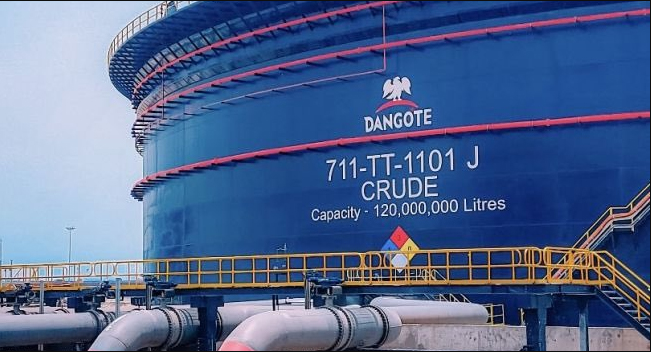
Nigeria’s largest oil refinery has suspended sales of petrol in the local naira currency, a development that threatens to trigger significant fuel price increases and compound the country’s foreign exchange challenges.
The Dangote Petroleum Refinery announced Friday evening that it would halt naira-denominated transactions effective Sunday, September 28, citing “depletion of its crude-for-naira allocation”. The decision arrives at a particularly sensitive time for Nigeria’s fuel market, with the announcement reaching customers at precisely 6:42 pm on Friday via email.
In the tersely-worded notice, signed by the Group Commercial Operations of Dangote Petroleum Refinery & Petrochemicals, the company acknowledged it had been “selling petroleum products in excess of our Naira-Crude allocations” and declared itself “unable to sustain PMS sales in Naira going forward.” The refinery advised customers with pending naira transactions to formally request refunds.
The suspension marks a troubling repeat of events from March 2025, when the refinery briefly halted local currency sales, pushing pump prices close to ₦1,000 per litre and fueling concerns about the “dollarisation” of fuel sales. Industry observers warn that history may be repeating itself, with potentially devastating consequences for Nigerian consumers already grappling with economic hardship.
The timing of the announcement has added fuel to existing tensions at the refinery. The Petroleum and Natural Gas Senior Staff Association of Nigeria (PENGASSAN) on Friday condemned what it described as the mass dismissal of over 800 Nigerian workers, calling it “an unjust and insensitive corporate decision.” The union has threatened nationwide solidarity actions unless the issue is resolved.
Dangote’s management has pushed back against allegations of mass layoffs, maintaining that only a limited number of employees were dismissed due to sabotage-related concerns. However, the convergence of operational disruptions and labor disputes has created an atmosphere of uncertainty around the facility that many had hoped would transform Nigeria’s energy independence.
The broader implications extend far beyond fuel stations. The refinery cited “currency mismatch with its crude oil purchase obligations, which are currently denominated in U.S. dollars” as justification for the suspension. This explanation underscores the fundamental challenge facing Nigeria’s petroleum sector: while the refinery requires foreign currency to purchase crude oil, domestic sales in naira create a structural imbalance that threatens operational sustainability.
For oil marketers, the decision represents another blow to an already precarious business environment. The suspension forces them to either absorb higher costs from dollar-denominated purchases or pass these increases directly to consumers at the pump. Given the current economic climate, the latter scenario appears inevitable.
The Dangote refinery, touted as Africa’s largest oil refinery with a capacity of 650,000 barrels per day, was positioned as a game-changer for Nigeria’s long-standing fuel import dependency. However, recurring operational challenges and policy complications continue to undermine its potential impact on domestic energy security.
As Nigeria heads into the weekend, fuel marketers and consumers alike are bracing for another round of price volatility. The pattern established in March suggests that any return to dollar-denominated sales will quickly translate into higher costs at filling stations across the country.
The refinery has promised to provide updates on the resumption of naira sales once “the situation has been resolved,” but offered no timeline for when that might occur. In the meantime, Nigeria’s fuel market faces renewed uncertainty at a time when economic stability remains fragile.
WHAT YOU SHOULD KNOW
The Dangote Refinery has suspended naira-based petrol sales effective September 28, forcing a return to dollar transactions that could push fuel prices back toward ₦1,000 per litre.
This marks the second such suspension in 2025, highlighting a critical structural problem: the refinery needs dollars to buy crude oil but sells refined products in naira, creating an unsustainable currency mismatch.