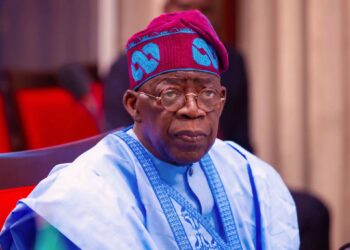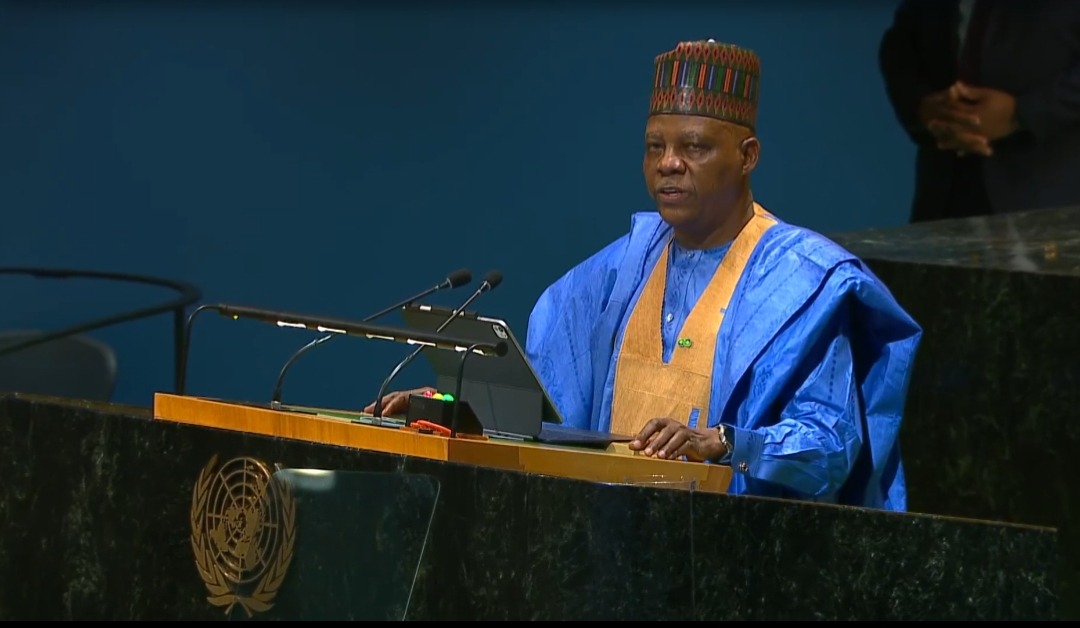
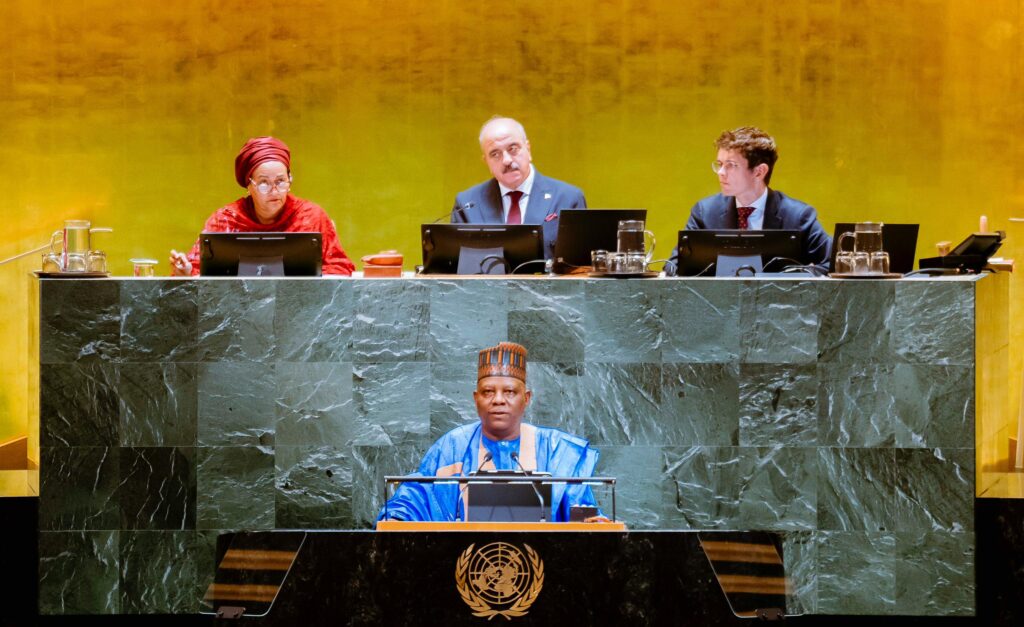
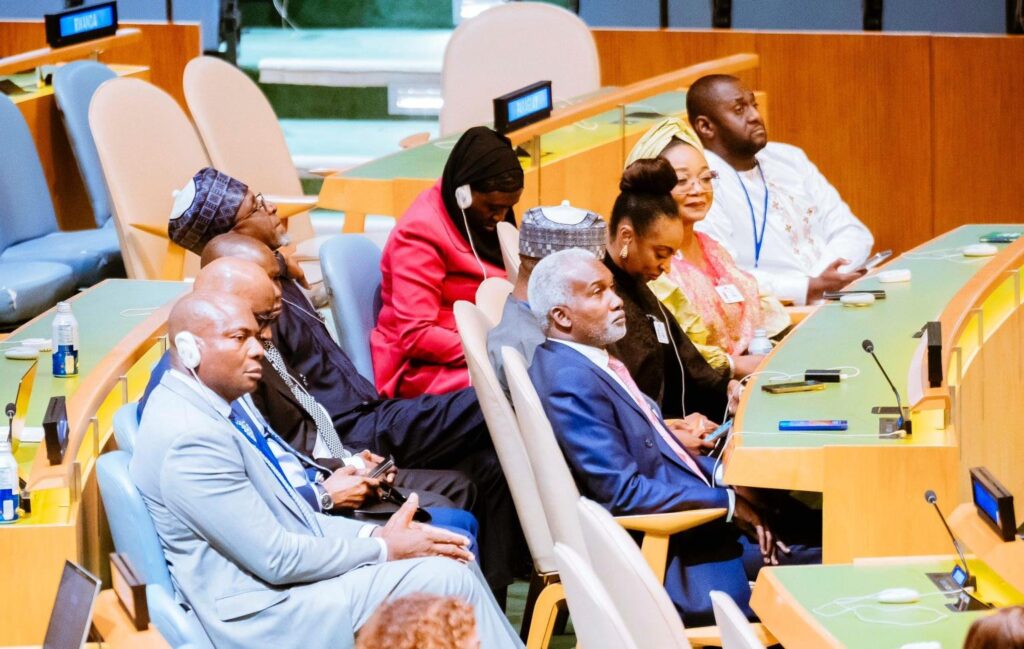
President Bola Tinubu on Wednesday presented a bold reform agenda to the United Nations, cautioning that the global body risks fading into irrelevance if it fails to embrace structural change in the face of mounting global challenges.
Speaking at the UN General Assembly’s 80th session through Vice President Kashim Shettima, Tinubu accused the UN of failing to live up to its mandate, citing persistent conflicts and human suffering in the Middle East and elsewhere as “stains on our collective humanity.”
He argued that the UN’s credibility was being steadily eroded by the widening gap between its promises and its actions, even as he positioned Nigeria’s economic reforms as a model of resilience for developing nations.
“For all our careful diplomatic language, the slow pace of progress on these hardy perennials of the UN General Assembly debate has led some to look away from the multilateral model. Some years ago, I noticed a shift at this gathering: key events were beginning to take place outside this hall, and the most sought-after voices were no longer heads of state,” he observed.
Nigeria Pushes for Security Council Seat
Central to Tinubu’s proposal was Nigeria’s demand for permanent representation on the UN Security Council. “Nigeria must have a permanent seat at the UN Security Council. This should take place as part of a wider process of institutional reform. The United Nations will recover its relevance only when it reflects the world as it is, not as it was,” he declared.
The President highlighted Nigeria’s rise from “a colony of 20 million people, absent from the tables where decisions about our fate were taken” to “a sovereign nation of over 236 million, projected to be the third most populous country in the world, with one of the youngest and most dynamic populations on earth.”
Tinubu voiced impatience with the slow progress on disarmament, equitable trade, and global finance, stressing that such failures only deepen inequality. “When we speak of nuclear disarmament, the proliferation of small weapons, Security Council reform, fair access to trade and finance, and the conflicts and human suffering across the world, we must recognise the truth. These are stains on our collective humanity,” he stated.
Palestinian Question and Global Peace
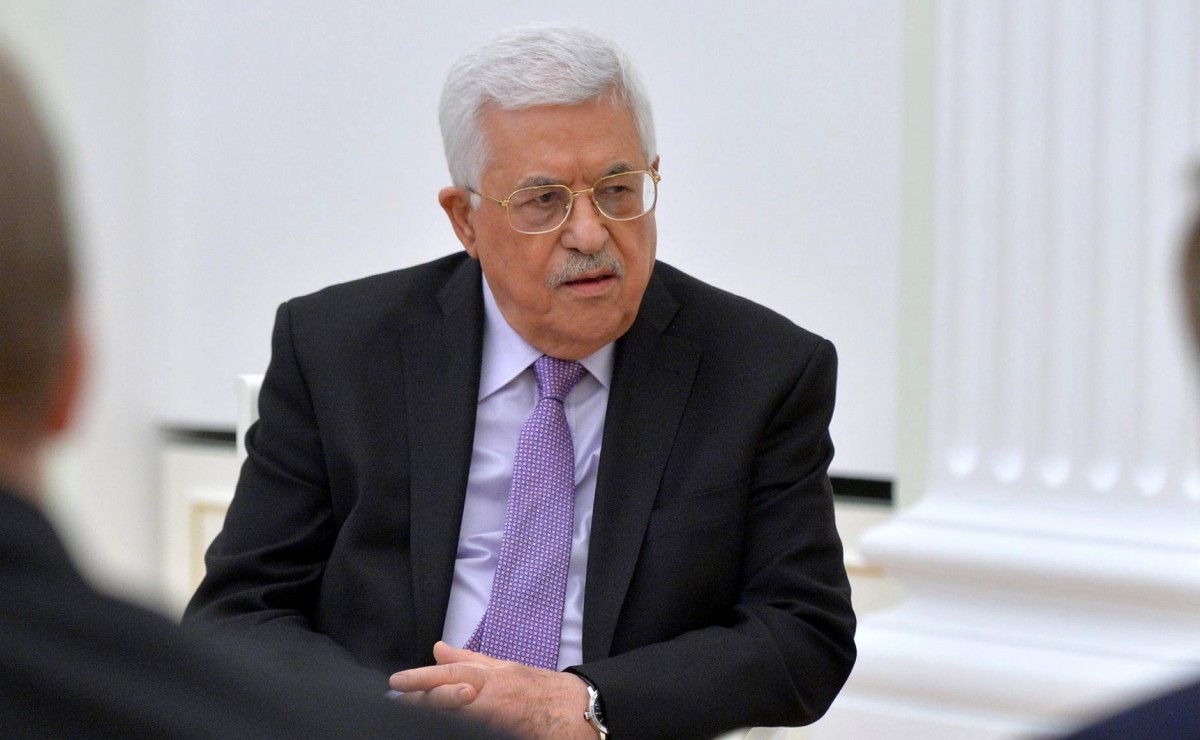
On the long-standing conflict in the Middle East, Tinubu offered Nigeria’s unambiguous stance: “We say, without stuttering and without doubt, that a two-state solution remains the most dignified path to lasting peace for the people of Palestine. The people of Palestine are not collateral damage in a civilisation searching for order. They are human beings, equal in worth, entitled to the same freedoms and dignities that the rest of us take for granted.”
Financial System Reform and Debt Relief
The Nigerian leader also called for a radical overhaul of the global financial system, urging the establishment of a binding framework to manage sovereign debt. “I am calling for a new and binding mechanism to manage sovereign debt, a sort of International Court of Justice for money, that will allow emerging economies to escape the economic straitjacket of primary production of unprocessed exports,” he said.
He insisted that debt relief must be pursued as a practical necessity rather than charity: “urgent action to promote debt relief – not as an act of charity but as a clear path to the peace and prosperity that benefits us all.”
Africa’s Minerals and the Future Economy
Tinubu positioned Africa’s natural wealth at the heart of future global stability, stressing that producers must share fairly in the benefits of their resources. “Africa – and I must include Nigeria – has in abundance the critical minerals that will drive the technologies of the future,” he said.
“Investment in exploration, development and processing of these minerals, in Africa, will diversify supply to the international market, reduce tensions between major economies and help shape the architecture for peace and prosperity.”
Warning against the unchecked export of raw materials, he said: “When we export raw materials, as we have been doing, tension, inequality, and instability fester.”
Bridging the Digital Divide
Turning to technological challenges, Tinubu called for global collaboration to close the digital divide. Referencing the UN Secretary-General’s vision, he added that “‘A.I.’ must stand for ‘Africa Included’.”
“I am calling for a new dialogue, to ensure we promote the best of the opportunities that are arising – and promote the level of access that allows emerging economies more quickly, to close a wealth and knowledge gap that is in no one’s interest,” he said.
Nigeria’s Economic Transition
Tinubu also addressed Nigeria’s domestic reforms, acknowledging the strain they impose on citizens while defending them as necessary. “The government has taken difficult but necessary steps to restructure our economy and remove distortions, including subsidies and currency controls that benefited the few at the expense of the many,” he explained.
“I believe in the power of the market to transform. Our task is to enable and facilitate, and to trust in the ingenuity and enterprise of the people. But the process of transition is difficult,” he said.
Terrorism and Extremism
On security, Tinubu stressed that ideology, not just military power, must underpin the fight against extremism. “From this long and difficult struggle with violent extremism, one truth stands clear: military tactics may win battles measured in months and years, but in wars that span generations, it is values and ideas that deliver the ultimate victory,” he said.
Reaffirming Nigeria’s dedication to peace, human rights, and multilateral cooperation, Tinubu concluded with a warning: “We must make real change, change that works, and change that is seen to work. If we fail, the direction of travel is already predictable.”
What you should know
President Tinubu’s UN address marked one of Nigeria’s most forceful calls for global reform in recent years.
His demands from a Security Council seat to a new debt management system, and control over Africa’s mineral wealth highlight a shift in Nigeria’s diplomacy, positioning the country as a voice for the Global South while tying international credibility to tangible reforms.