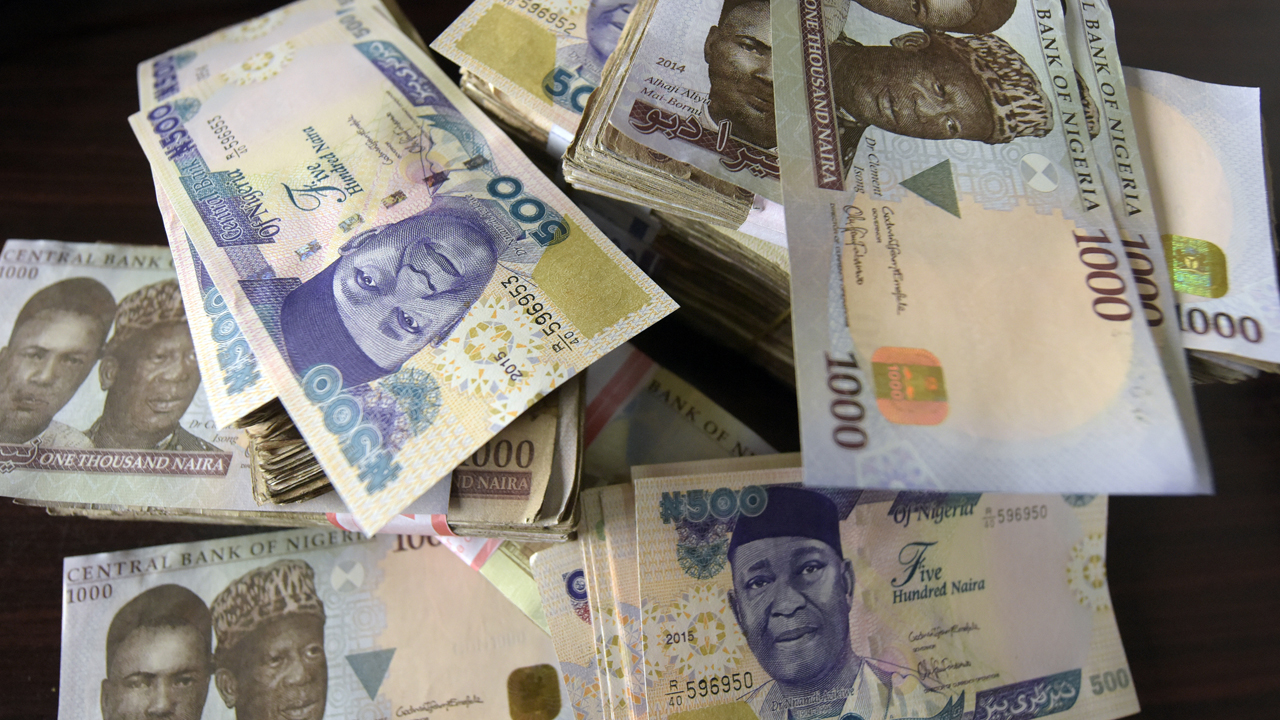
The Nigerian naira extended its recent decline against the U.S. dollar on Tuesday, closing at N1,493.2 per dollar in the official foreign exchange market despite the Central Bank of Nigeria’s decision to cut its benchmark interest rate for the first time in years.
The currency’s latest weakness, representing a marginal decline from Monday’s N1,491.49 and Friday’s N1,488 per dollar, came on the heels of the conclusion of the 302nd Monetary Policy Committee meeting, where policymakers reduced the Monetary Policy Rate by 50 basis points to 27 percent.
The parallel market, which often serves as a barometer for underlying currency pressures, saw the naira slip further to N1,521.5 per dollar from Monday’s N1,518, widening the premium between official and black-market rates to approximately 28 naira – a gap that underscores persistent foreign exchange scarcity in Africa’s largest economy.
CBN Governor Olayemi Cardoso, announcing the rate decision at Tuesday’s post-MPC briefing in the Federal Capital Territory, also revealed that the committee had narrowed the asymmetric corridor around the benchmark rate from +500/-100 basis points to +250/-250 basis points, signaling a more balanced monetary policy stance.
Reserves Surge to Six-Year Peak
In a contrasting development that highlights the complex dynamics facing Nigeria’s economy, the country’s external reserves surged to $42.03 billion – the highest level since late September 2019 and marking a 72-month peak. The reserves have demonstrated remarkable consistency, recording gains in every trading session throughout September, delivering 13 consecutive daily increases across 14 reporting days.
This sustained buildup, rising from $41.99 billion the previous day and significantly above the $41.42 billion recorded at the beginning of September, suggests improved foreign exchange inflows, likely from oil revenues and diaspora remittances.
While the naira struggled against the dollar, it managed a modest gain against the British pound, strengthening to N2,011.32 from Monday’s N2,014.9 – a development that may reflect sterling’s own challenges in global markets.
Market analysts suggest the naira’s post-MPC weakness against the dollar could reflect short-term disappointment over the central bank’s dovish pivot, particularly as investors had grown accustomed to the CBN’s aggressive tightening cycle that began in 2022 to combat inflation and support the currency.
Seasonal Pressures Mount
The timing of the currency decline coincides with seasonal foreign exchange demand pressures that typically emerge in the fourth quarter. These include increased spending on travel, education payments for students abroad, and year-end business obligations – factors that traditionally strain Nigeria’s foreign exchange markets.
Additionally, the rate cut may signal to foreign portfolio investors that the era of attractive naira-denominated yields is moderating, potentially reducing capital inflows that have helped support the currency in recent months.
The juxtaposition of weakening exchange rates against a backdrop of strengthening reserves presents policymakers with a complex challenge: how to maintain currency stability while supporting economic growth through lower borrowing costs.
As Nigeria navigates these competing pressures, market participants will be closely watching upcoming inflation data and the central bank’s communication strategy to gauge whether Tuesday’s monetary easing marks the beginning of a sustained easing cycle or a temporary policy adjustment.
WHAT YOU SHOULD KNOW
Nigeria’s currency weakened to N1,493.2 per dollar despite the Central Bank cutting interest rates by 0.5% to 27% – the first rate cut in years. This suggests the naira’s decline is driven by seasonal demand pressures (travel, school fees) and investor concerns about lower returns, rather than reserve shortages.
Notably, Nigeria’s foreign reserves hit a six-year high of $42.03 billion with 13 consecutive days of growth, indicating the country has the financial cushion to defend its currency if needed.
The rate cut signals the CBN is prioritizing economic growth over currency defense, but the timing coincides with traditional fourth-quarter forex demand that typically pressures the naira.