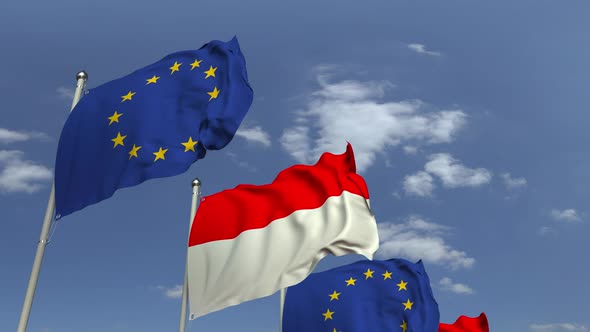
After nearly a decade of complex negotiations, Indonesia and the European Union on Tuesday signed a comprehensive economic partnership agreement that officials say will fundamentally reshape trade relations between Southeast Asia’s largest economy and the 27-nation bloc.
The landmark deal, announced at a ceremony in Bali, eliminates tariffs on the vast majority of goods traded between the regions and is expected to generate significant economic benefits for both sides when it takes effect on January 1, 2027.
Substantial Tariff Reductions Drive Economic Promise
Under the agreement’s terms, Indonesia will remove import duties on 98.5% of EU goods, providing immediate relief for European exporters of automobiles, dairy products, processed meats, chocolates, and bakery items. The EU estimates this will save European companies approximately 600 million euros annually—money that had previously gone toward duties averaging 10% on exports to Indonesia.
The benefits flow both ways. Indonesian exporters will gain duty-free access to 90% of the EU market, a development that could significantly boost the country’s palm oil, coffee, textile, and clothing industries. With bilateral trade currently valued at $30.1 billion in 2024, Indonesian officials project this figure will double within the agreement’s first five years of implementation.
“As we look ahead to the next stage, the legal scrubbing, translation, and ratification, we reaffirm the determination to bring this agreement into force at the earliest opportunities,” said Airlangga Hartarto, Indonesia’s Coordinating Minister for Economic Affairs, speaking at Tuesday’s signing ceremony.
Critical Minerals Take Center Stage
Beyond traditional trade goods, the agreement positions Indonesia as a key supplier of critical minerals essential to Europe’s green energy transition. EU Trade Commissioner Maros Sefcovic emphasized that the deal would help diversify supply chains, particularly for materials like nickel and cobalt, which Indonesia possesses in abundance.
European Commission President Ursula von der Leyen separately highlighted the agreement’s strategic importance, noting it would provide “a stable and predictable supply of critical minerals, notably nickel and cobalt.”
This mineral partnership extends to emerging industries. Hartarto revealed that Indonesia is actively negotiating with European automakers about potential partnerships in battery and electric vehicle production, signaling the country’s ambitions to move beyond raw material exports toward higher-value manufacturing.
Palm Oil Industry Faces Mixed Outlook
While the agreement removes significant tariff barriers, Indonesia’s crucial palm oil sector confronts ongoing challenges that could limit the deal’s immediate impact. Eddy Martono, chairman of the Indonesian Palm Oil Association, welcomed the tariff elimination but warned that non-tariff barriers remain problematic.
Specifically, the EU Deforestation Regulation, set for implementation later this year, requires palm oil producers to document that their shipments originate from areas not deforested after 2020. This requirement could substantially complicate trade flows from Indonesia, the world’s largest palm oil producer.
“There is still homework to be done, namely the EUDR, which must also be resolved immediately because it will be implemented later this year,” Martono said, suggesting the environmental regulation could undermine the trade agreement’s effectiveness for his industry.
Road to Implementation
The agreement now enters a technical phase involving legal review, translation into multiple languages, and ratification by relevant legislative bodies. Indonesian officials remain optimistic about meeting their January 2027 implementation target, though the complex approval process in both regions could present timing challenges.
This deal represents the culmination of negotiations that began in earnest in 2016, reflecting both the complexity of modern trade agreements and the strategic importance both sides place on deepening economic ties.
As global supply chains face ongoing disruption and governments seek to reduce dependence on single-source suppliers, the Indonesia-EU partnership offers a template for how resource-rich developing nations and advanced economies can structure mutually beneficial relationships in an increasingly multipolar world.
The agreement’s success will ultimately depend on implementation details and how effectively both sides navigate remaining regulatory challenges, particularly in sensitive sectors like palm oil, where trade and environmental concerns intersect.
WHAT YOU SHOULD KNOW
Indonesia and the EU have finalized a major trade deal after 9 years of negotiations that will eliminate tariffs on nearly all goods between them, potentially doubling their $30 billion annual trade by 2032.
The agreement is strategically significant because it gives Europe access to Indonesia’s critical minerals (nickel and cobalt) needed for green energy while opening EU markets to Indonesian palm oil, coffee, and textiles.
However, the deal’s effectiveness may be limited by EU environmental regulations that could restrict Indonesian palm oil imports, highlighting the growing tension between trade liberalization and sustainability requirements in modern commerce.