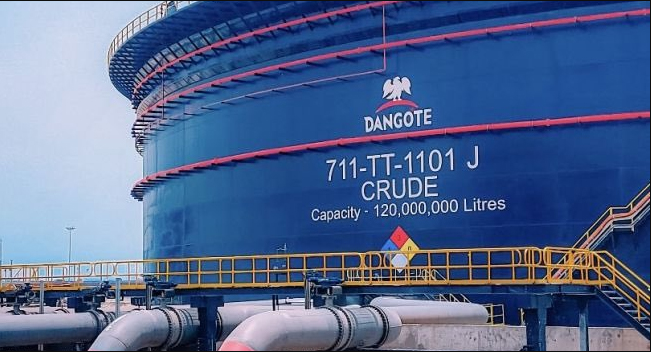
Nigeria’s downstream petroleum sector is witnessing a dramatic escalation in tensions as the Dangote Petroleum Refinery and the Depot and Petroleum Products Marketers Association of Nigeria (DAPPMAN) engage in a public war of words over what amounts to a staggering N1.505 trillion annual subsidy demand.
At the heart of this dispute lies a fundamental disagreement over product delivery mechanisms and cost structures that could have far-reaching implications for fuel prices across Africa’s most populous nation.
The Core Allegation
According to a strongly worded statement from Dangote Refinery management, DAPPMAN is essentially demanding that the refinery absorb massive additional costs to enable depot operators to remain competitive. The refinery alleges that while it offers petroleum products at competitive gantry prices—where customers can collect directly from the facility—DAPPMAN members insist on more expensive coastal logistics arrangements.
This preference for coastal delivery, Dangote claims, adds N75 per liter in additional costs comprising coastal freight, Nigerian Maritime Administration and Safety Agency (NIMASA) fees, Nigerian Ports Authority (NPA) charges, and vessel pumping costs of N5 per liter. With Nigeria’s daily consumption estimated at 40 million liters of Premium Motor Spirit and 15 million liters of Automotive Gas Oil, these additional costs compound to the eye-watering N1.505 trillion annually.
A Question of Market Dynamics
The dispute reveals deeper structural issues within Nigeria’s petroleum supply chain. Dangote Refinery, which began operations as Africa’s largest single-train refinery, appears to be challenging established market practices that have historically favored importers and depot operators.
The refinery’s assertion that it maintains closing stocks of 500 million liters monthly while simultaneously achieving significant export volumes—3.2 million metric tons between June and September—suggests robust production capacity. However, the concurrent import of 3.68 million metric tons by marketers during the same period raises questions about market efficiency and what Dangote terms “economic dumping.”
DAPPMAN’s Counter-Narrative
The marketers’ association has firmly rejected Dangote’s characterization, describing the refinery’s allegations as “misleading, factually incorrect, and damaging.” In a measured response, DAPPMAN denied sponsoring any industrial action by petroleum unions and emphasized its role in “de-escalation” efforts to maintain fuel supply stability.
More significantly, DAPPMAN has challenged the refinery’s narrative on recent fuel price reductions, attributing these to government reforms, naira strengthening, and declining crude oil prices rather than Dangote’s market impact. The association has also raised pointed questions about the refinery’s export policies, questioning why it can freely export to international markets like the United States while seeking what they perceive as restrictive measures domestically.
Broader Implications
This public confrontation occurs against the backdrop of Nigeria’s ongoing petroleum sector reforms and the country’s long-standing struggle with fuel subsidy regimes that have historically drained government resources. Dangote’s explicit rejection of subsidy arrangements—describing them as practices that “historically defrauded the Federal Government for many years”—signals a potential shift in market dynamics.
The dispute also highlights the complex interplay between local refining capacity, import dependence, and market structure in Nigeria’s petroleum sector. With the Dangote Refinery positioned as a game-changer in reducing import dependence, these tensions may represent growing pains as the market adjusts to new realities.
The Road Ahead
As both parties maintain their positions, the resolution of this dispute will likely have significant implications for fuel pricing, market competition, and the broader success of Nigeria’s petroleum sector reforms. The outcome may well determine whether local refining capacity translates into genuine benefits for Nigerian consumers or simply reshuffles existing market dynamics.
With labor unions maintaining their independence in this dispute, as DAPPMAN emphasizes, the focus remains on finding sustainable solutions that balance commercial viability with national energy security objectives. The coming weeks will prove critical in determining whether dialogue can bridge these seemingly irreconcilable positions or whether this standoff will escalate further, potentially disrupting fuel supply chains across the nation.
WHAT YOU SHOULD KNOW
The Dangote Petroleum Refinery and Nigeria’s depot marketers are locked in a bitter dispute over a massive N1.5 trillion annual subsidy demand. DAPPMAN wants Dangote to absorb costly shipping and logistics fees (N75 per liter) so their members can compete with the refinery’s direct pickup prices, but Dangote has flatly refused, calling it economic fraud similar to Nigeria’s historically corrupt fuel subsidy schemes.