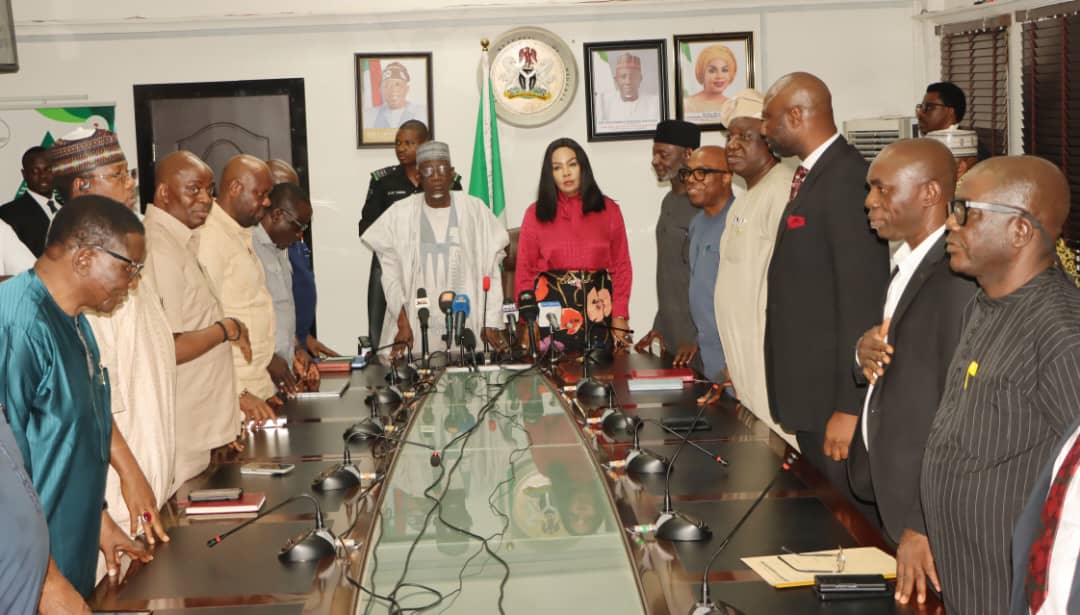
The Nigeria Union of Petroleum and Natural Gas Workers (NUPENG) has suspended its strike following a breakthrough agreement with the management of Dangote Refinery to recognise employees’ rights to unionise.
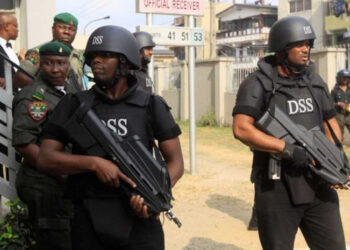
The deal was struck at a closed-door meeting convened by the Department of State Services (DSS), with Finance Minister Wale Edun, Nigeria Labour Congress (NLC) officials, and other stakeholders in attendance. Acting NLC General Secretary, Benson Upah, confirmed the resolution, while the Ministry of Labour said a formal statement would follow.
The development came after NUPENG threatened strike action over Dangote’s alleged refusal to recognise union rights. Conciliation efforts led by the Federal Ministry of Labour and Employment on September 8 paved the way for the agreement.
Memorandum of Understanding
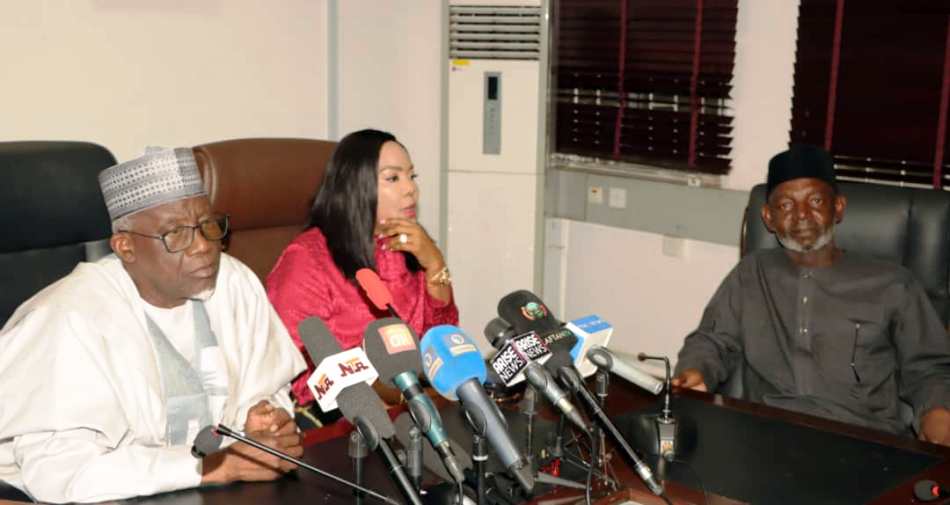
According to the Memorandum of Understanding (MoU) signed, Dangote Refinery and Petrochemicals acknowledged that unionisation is a right under Nigerian labour laws. Workers who choose to join unions will now be allowed to do so, with the process to begin immediately and be concluded within two weeks (September 9–22, 2025).
The MoU also guaranteed that no employee would face victimisation as a result of the strike notice. Both sides agreed that the refinery would not create an alternative union to undermine the workers’ choice.
Signatories included Sayyu Dantata for the Dangote Group, O.K. Ukoha for the Nigerian Midstream and Downstream Petroleum Regulatory Authority (NMDPRA), and Ojimba Jibrin for Dangote Group. Labour was represented by NLC’s Benson Upah, TUC’s N.A. Toro, NUPENG President Akporeha Williams, and NUPENG General Secretary Afolabi Olawale. Amos Falonipe signed for the Federal Ministry of Labour on behalf of the minister.
Union Dispute
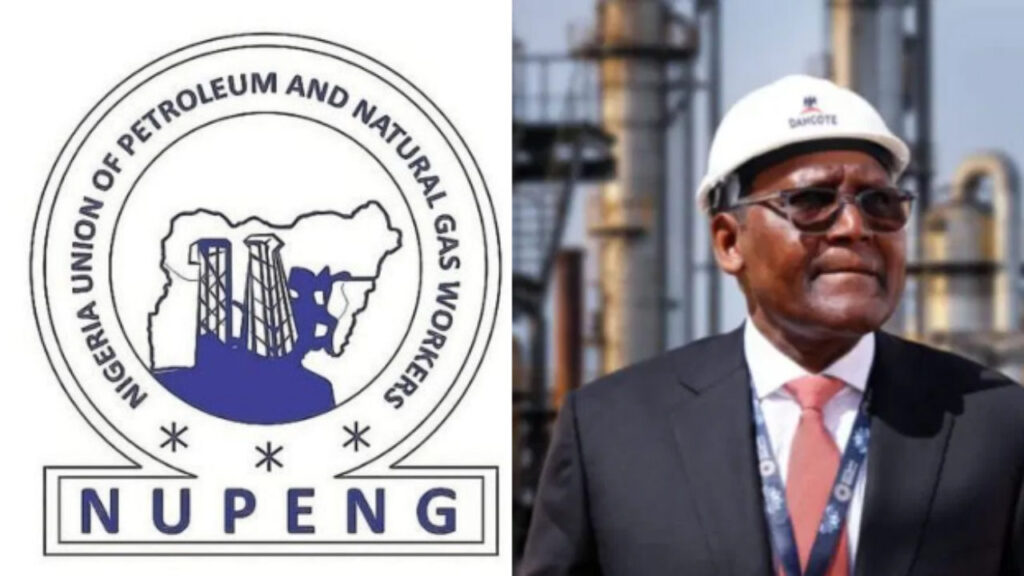
The conflict began after NUPENG accused Dangote Refinery of hiring new fuel tanker drivers on the condition that they avoid joining the union. The company denied the claim, calling it “cheap blackmail.”
The 650,000 barrels-per-day refinery, inaugurated last year as Africa’s largest, was designed to cut Nigeria’s dependence on imported fuel. While it has lowered petrol prices, concerns over monopoly power have grown given its dominant market position.
Dangote Group has also faced resistance over its plan to roll out compressed natural gas (CNG) trucks, a move seen as disruptive to the existing network of over 20,000 diesel-powered tanker operators.
Despite the strike, Dangote’s spokesman Anthony Chiejina insisted there was “no fuel shortage” and that operations remained stable. The action nonetheless attracted strong backing from the NLC, as well as international labour organisations including IndustriALL (Switzerland) and the International Lawyers Assisting Workers (ILAW) network in Washington.
What you should know
NUPENG has suspended its strike after Dangote Refinery agreed to respect workers’ union rights under Nigerian law.
The unionisation process is set to be completed within two weeks, marking a significant shift in labour relations at Africa’s largest refinery, which has faced monopoly concerns and tensions with existing tanker operators.