Dangote refinery found itself at the center of a growing labor dispute on Tuesday as fuel tanker drivers entered their second day of strikes, threatening to disrupt the country’s petroleum distribution network just as the facility emerges as a transformative force in Africa’s oil sector.
The Nigeria Union of Petroleum and Natural Gas Workers (NUPENG) launched the industrial action on Monday, accusing the $19 billion refinery of anti-union practices in its hiring of drivers to transport gasoline across the country. The strike has since garnered support from labor organizations both domestically and internationally, signaling a potentially significant challenge to billionaire Aliko Dangote’s oil empire.
Despite the work stoppage, Dangote refinery spokesman Anthony Chiejina sought to reassure consumers on Tuesday, insisting that fuel supplies remain stable. “There is no fuel shortage; everything is going on,” Chiejina told AFP, emphasizing that negotiations between the union, government officials, and company representatives were ongoing.
The dispute centers on allegations that Dangote’s recruitment practices effectively bar drivers from union membership—a charge the company categorically denies. Union president Williams Akporeha escalated the rhetoric Tuesday, telling Nigerian broadcaster Arise News that the controversy reflects a broader pattern of labor hostility by the continent’s richest man.
“What Dangote has shown over time is that he’s not prepared to have workers that will have a say in his employment,” Akporeha declared, framing the conflict as a test case for workers’ rights in Nigeria’s evolving energy sector.
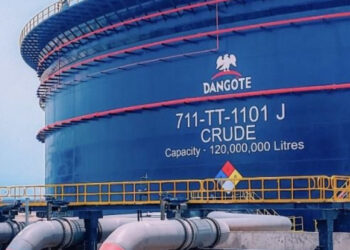
The timing of the strike is particularly significant, as the Dangote refinery, which officially commenced operations last year with a processing capacity of 650,000 barrels per day, has fundamentally altered Nigeria’s petroleum landscape. For decades, Africa’s largest oil producer paradoxically imported nearly all of its refined fuel products, a situation attributed to chronic underinvestment and mismanagement of state-owned refineries.
The privately owned Dangote facility has not only reduced consumer fuel prices but has also disrupted established players in Nigeria’s notoriously corrupt oil sector. However, its dominance has raised concerns about market concentration, with critics warning of potential monopolistic practices as Dangote consolidates control over both refining and distribution.
The current labor dispute emerged from the refinery’s plans to revolutionize Nigeria’s fuel distribution system. Last month, Dangote announced intentions to deploy thousands of compressed natural gas-powered trucks to transport petroleum products nationwide—an ambitious initiative that has faced logistical delays but promises to modernize a sector long dominated by over 20,000 aging diesel tankers.
This modernization drive has clearly unsettled established operators and their workforce, creating the conditions for the current confrontation.
The strike has attracted notable international support, with Switzerland-based global union IndustriALL and the Washington-based International Lawyers Assisting Workers network joining local organizations like the Nigeria Labour Congress in backing NUPENG’s position. This international dimension suggests the dispute could have broader implications for labor relations across Africa’s energy sector.
Dangote officials have pushed back forcefully against union allegations, with spokesman Chiejina dismissing claims of anti-union discrimination as “cheap blackmail.” The company maintains that no restrictions have been placed on driver unionization, setting up a classic he-said, she-said dynamic that may require government mediation to resolve.
As talks continue, the standoff represents more than a simple labor dispute—it embodies the tensions inherent in Nigeria’s energy sector transformation. The success of the Dangote refinery in reducing import dependence and consumer costs is undeniable, but its emergence as a dominant force has inevitably generated pushback from established interests.
The resolution of this conflict will likely serve as a bellwether for how Nigeria manages the transition from its dysfunctional old energy order to a new dispensation dominated by private capital and modern infrastructure. With fuel supplies reportedly stable for now, both sides appear to have breathing room for negotiations, but the international attention and union solidarity suggest this dispute may prove more challenging to resolve than typical industrial actions.
For consumers who have long suffered from fuel shortages and price volatility, the ultimate question remains whether this labor standoff will jeopardize the supply stability and price benefits that the Dangote refinery has delivered since its launch.
WHAT YOU SHOULD KNOW
Nigeria’s Dangote refinery, Africa’s largest, is embroiled in a labor strike as fuel tanker drivers protest alleged anti-union hiring practices. While the company denies fuel shortages and dismisses union claims as “cheap blackmail,” the dispute highlights growing tensions as the $19 billion facility transforms Nigeria’s oil sector.
The refinery has successfully reduced fuel imports and consumer prices since opening last year, but its dominance is generating pushback from established players. With international union support backing the strikers, this conflict will test whether Nigeria can modernize its energy sector without sacrificing workers’ rights—ultimately determining if the benefits of reduced fuel dependence come at the cost of labor stability.