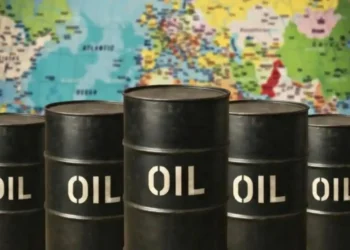
The OPEC+ oil group is poised to approve another production increase at Sunday’s virtual meeting, marking the continuation of a strategic pivot that has seen the group abandon its traditional supply restraint policy in favor of defending market share.
According to Iraqi officials and sources close to the negotiations, the 23-nation alliance will likely agree to raise output by between 135,000 and 350,000 barrels per day starting in October, though the exact figure remains under discussion as members weigh competing pressures.
The decision represents a measured acceleration of OPEC+’s production strategy, which began in April with the reversal of previous output cuts. Since then, the group has already restored approximately 2.5 million barrels per day to global markets—equivalent to roughly 2.4% of worldwide oil demand.
Political and Economic Pressures Drive Policy
Industry analysts point to multiple factors driving OPEC+’s continued production increases. Chief among them is sustained pressure from U.S. President Donald Trump, who has repeatedly called for lower oil prices to ease inflationary pressures on American consumers.
“The group is clearly responding to geopolitical demands while trying to reclaim market share that has been steadily eroded by U.S. shale producers,” said energy market observers familiar with the cartel’s decision-making process.
Despite the significant production increases implemented since April, oil prices have remained stubbornly elevated, with Brent crude trading near $66 per barrel. This resilience stems largely from Western sanctions on major producers Russia and Iran, which have effectively removed substantial volumes from accessible global markets.
The price stability has inadvertently encouraged competitors, particularly U.S. shale producers, to maintain high output levels, further pressuring OPEC+ to defend its market position through increased production rather than price support.
Technical Challenges Limit Impact
However, the cartel faces significant operational constraints that have undermined the effectiveness of its production policy. Most OPEC+ members are already operating near maximum capacity, leaving only Saudi Arabia and the United Arab Emirates with meaningful spare production capability.
This reality has meant that actual production increases have consistently fallen short of announced targets, limiting the policy’s impact on both prices and market share objectives.
Iraq’s OPEC delegate Mohammed al-Najjar, speaking at an energy conference in Baghdad, indicated the group would likely settle on increases of 130,000 to 140,000 barrels per day for October—a more modest figure than some sources had suggested.
Market Response and Outlook
Financial markets have already begun pricing in the expected production increase. Brent crude futures closed Friday at $65.50 per barrel, down 2.2% on weak U.S. employment data and anticipation of Sunday’s OPEC+ decision. Despite recent volatility, prices remain well above the 2025 low of approximately $58 reached in April.
The Sunday meeting, scheduled to begin at 12:30 GMT, will see OPEC+ members deliberating whether to accelerate the unwinding of their second tranche of production cuts—totaling 1.65 million barrels per day—more than a year ahead of the original schedule.
This would represent a significant policy departure for an organization that has historically used production cuts as its primary tool for market management. The group still maintains substantial cuts in place, including a 2 million barrel per day reduction by all members that extends through 2026.
Strategic Implications
The decision underscores OPEC+’s evolving role in global energy markets, where traditional price-setting strategies have been complicated by sanctions regimes, competitive pressures from non-OPEC producers, and political demands from major consuming nations.
As the alliance that controls roughly half of global oil production navigates these competing pressures, Sunday’s meeting will provide crucial insights into whether the group can successfully balance market share objectives with its traditional role as a price stabilizer in an increasingly complex global energy landscape.
The outcome will be closely watched by energy traders, policymakers, and consumers worldwide as oil markets continue to grapple with the intersection of geopolitical tensions and economic fundamentals in determining global energy prices.
WHAT YOU SHOULD KNOW
OPEC+ is abandoning its traditional strategy of cutting oil production to boost prices, instead choosing to increase output to defend market share against U.S. competitors.
Despite adding 2.5 million barrels per day since April and planning further increases of up to 350,000 barrels daily, oil prices remain stubbornly high at around $66 per barrel due to Western sanctions on Russia and Iran.
Only Saudi Arabia and the UAE can actually deliver meaningful production increases, while political pressure from President Trump for lower prices is driving the cartel’s policy shift. This represents a fundamental change in how OPEC+ operates—prioritizing market share over price control for the first time in years.