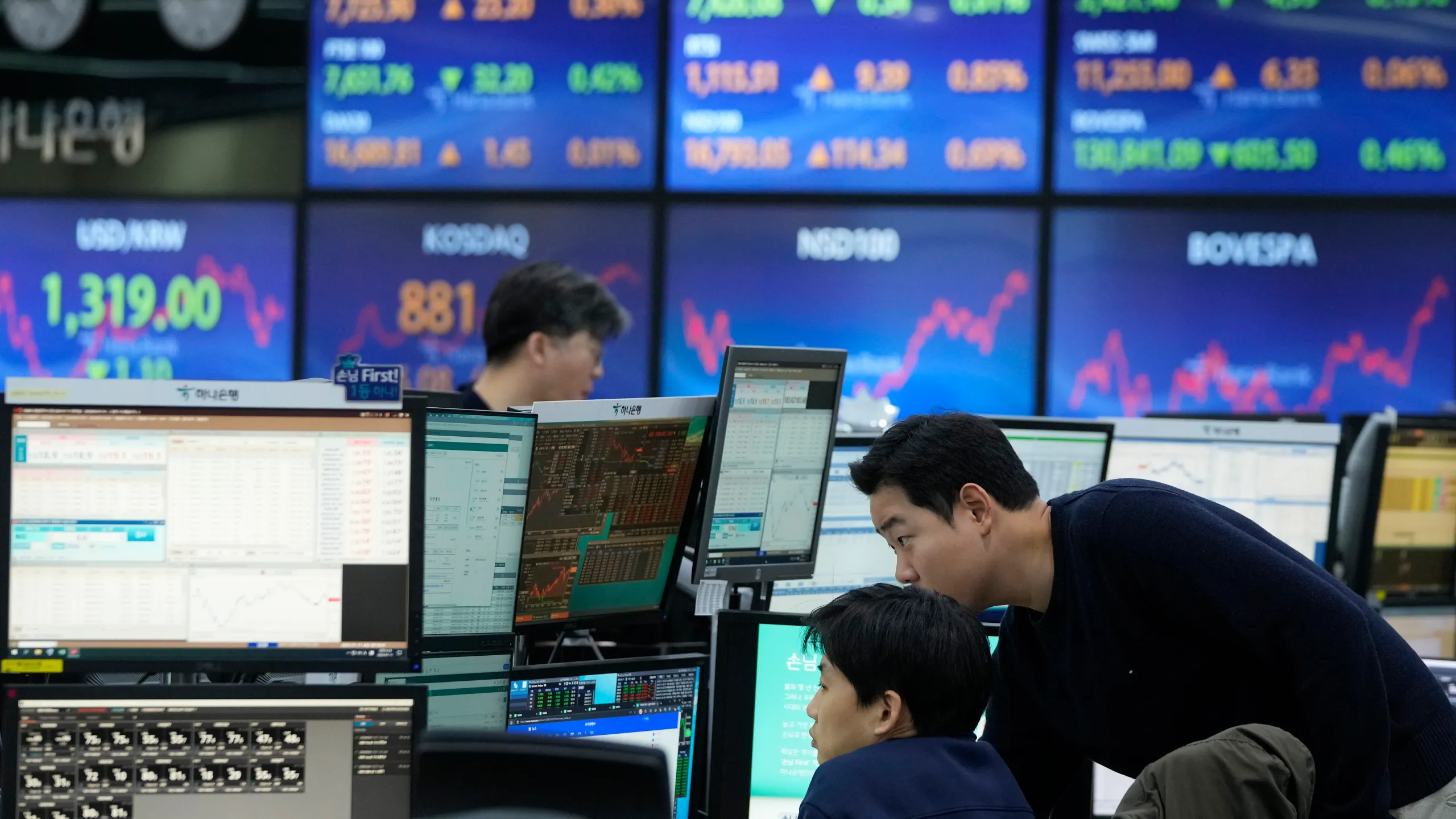
Asian markets opened the week on a cautious note on Monday, with Japanese technology stocks bearing the brunt of profit-taking after a remarkable summer rally, while Chinese markets continued their upward trajectory, fueled by artificial intelligence optimism and abundant liquidity.
Japanese Tech Giants Face Reality Check
The Nikkei 225 tumbled 1.6% as investors finally pulled back from high-flying semiconductor plays that had delivered outsized gains through the summer months. Leading the decline was testing equipment manufacturer Advantest, which plummeted 9% after an extraordinary 49% surge over the previous three months. The selloff reflects a broader recalibration in Japanese tech valuations, with traders questioning whether recent gains had outpaced fundamental improvements.
This profit-taking comes at a crucial juncture for global technology markets, which have been riding a wave of artificial intelligence enthusiasm. The question now is whether this represents a healthy consolidation or the beginning of a more significant correction in the sector.
China’s AI Ambitions Drive Market Sentiment
In stark contrast to Japan’s tech retreat, Chinese markets extended their remarkable August performance, with blue-chip stocks adding another 0.4% to build on a 10% monthly gain. The surge reflects what analysts describe as a “liquidity hunt” in an environment where traditional yield-generating investments have become increasingly scarce.
The artificial intelligence narrative gained fresh momentum with Hong Kong-listed Alibaba shares rocketing nearly 19% in their biggest single-day gain since early 2022. The jump followed positive sentiment around the company’s cloud computing division and reports that Chinese AI startup DeepSeek had chosen Huawei chips for training some of its AI models, signaling potential shifts in the global semiconductor supply chain.
The broader MSCI Asia-Pacific index excluding Japan gained 0.4%, touching four-year highs as Chinese optimism spilled over into regional markets. However, this enthusiasm wasn’t universal, with South Korean markets declining 0.7% and Indonesian stocks falling 1.5% amid domestic political turbulence that has rattled the central bank.
Federal Reserve in Focus as Labor Data Looms
All eyes this week will be on U.S. employment data, with Friday’s August payrolls report carrying outsized significance for Federal Reserve policy. Market consensus points to a modest 75,000 job gain, though estimates range dramatically from zero to 110,000, reflecting deep uncertainty following July’s unexpectedly weak numbers.
The unemployment rate is forecast to edge higher to 4.3%, which would reinforce concerns about cooling labor market conditions. JPMorgan’s chief U.S. economist, Michael Feroli, noted that while inflation and growth data don’t necessarily demand immediate rate cuts, it would take a “significant positive employment surprise” to derail the Fed’s apparent path toward easing.
Futures markets are pricing in nearly a 90% probability of a rate cut at the Fed’s September 17 meeting, a dramatic shift from earlier expectations. This anticipation of lower borrowing costs has helped propel Wall Street near record highs, though the timing is notable given September’s historical reputation as the worst-performing month for the S&P 500 over the past 35 years.
Political Pressures Mount on Fed Independence
Adding complexity to the Fed’s deliberations are intensifying political pressures from the Trump administration. The central bank’s independence faces fresh challenges this week, with Fed Governor Lisa Cook preparing to file new arguments against her potential dismissal on Tuesday, while confirmation hearings for Trump’s Fed nominee Stephen Miran are scheduled for Thursday.
These political dynamics have contributed to dollar weakness, with the greenback shedding 2.2% in August and trading at 97.791 against a basket of currencies. The euro has benefited, gaining 0.3% to $1.1710, while the dollar held steady against the yen at 146.93.
Trade Policy Uncertainty Clouds Outlook
Meanwhile, trade policy remains a wild card for global markets. A recent Court of Appeals ruling declared many of Trump’s broad-based tariffs illegal, though the levies remain in place pending a Supreme Court appeal expected by mid-October. The uncertainty has complicated ongoing trade negotiations, with talks with Japan stalling over rice import issues and South Korean negotiations facing similar obstacles.
Capital Economics’ Paul Ashworth warns that if the Supreme Court upholds the lower court’s ruling, the Treasury could be forced to return nearly $100 billion in collected duties over the past five months, potentially unraveling preliminary trade agreements with various countries.
Commodities Surge on Dollar Weakness
The commodity complex has been a clear beneficiary of dollar weakness and rate cut expectations. Gold continued its ascent, gaining 1.0% to reach a four-month high of $3,481 per ounce after posting a 2.2% gain last week. The precious metal has found support from both the weakening dollar and the anticipation of lower real interest rates, which reduce the opportunity cost of holding non-yielding assets.
Market Outlook: Navigating Crosscurrents
As markets navigate these crosscurrents, several key themes are emerging. The artificial intelligence revolution continues to drive selective enthusiasm, particularly in Chinese markets where domestic AI capabilities are gaining recognition. However, the Japanese experience serves as a reminder that even the most compelling narratives can face periodic reality checks.
The Federal Reserve’s policy path remains the dominant macro factor, with employment data likely to determine whether the central bank moves cautiously or more aggressively in its easing cycle. Political pressures on Fed independence add another layer of complexity, potentially affecting the central bank’s credibility and market confidence in its decision-making process.
For investors, the coming week represents a crucial test of market resilience. With thin holiday trading limiting liquidity and major economic data on the horizon, volatility could pick up quickly. The contrast between profit-taking in established tech leaders and enthusiasm for emerging AI players suggests markets are still working through the implications of rapid technological change.
The challenge ahead will be distinguishing between temporary market corrections and more fundamental shifts in the global economic landscape. As always, the devil will be in the details of the data, and Friday’s employment report may well set the tone for markets heading into the traditionally volatile autumn trading season.
WHAT YOU SHOULD KNOW
Markets are at a critical inflection point this week. While Asian tech stocks face profit-taking and Chinese AI companies surge, the real driver is Friday’s U.S. employment data. With futures pricing in a 90% chance of Fed rate cuts, a weak jobs report would virtually guarantee easing, while a strong surprise could derail expectations entirely.