President Bola Tinubu has successfully negotiated the return of Brazil’s state-owned oil giant Petrobras to Nigeria, marking the end of a five-year absence that had strained bilateral cooperation in the crucial energy sector.
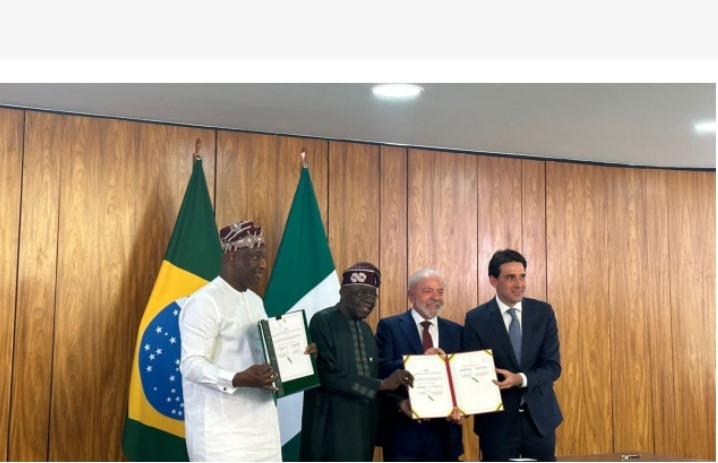
The announcement came during President Tinubu’s state visit to Brazil, where he held extensive discussions with Brazilian President Luiz Inácio Lula da Silva at the Palácio do Planalto in Brasília. The development represents a significant victory for Nigeria’s efforts to attract international investment and revitalize its oil and gas sector.
A Strategic Energy Partnership Renewed
Petrobras, one of the world’s largest oil companies, had previously operated joint venture operations in Nigeria before halting activities five years ago. The company’s renewed interest centers on Nigeria’s frontier deepwater acreage, with particular focus on expanding operations beyond its previous involvement at the Agbami field.
“We have the largest gas repository. So I don’t see why Petrobras doesn’t join as a partner in Nigeria as soon as possible,” President Tinubu declared at a joint press conference, emphasizing the natural synergy between Brazil’s technical expertise and Nigeria’s vast energy resources.
The timing of this development is particularly significant, as it coincides with Nigeria’s broader economic reform agenda and efforts to attract foreign direct investment. The partnership is expected to bring advanced deepwater drilling technology and billions of dollars in potential investment to Nigeria’s energy sector.
Beyond Oil: A Comprehensive Economic Framework
The Petrobras announcement was just one highlight of a comprehensive diplomatic engagement that saw both nations sign five memoranda of understanding covering trade, diplomacy, science, aviation, and finance cooperation. These agreements signal a new chapter in Nigeria-Brazil relations, moving beyond what President Tinubu called “symbolic ties” to concrete economic cooperation.
Among the most notable developments was the establishment of direct flight connections between Lagos and São Paulo, to be operated by Nigeria’s Air Peace airline. This move is expected to significantly boost trade and people-to-people connections between the two nations, which together represent the world’s largest Black populations.
The aviation sector cooperation extends beyond passenger services, with Brazilian aircraft manufacturer Embraer establishing a service center in Nigeria to serve as a regional hub for aircraft maintenance and repairs across West Africa.
Addressing Critical Sectors
President Tinubu highlighted several areas where Brazil’s expertise could transform Nigeria’s economic landscape. Of particular note was his emphasis on pharmaceutical manufacturing, questioning why Brazil’s advanced generic drug production capabilities couldn’t be replicated in Nigeria.
“I don’t know why the manufacturing of generic drugs, which Brazil has done deeply and far, cannot be in Nigeria,” Tinubu stated, pointing to potential collaboration in healthcare and pharmaceuticals that could reduce Nigeria’s dependence on imported medicines.
The agreements also encompass cooperation in biotechnology, bioeconomy, ocean science, innovation ecosystems, renewable energy, space development, and digital transformation—areas where Brazil has demonstrated significant expertise.
Economic Reforms Bearing Fruit
President Tinubu used the platform to showcase the results of his administration’s economic reforms, particularly in foreign exchange management and corruption reduction. He assured potential Brazilian investors that Nigeria’s business environment has improved significantly.
“The reforms I’ve embarked upon since I took over in Nigeria have been very impactful. It was initially painful, but today the result is blossoming,” Tinubu explained, highlighting improvements in currency market stability and foreign exchange accessibility.
The president’s message was clear: Nigeria is open for business, and the speculative activities that previously plagued the foreign exchange market have been eliminated.
BRICS and Global South Cooperation
President Lula positioned the renewed partnership within the broader context of Global South cooperation, emphasizing the importance of collaboration between major developing nations in an era of increasing protectionism.
“At a time when protectionism and unilateralism have returned, Nigeria and Brazil reaffirm their bet on free trade and productive integration,” Lula stated, underscoring both nations’ commitment to multilateral cooperation.
The timing of this partnership is particularly relevant given both countries’ involvement in BRICS and their shared commitment to reducing dependence on Western-dominated economic systems.
Trade Potential and Investment Opportunities
Current trade figures between the two nations reveal significant room for growth. Nigeria ranks as Brazil’s 49th largest export destination, with bilateral trade totaling nearly $2.1 billion in 2024. Brazil exported almost $1 billion to Nigeria, primarily sugar and food products, while importing $1.1 billion, mostly fertilizers.
These figures, while substantial, represent only a fraction of the potential trade volume between Africa’s largest economy and South America’s industrial powerhouse. The new agreements are designed to unlock this potential through improved connectivity, financial cooperation, and technology transfer.
Looking Ahead
The success of President Tinubu’s third visit to Brazil—following previous engagements during the G20 summit and climate change discussions at BRICS—demonstrates the strategic importance both nations place on their bilateral relationship.
The establishment of the 2025 Nigeria-Brazil Strategic Dialogue Mechanism provides a framework for sustained cooperation and regular high-level engagement between the two nations.
As both countries face similar challenges in economic development, energy transition, and global positioning, their renewed partnership could serve as a model for South-South cooperation in an increasingly multipolar world.
For Nigeria, the return of Petrobras and the comprehensive partnership with Brazil represent validation of its reform agenda and its potential as an investment destination. For Brazil, it opens access to Africa’s largest market and positions the country as a key player in the continent’s development trajectory.
The agreements signed in Brasília mark not just a diplomatic success but potentially the beginning of a transformative economic partnership that could reshape trade and investment patterns across the Atlantic.
WHAT YOU SHOULD KNOW
President Tinubu’s diplomatic mission to Brazil has delivered a significant economic breakthrough: the return of oil giant Petrobras to Nigeria after five years, alongside comprehensive bilateral agreements worth billions in potential investment.
This partnership transforms Nigeria from an isolated economy to a key player in Global South cooperation, with Brazil’s industrial expertise complementing Nigeria’s vast natural resources and market potential.