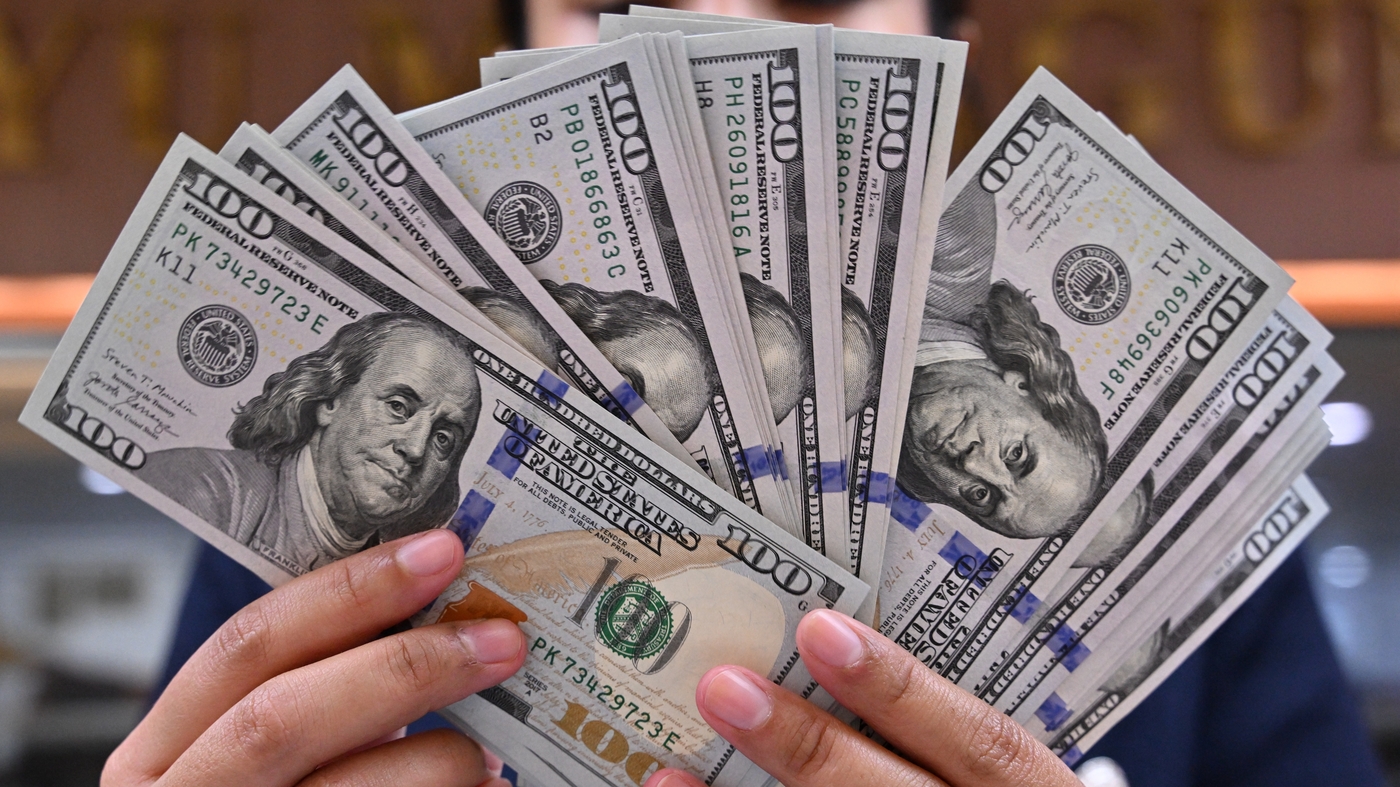
The U.S. dollar mounted a modest recovery on Monday, finding its footing after suffering a sharp decline last week triggered by Federal Reserve Chair Jerome Powell’s dovish commentary that significantly heightened market expectations for an imminent rate cut.
The greenback’s stabilization came as traders reassessed their positioning following Powell’s remarks, which effectively shifted the monetary policy narrative and sent ripples through global currency markets. The euro retreated 0.2% to $1.1693, stepping back from Friday’s four-week peak of $1.174225, while both sterling and the Swiss franc declined 0.1% against the strengthening dollar.
Rate Cut Bets Surge Following Powell Speech
Powell’s comments have fundamentally altered the interest rate landscape, with major financial institutions now aligning behind expectations of monetary easing. Barclays, BNP Paribas, and Deutsche Bank have all revised their forecasts to anticipate a 25-basis-point reduction in September, marking a notable shift in Wall Street’s consensus view.
The market’s response has been swift and decisive. According to CME’s FedWatch tool, traders are now pricing in an 85% probability of a quarter-point cut at the Fed’s September 17 meeting, a substantial increase from the roughly 70% odds that prevailed before Powell’s speech. This dramatic recalibration underscores how sensitive markets have become to any hints of policy dovishness from the central bank.
Structural Dollar Weakness Emerges
The dollar’s recent struggles reflect broader concerns about the U.S. economic trajectory and fiscal outlook. Samy Chaar, chief economist at Lombard Odier, points to a confluence of factors weighing on the currency, including expectations of policy easing, economic deceleration, and persistent worries about America’s fiscal position.
The numbers tell a compelling story of dollar weakness. Against a basket of six major currencies, the greenback has surrendered more than 9.5% of its value year-to-date, representing one of its most challenging periods in recent memory. The euro has emerged as the standout beneficiary, surging nearly 13% against the dollar this year and positioning itself as the basket’s lead performer.
Looking ahead, Chaar anticipates further euro strength, projecting the single currency could reach $1.20-$1.22 over the next six to twelve months—a forecast that would represent significant additional dollar weakness from current levels.
Bond Markets Reflect Shifting Dynamics
The currency movements have been accompanied by notable shifts in government bond markets on both sides of the Atlantic. Eurozone yields climbed on Monday, with Germany’s 10-year benchmark—the bloc’s key reference rate—rising 5 basis points to 2.77%, approaching the five-month high of 2.787% established last week.
The yield movements reflected traders’ reassessment of Federal Reserve policy implications for European markets while also incorporating fresh data showing improved German business sentiment. U.S. Treasury yields similarly edged higher across the curve as investors recalibrated their positions, with the two-year note—particularly sensitive to rate expectations—advancing 2 basis points to 3.71%.
Political Pressures Add Complexity
Beyond monetary policy considerations, markets are grappling with renewed political tensions surrounding Fed independence. President Trump’s continued criticism of Powell and other Fed policymakers has raised fresh concerns about potential interference with central bank decision-making.
Goldman Sachs analysts highlighted this political dynamic as a potential risk factor, noting in a research note that “renewed efforts to reshape the Fed present a potential challenge to longer maturities.” The 30-year Treasury yield reflected these concerns, trading at 4.9050%.
Key Data Points Loom
With market positioning heavily influenced by Fed expectations, upcoming economic releases take on heightened significance. Investors will scrutinize Friday’s PCE deflator reading—the Fed’s preferred inflation measure—for clues about the central bank’s policy path. The August employment report, scheduled for release a week later, promises to be equally critical in shaping rate cut expectations.
Global Currency Ripple Effects
The dollar’s weakness has created opportunities across global currency markets. The Chinese yuan surged to its strongest level in a month, benefiting from the broad-based dollar decline and offering some relief to China’s export-dependent economy.
In cryptocurrency markets, the relationship with traditional currencies continues to evolve. Ether experienced a notable 5% decline on Monday despite reaching a record high of $4,955.14 over the weekend, while Bitcoin retreated approximately 1.5% to $111,197, highlighting the continued volatility in digital asset markets.
As markets navigate this shifting landscape, the interplay between Federal Reserve policy, political pressures, and global economic dynamics will likely continue driving currency volatility in the weeks ahead.
WHAT YOU SHOULD KNOW
The U.S. dollar’s recent volatility centers on one critical development: Federal Reserve Chair Jerome Powell’s comments have dramatically increased expectations of a September rate cut, with markets now pricing in 85% odds compared to 70% before his speech.
This shift has triggered significant currency movements—the dollar has weakened by over 9.5% this year, while the euro has surged by nearly 13%. Major banks now expect a 25-basis-point cut next month, reflecting concerns about U.S. economic slowing and fiscal pressures.