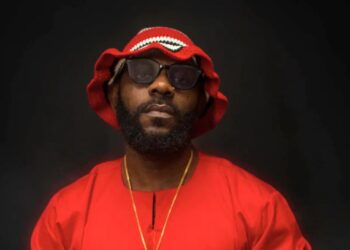
Nigerian singer and songwriter, Reekado Banks, has opened up about the circumstances surrounding his departure from Don Jazzy’s Mavin Records, the label widely credited with propelling him into the limelight.
The “Easy” crooner, who joined Mavin Records in 2014, quickly became one of the standout acts of his generation after winning Rookie of the Year at The Headies that same year.
In 2015, he cemented his place as a rising star when he clinched the coveted and controversial Next Rated award, further boosting his profile as one of the industry’s brightest talents.
However, in 2018, Reekado Banks shocked fans when he announced his exit from the label to establish his own imprint, Banks Music. While the move was celebrated as a bold step toward independence, the artist has now admitted it may have come too soon.
Speaking during an interview with reality TV star, Teddy A, on the Echoo Room show, Banks revealed that the realisation hit him when he began to manage the complexities of the music business without the backing of a structured label.
“I realised it was premature when I started handling things myself,” he confessed. “It wasn’t a conflict situation. I was pretty young and fixated on what I wanted to do—I just wanted to leave.”
He went on to clarify that his exit was not fueled by disagreements with Mavin Records or its founder, Don Jazzy, but rather a personal decision. According to him, his initial three-year contract had expired, and instead of renewing, he allowed it to run an additional two years before officially parting ways.
“I was at Mavin for five years without reviewing my contract. By the time I decided to leave, it was simply a choice I made, not because there was bad blood,” he explained.
Since leaving Mavin, Reekado Banks has continued to build his career as an independent artist, though he acknowledges that the move came with challenges he might not have been fully prepared for at the time.
WHAT YOU SHOULD KNOW
Reekado Banks admits leaving Mavin Records was a premature move, noting that while his exit wasn’t due to conflict, managing his music career independently proved more challenging than expected.