In a significant development for Africa’s energy sector, WAGL Energy Limited has announced its fleet capacity has now exceeded 160,000 cubic meters, marking a substantial milestone in the joint venture ambitious expansion strategy.
The announcement, made Monday via the Nigerian National Petroleum Company Limited’s (NNPCL) official social media channels, underscores the growing influence of the partnership between Nigeria’s state oil company and the Sahara Group in continental liquefied petroleum gas (LPG) distribution.
Strategic Position Strengthened
This fleet expansion consolidates WAGL Energy’s position as one of Africa’s premier LPG suppliers, reflecting the company’s commitment to what NNPCL describes as “sustainable and affordable energy solutions for homes, businesses, and industries.” The milestone represents a dramatic increase from the company’s original two-vessel operation that began over a decade ago.
“WAGL Energy Limited is driving Africa’s access to reliable and clean energy through sustainable LPG supply, extending its impact across the continent and beyond,” NNPCL stated in its announcement, highlighting the venture’s continental ambitions.
Billion-Dollar Investment Drive
The fleet expansion forms part of NNPC’s ambitious five-year, $1 billion investment plan designed to accelerate Nigeria’s “decade of gas” initiative and support the country’s energy transition agenda. This comprehensive strategy aims to position natural gas as a bridge fuel in Nigeria’s journey toward cleaner energy sources.
Industry observers note that the expansion comes at a critical time as African nations seek to balance energy security with environmental commitments. The LPG sector has emerged as a key component of this strategy, offering cleaner-burning alternatives to traditional biomass fuels used across the continent.
Historical Context and Growth Trajectory
WAGL Energy’s journey began in March 2013 when it was incorporated as West African Gas, a joint venture between NNPC LNG Ltd and Ocean Bed Trading Ltd, a Sahara Group subsidiary. Initially focused on the offtake, marketing, and trading of Nigeria LNG’s natural gas liquids under equity lifting arrangements, the company has since evolved into a major regional player.
The partnership achieved a significant milestone in May 2022 when it took delivery of two state-of-the-art LPG vessels, MT BARUMK and MT SAPET, each with a capacity of 23,000 cubic meters. These vessels were constructed at South Korea’s Hyundai MIPO Shipyard, known for producing mid-sized carriers for the global energy market.
The addition of these vessels elevated the joint venture’s total investment beyond $300 million, representing substantial progress toward their $1 billion infrastructure commitment target by 2026.
Expanding Infrastructure Footprint
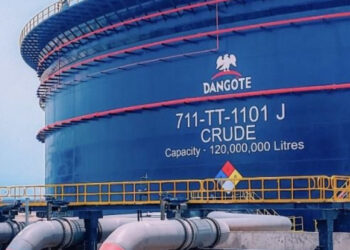
Beyond fleet expansion, WAGL Energy has been diversifying its operational capabilities. In July 2024, the company secured a significant maintenance agreement with NNPCL for the Escravos Crude Oil Terminal Facility in Delta State, demonstrating its growing role in Nigeria’s broader energy infrastructure management.
Meanwhile, Sahara Group has been developing complementary infrastructure across the continent, constructing over 120,000 metric tonnes of storage facilities across 11 African countries, including Nigeria, Senegal, Ghana, Côte d’Ivoire, Tanzania, and Zambia.
National Energy Goals
The fleet expansion directly supports Nigeria’s LPG Penetration Framework and LPG Expansion Plan, government initiatives designed to increase domestic gas consumption across multiple sectors. These programs target households, power generation, automotive fuel applications, and industrial uses, with an ambitious goal of achieving 5 million metric tonnes of annual LPG consumption by 2025.
This target represents a significant scaling up of Nigeria’s gas utilization, potentially reducing the country’s dependence on traditional biomass fuels and contributing to improved air quality in urban and rural communities.
Regional Impact
The announcement positions WAGL Energy as a key player in Africa’s evolving energy landscape, where countries are increasingly looking to natural gas as both a domestic energy solution and export commodity. The company’s expanded capacity suggests it is well-positioned to serve growing regional demand while supporting Nigeria’s ambitions to become a major gas exporter.
As African economies continue to industrialize and urbanize, reliable LPG supply chains become increasingly critical for economic development and energy security. WAGL Energy’s enhanced capabilities may prove instrumental in meeting this growing demand across the continent.
The partnership between NNPCL and Sahara Group represents one of Nigeria’s most significant private-public collaborations in the energy sector, demonstrating how joint ventures can mobilize substantial capital for infrastructure development in emerging markets.
WHAT YOU SHOULD KNOW
WAGL Energy’s fleet expansion beyond 160,000 cubic meters represents more than just increased capacity—it signals Nigeria’s serious commitment to becoming Africa’s gas hub. With $300 million already invested toward a $1 billion target by 2026, this partnership is positioning Nigeria to lead the continent’s transition from traditional biomass fuels to cleaner LPG alternatives.
Nigeria is leveraging strategic partnerships to build the infrastructure needed to supply 5 million metric tonnes of LPG annually by 2025, potentially transforming how Africa powers its homes and industries while creating a major new revenue stream for the continent’s largest economy.