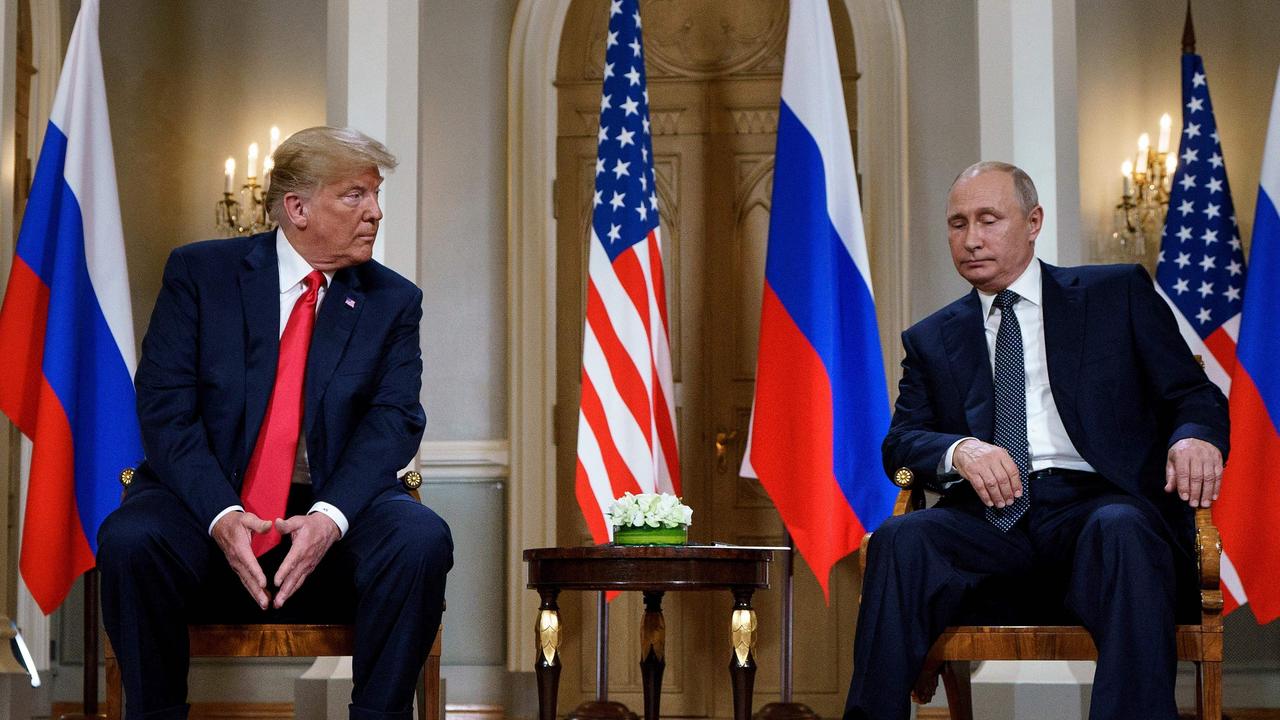
Oil markets retreated on Friday as traders positioned themselves ahead of what could be one of the most consequential diplomatic meetings in recent memory: President Donald Trump’s scheduled summit with Russian President Vladimir Putin in Alaska to discuss a potential ceasefire in Ukraine.
Brent crude futures declined 49 cents, or 0.7%, settling at $66.35 per barrel by 1105 GMT, while U.S. West Texas Intermediate crude shed 58 cents, or 0.9%, to trade at $63.38. The decline reflects market uncertainty as investors weigh the possibility of sanctions relief against the risk of further escalation in the 30-month-old conflict.
The stakes couldn’t be higher for global energy markets. Trump has dangled both carrot and stick approaches to Moscow, suggesting potential sanctions relief while simultaneously threatening secondary sanctions on countries that purchase Russian oil if peace talks fail to progress. This dual strategy has left commodity traders in a state of calculated anticipation.
“The market is watching out for whether there is a ceasefire or not. An expectation of a ceasefire translates into more Russian production,” explained UBS commodities analyst Giovanni Staunovo. “The question is will there be escalation or de-escalation?”
The geopolitical uncertainty comes at a time when oil markets are already grappling with multiple headwinds. Weekly performance data shows the divergent paths of the major benchmarks: WTI is poised to drop 0.7% for the week, while Brent crude maintains a modest 0.4% gain, highlighting the complex cross-currents affecting global energy pricing.
Adding to market pressures, concerning economic indicators from China, the world’s second-largest crude consumer, have raised fresh questions about global fuel demand. Chinese government data revealed factory output growth had plummeted to an eight-month low, while retail sales expanded at their slowest pace since December. These figures paint a picture of economic deceleration in a nation critical to global energy consumption patterns.
Despite these demand concerns, Chinese refinery throughput data presented a mixed picture. Refineries increased processing by 8.9% year-over-year in July, though this represented a decline from June’s levels, which had reached their highest point since September 2023. Tellingly, China’s oil product exports also climbed compared to the previous year, suggesting domestic fuel consumption remains subdued despite robust refining activity.
The market’s bearish sentiment extends beyond geopolitical and demand-side concerns. Bank of America analysts this week expanded their forecast for oil market surplus, projecting an average excess of 890,000 barrels per day from July 2025 through June 2026. This revision reflects growing supplies from the OPEC+ producer group, which includes the Organization of the Petroleum Exporting Countries, Russia, and allied nations.
The surplus projections align with warnings from the International Energy Agency, which this week described the oil market as appearing “bloated” following recent increases to OPEC+ output. The combination of potential oversupply and uncertain demand growth presents a challenging environment for crude prices.
Financial market conditions add another layer of complexity. The prospect of “higher-for-longer” U.S. interest rates continues to weigh on commodity sentiment, as elevated borrowing costs typically dampen economic activity and, consequently, energy demand.
As traders await the outcome of the Alaska summit, the oil market finds itself at a critical juncture. A successful ceasefire agreement could potentially ease sanctions on Russian energy exports, adding significant supply to global markets. Conversely, failed negotiations might trigger the secondary sanctions Trump has threatened, potentially tightening supply but also risking broader economic disruption.
The convergence of geopolitical uncertainty, weakening demand signals from China, forecasts of market oversupply, and restrictive monetary policy has created a uniquely challenging environment for oil markets. Friday’s diplomatic developments in Alaska may well determine whether crude prices face further pressure from increased Russian supply or find support through continued geopolitical risk premiums.
For now, the energy markets remain in a holding pattern, with traders parsing every diplomatic signal for clues about the future direction of both the Ukrainian conflict and global oil flows.
WHAT YOU SHOULD KNOW
Oil prices dropped on Friday as traders braced for Trump-Putin talks in Alaska that could dramatically reshape global energy supply. The market is caught between two powerful forces: potential sanctions relief on Russian oil (which would flood markets with more supply) and weakening demand from China’s slowing economy.