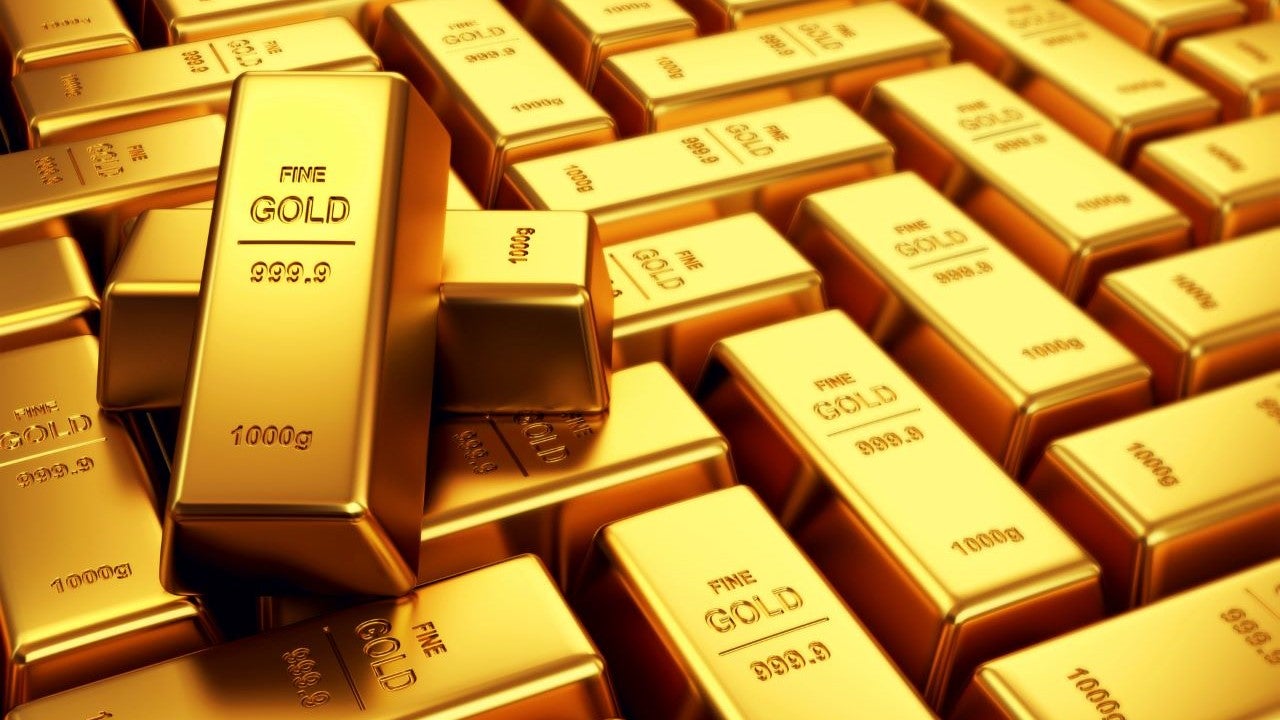
Gold prices managed to climb higher in Friday trading, lifted by a weakening U.S. dollar, though the precious metal remained on track for its first weekly decline in recent sessions as persistent inflation concerns clouded the Federal Reserve’s monetary policy outlook.
Spot gold trading showed prices around $3,335 per ounce as of recent sessions, representing a modest daily gain of 0.3% that brought the metal to approximately $3,345 per ounce during European morning hours. However, this uptick couldn’t offset earlier weekly losses, with bullion down 1.5% for the week as investors recalibrated expectations around the Federal Reserve’s next policy moves.
The dollar’s retreat provided crucial support for gold, with the Dollar Index falling 0.3%, making the precious metal more attractive to international buyers. This inverse relationship has become particularly pronounced in recent trading sessions, according to market analysts.
“In the short term, gold has a heightened inverse relationship to moves in the U.S. dollar, which in turn is being whipsawed by economic data and fast news on both tariffs and Ukraine,” explained independent analyst Ross Norman, highlighting the complex web of factors currently driving precious metals markets.
Inflation Data Reshapes Fed Timeline
The week’s trading narrative was largely shaped by costs that were sharply on the rise for producers and manufacturers in July, a sign that higher prices could soon filter down to American consumers. The producer price index data revealed the strongest monthly increase in three years, signaling broader inflationary pressures that have complicated the Federal Reserve’s policy calculus.
This development marked a sharp contrast to earlier optimism following the July CPI that rose 0.2%, easing market fears over Trump’s tariffs and initially fueling bets on a Fed rate cut in September. However, the subsequent producer price surge has created a dilemma for the Federal Reserve on whether to hold interest rates steady in September.
The shifting economic landscape has led traders to push back their expectations for monetary easing, with many now anticipating the first rate cut in October rather than the previously expected September timeline. This recalibration reflects the challenge facing policymakers as they balance growth concerns against persistent inflation pressures.
Technical and Fundamental Dynamics
Gold’s performance continues to reflect its traditional role as a non-yielding asset that benefits from lower interest rate environments. The metal’s weekly decline, despite Friday’s recovery, underscores how sensitive precious metals markets have become to Federal Reserve policy signals.
UBS commodity analyst Giovanni Staunovo offered an optimistic longer-term perspective, noting, “We have seen in the past that gold price corrections get smaller and smaller, suggesting that some buyers, who missed out in the past, use these price setbacks as a way to gain exposure to the yellow metal.”
This observation aligns with gold soaring to unprecedented heights above $3,500 per ounce in 2025, fundamentally driven by Federal Reserve monetary policy decisions earlier in the year, though recent volatility has pulled prices back from those record levels.
Regional Demand Patterns
Physical gold markets showed mixed signals across key trading regions. In India, one of the world’s largest gold-consuming markets, demand showed signs of improvement as the price pullback attracted retail buyers looking for entry points. However, activity in other major Asian trading hubs remained subdued, reflecting broader uncertainty about the metal’s near-term direction.
Geopolitical Undercurrents
Adding another layer of complexity to market dynamics, investors were closely monitoring high-level diplomatic developments, including potential meetings between major world leaders that could influence global economic stability and, by extension, safe-haven demand for precious metals.
Broader Precious Metals Complex
The mixed sentiment extended across the precious metals complex, with spot silver gaining modestly by 0.1% to $38.02 per ounce, while platinum advanced 0.5% to $1,363.90. Palladium bucked the trend, declining 0.2% to $1,143.25, reflecting its unique exposure to automotive industry demand patterns.
As markets head into the weekend, the fundamental tension between dollar strength, inflation expectations, and Federal Reserve policy continues to create a challenging environment for precious metals investors, with gold’s traditional safe-haven appeal being tested against evolving monetary policy realities.
The coming weeks will likely see continued volatility as markets digest additional economic data and Federal Reserve communications that could further reshape expectations for the central bank’s policy trajectory through the remainder of 2025.
WHAT YOU SHOULD KNOW
Gold prices rose modestly on Friday due to a weaker dollar but remained down 1.5% for the week. The critical factor driving markets is that hot inflation data has forced investors to delay expectations for Federal Reserve rate cuts from September to October. This shift matters because gold typically performs better when interest rates are low, so any delay in rate cuts creates headwinds for precious metals.