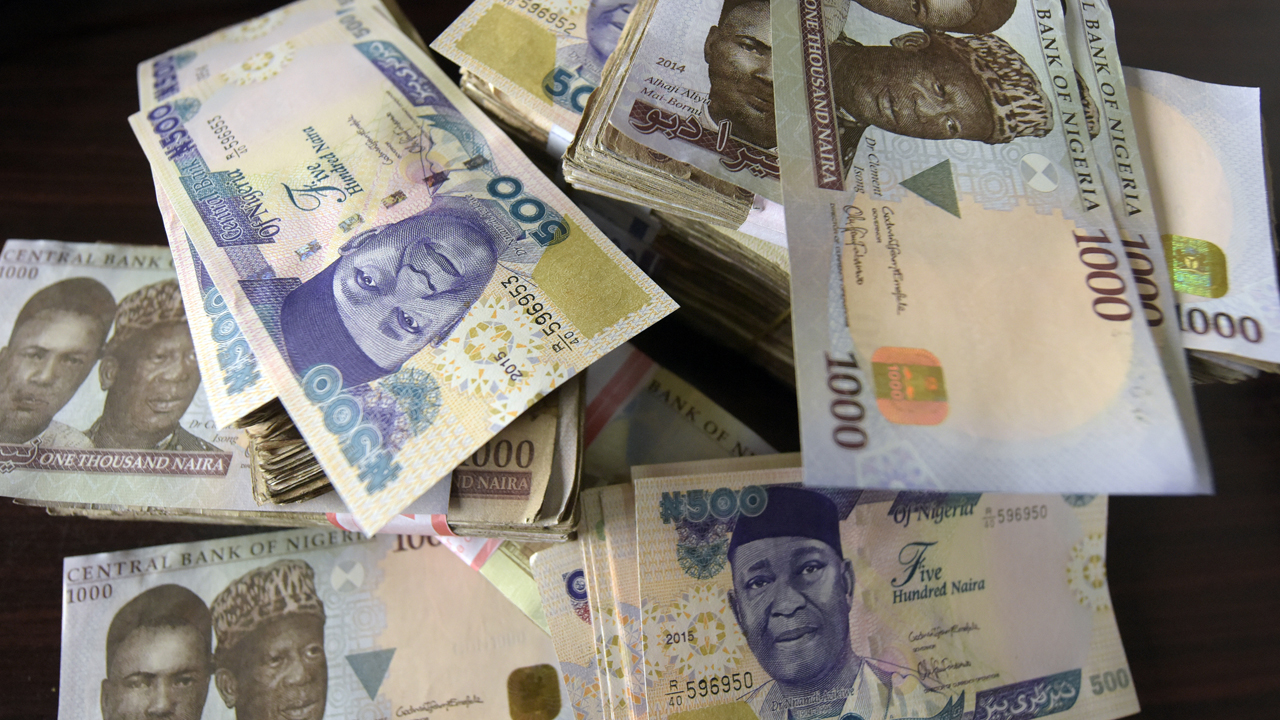
The Nigerian naira experienced a setback, declining against the US dollar in both official and parallel foreign exchange markets despite showing signs of recovery earlier in the week, highlighting the continued volatility that has characterized Africa’s largest economy’s currency markets.
According to Central Bank of Nigeria (CBN) data, the naira weakened to N1,533 per dollar in the official market, down from the previous day’s settlement rate of N1,531.95, representing a daily loss of N1.15. The decline was more pronounced in the parallel market, where the currency shed N5 to close at N1,565 per dollar, compared to N1,560 the previous trading session.
This retreat comes as a surprise to market watchers, particularly given the naira’s strong performance on Monday and underlying economic indicators that suggest improving fundamentals. The currency’s inability to hold key support levels has raised questions about the sustainability of recent gains and the effectiveness of monetary policy interventions.
Foreign Investment Surge Provides Hope
Despite the day’s losses, longer-term trends appear more encouraging. Nigeria’s external reserves climbed to $39.54 billion as of August 1, bolstered by significant foreign portfolio inflows participating in CBN’s open market operations, where attractive yields on OMO bills have drawn international interest.
The National Bureau of Statistics revealed that Nigeria attracted $5.642 billion in total capital importation during the first quarter of 2025, with portfolio investments dominating at $5.204 billion. This represents a substantial vote of confidence in the Nigerian capital market, though the composition reveals some structural challenges.
“The heavy skew toward portfolio investments, as opposed to foreign direct investment, suggests that while Nigeria is attracting capital, much of it remains ‘hot money’ that can quickly exit during periods of uncertainty,” noted a senior forex analyst who requested anonymity due to the sensitivity of the topic.
Foreign direct investment, traditionally viewed as a more stable form of capital inflow, accounted for only $126.29 million of the total, with other investments contributing $311.17 million.
UK Leads Investment Sources
The United Kingdom emerged as Nigeria’s primary source of foreign exchange, contributing $3.681 billion, or 65.26 percent of total capital imported in the first quarter. South Africa followed with $501.29 million (8.88 percent), while Mauritius rounded out the top three with $394.51 million (6.99 percent).
This geographic concentration of capital sources, particularly the heavy reliance on UK investments, presents both opportunities and risks for Nigeria’s economic planners, as changes in UK-Nigeria relations or British investment appetite could significantly impact currency stability.
Global Dollar Dynamics Add Complexity
The naira’s struggles occurred against a backdrop of broader US dollar weakness, with the greenback subdued as markets focused on President Donald Trump‘s upcoming appointment to fill a vacancy on the Federal Reserve’s Board of Governors.
The US Dollar Index declined 0.1 percent to 98.527, continuing a pattern of muted performance following disappointing employment data that has persisted for nearly four months. Services sector activity unexpectedly stagnated in July despite rising input costs, reflecting the economic impact of the Trump administration’s tariff policies.
Federal Reserve policy expectations are also weighing on dollar strength, with markets pricing in a 90 percent probability of a rate cut in September and approximately 60 basis points of total easing by year-end.
Policy Uncertainty Looms Large
Looking ahead, several factors could influence Naira’s performance in the coming weeks. President Trump’s announcement that he will name the Fed Chair’s successor by week’s end, along with his consideration of former White House economic adviser Kevin Hassett for the position, has created uncertainty in global currency markets.
More immediately concerning for emerging market currencies like the naira is Trump’s Friday deadline for new high tariffs on several countries, unless last-minute agreements are reached. The president has also threatened tariffs of up to 250 percent on pharmaceutical imports and levies on semiconductors.
Market Outlook Remains Mixed
While Tuesday’s losses represent a setback for naira bulls, the underlying fundamentals paint a more complex picture. The significant increase in foreign portfolio investment and rising external reserves suggests that Nigeria’s economic reforms are gaining traction with international investors.
However, the currency’s failure to hold technical support levels and the global headwinds from US trade policy uncertainty indicate that volatility is likely to persist. Market participants will be closely watching CBN’s policy responses and any additional measures to support currency stability while maintaining the momentum in foreign investment inflows.
The central bank faces the delicate task of balancing currency stability with the need to maintain attractive yields that continue drawing foreign capital, all while navigating an increasingly complex global monetary policy landscape.
WHAT YOU SHOULD KNOW
The Nigerian naira weakened on Tuesday (N1,533/$ official, N1,565/$ parallel market) despite positive economic fundamentals showing $5.64 billion in capital importation for Q1 2025 and external reserves rising to $39.54 billion.
While Nigeria is successfully attracting foreign investment—particularly from the UK (65% of total inflows)—the currency remains vulnerable to global dollar dynamics and policy uncertainties. The heavy reliance on portfolio investments ($5.2B) versus foreign direct investment ($126M) suggests Nigeria is drawing “hot money” that can exit quickly during uncertainty.