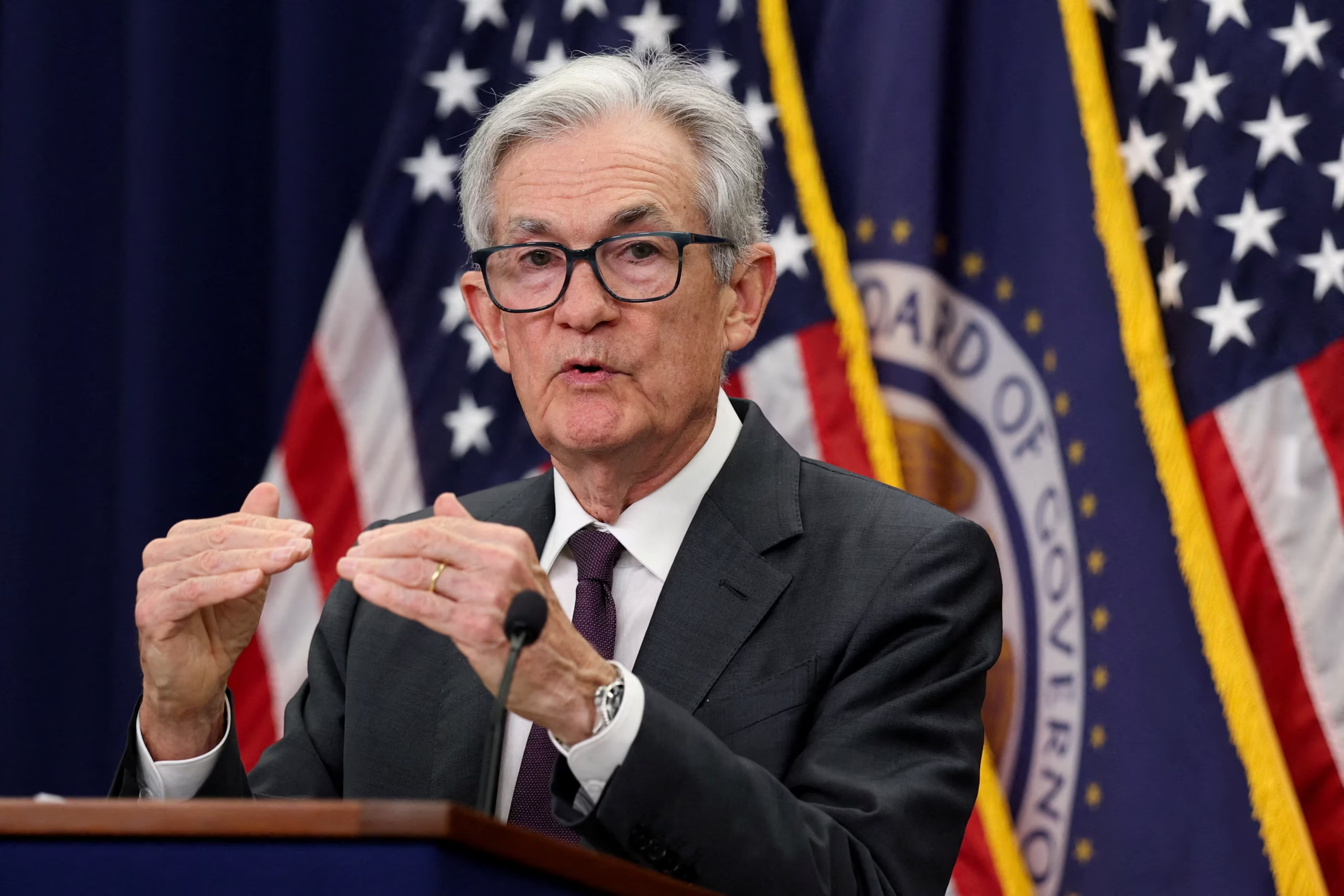
President Donald Trump intensified his public pressure campaign against Federal Reserve Chair Jerome Powell on Friday, demanding the Fed’s Board of Governors seize control of monetary policy if Powell refuses to cut interest rates immediately.
In a characteristically blunt social media post, Trump branded Powell a “stubborn MORON” and insisted the Fed chair “must substantially lower interest rates, NOW.” The president went further than previous criticisms by explicitly calling for the seven-member Board of Governors to “assume control” of rate-setting decisions—an unprecedented suggestion that strikes at the heart of central bank independence.
The outburst came two days after the Federal Reserve held its benchmark interest rate steady in a decision that revealed growing internal divisions. The 9-2 vote marked the first time in over three decades that two Fed governors formally dissented from a policy decision, a rare crack in the consensus-driven institution’s typically unified front.
Powell’s post-meeting comments appeared to dampen market expectations for September rate cuts, drawing Trump’s ire. The Fed chair’s measured tone suggested the central bank remains cautious about easing monetary policy too quickly, despite mounting political pressure from the White House.
Trump seized on the internal dissent as validation of his position, posting on Truth Social that “STRONG DISSENTS ON FED BOARD. IT WILL ONLY GET STRONGER! ‘TOO LATE!'” The president’s reference to the split vote signals his awareness that some Fed officials may be more sympathetic to his calls for aggressive rate cuts.
The confrontation highlights the delicate constitutional balance surrounding Federal Reserve independence. While the president nominates the seven Board of Governors members—subject to Senate confirmation—the Fed is designed to operate free from short-term political interference. Trump’s suggestion that the board should override its chair represents an extraordinary challenge to this traditional separation.
Financial markets have been closely watching the escalating tensions between the White House and the central bank, with investors seeking clarity on the Fed’s rate trajectory amid competing economic signals. The unusual public split among Fed officials, combined with Trump’s increasingly aggressive rhetoric, has injected new uncertainty into monetary policy expectations.
The president’s latest salvo reflects his long-standing frustration with Powell, whom he initially nominated but has repeatedly criticized for maintaining what Trump considers excessively restrictive monetary policy. Trump’s demand for “substantial” rate cuts suggests he views current borrowing costs as a drag on economic growth heading into the election cycle.
WHAT YOU SHOULD KNOW
President Trump has escalated his attack on Fed independence to an unprecedented level, publicly demanding that the Federal Reserve’s Board of Governors override Chair Jerome Powell and cut interest rates immediately.
This follows a rare split Fed decision where two governors dissented for the first time in 30 years. Trump’s call for the board to “assume control” represents an extraordinary challenge to the traditional separation between political leadership and monetary policy, potentially undermining the central bank’s independence that has been a cornerstone of U.S. financial stability.
Trump is pushing constitutional boundaries by suggesting political intervention in Fed decision-making, which could have far-reaching consequences for market confidence and institutional integrity.